Q&A: The World Before Her, part 1
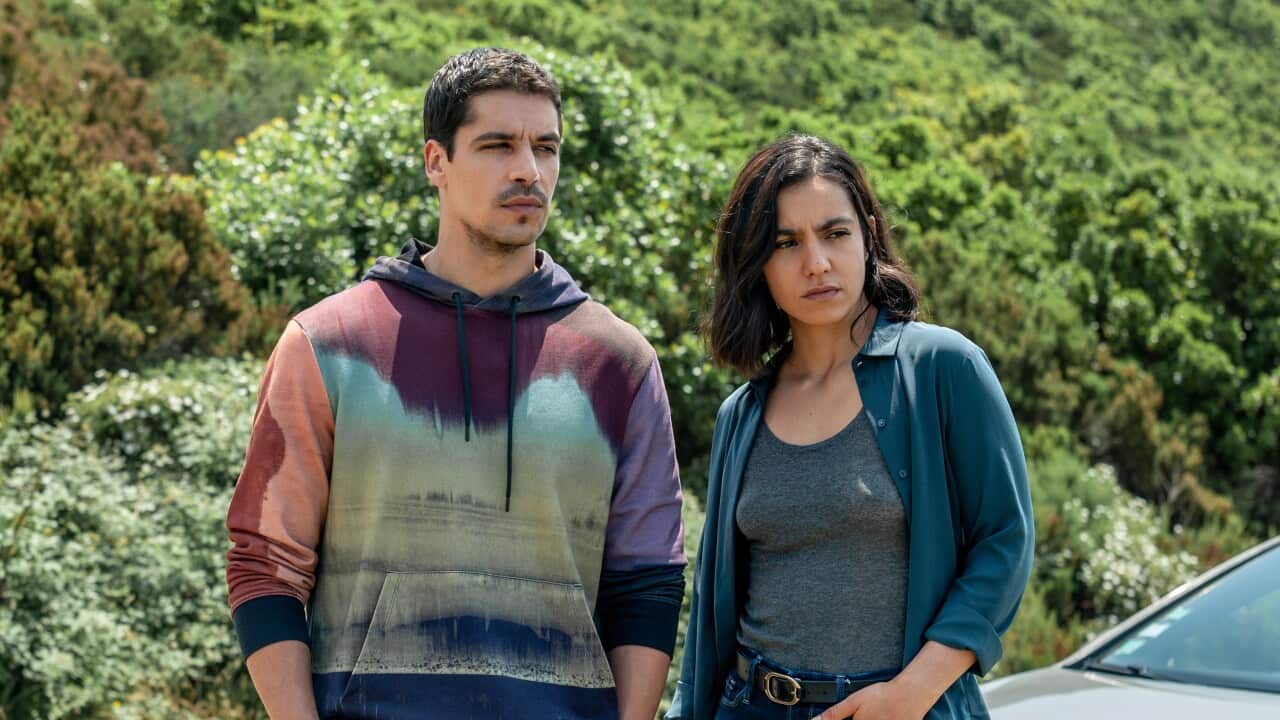
Told through the dual lens of the Miss India pageant and the women’s wing of the militant fundamentalist movement, Durgha Vahini, The World Before Her examines the role of women in India’s increasingly modern urban society. Director Nisha Pahuja speaks about the film from Mumbai.
Tribeca Film Festival and Hot Docs winner, The World Before Her deftly juxtaposes two extremes – the 20 contestants vying for the title of Miss India, a title that has often led to lucrative and highly prized work in the Bollywood film industry and the militant group, Durgha Vahini where girls are taught a fundamentalist version of Hinduism, one that espouses a war against Islam, Christianity and Western influences by any means necessary.
The World Before Her took Pahuja, a Canadian of Indian origin who has made a number of films in the sub continent, four years to research, shoot and edit. Initially the idea was to make a film that used the pageant as a lens through which to examine modern India. “There was sort of a crazy pageant boom that happened after India liberalised. In 1994, there were two women who won both Miss World and Miss Universe and that put India on the map and all of a sudden many young women wanted to become beauty queens. There was a backlash to this from the Hindu right and also feminist groups,” the director says via Skype from Mumbai. “Initially I was going to look at the opposition to the pageant and use it as the focal point. The more I started digging, the more the fundamentalists became intriguing and fascinating. I felt they needed to be a bigger part of the film. I thought that if I could access one of these camps then I could have a film that looked at two conflicting ideas of what the country should be, and how these ideas were being played out on the bodies of women.”
Pahuja met Prachi, a young women who is a leader at the Durgha Vahini camp and who is our guide to the training camps in the film. It was to be a formative meeting. “I was filming with another Hindu fundamentalist, a male version of Prachi, who was incredible,” Pahuja says. “He was the opposition, the Hindu right and the patriarchy in the film but once we got access to the camp, his role because smaller and once we got to the edit we had to cut him out all together.” Prachi, a woman with a singular, unwavering dedication to the belief system of the camp had captivated Pahuja. The director became convinced this was where her story lay, despite the difficulty of gaining access to the camp. She persisted for two years during which time she says, “The film was constantly evolving because it was a question of what I was going to end up getting in the end.”
It was the first time a film crew was allowed into the Durgha Vahini camp. “After our first day of shooting we were shut down,” the director recalls. “It was terrifying. There was somebody there who was higher up in the camp, who didn’t know we were going to be filming. Somehow we managed to stay but our access was curtailed.”
Throughout the film, subjects hint at a personal danger the filmmaker may face if she continues to pursue her line of questioning. When I ask her if she felt her personal safety was at risk, she admits that she felt in danger at the times of research, rather than during filming and when alone conducting meetings. “It was always the men who were part of the violent foot soldiers of the movement, the male counterparts of Durgha Vahini,” she says. “When I was going to meet some of those people, I did think that I should let [them] know where I was. Every now and then I felt that this could be frightening. I’ve been coming to India for many years and I’m very familiar with the country and the city of Bombay. I knew the lay of the land. It was just the fact that I was dealing with elements that were unsavoury and had the potential to be dangerous. I just thought at times I should be cautious."
Find part 2 of this blog, here.
About this writer
Kylie Boltin
Kylie Boltin is a filmmaker and writer. Kylie is the writer/director of the award winning observational documentary series 'Wedding Sari Showdown', fi...
Watch Online
SBS Shop
Dirty Business, How Mining Made Australia (DVD)
Land, Money and Power… Dig deep into Australia’s epic history of mining.
Giving His Best, Cadel Evans (Book)
A simple and concise introduction to the life of world champion cyclist, Cadel Evans.
The Tour de France - The Good, the Bad and the Just Plain Weird (Book)
Discover le Tour - the tactics, achievements, scandals and names you should know.


VideoNEW
Podcasts
Blogs