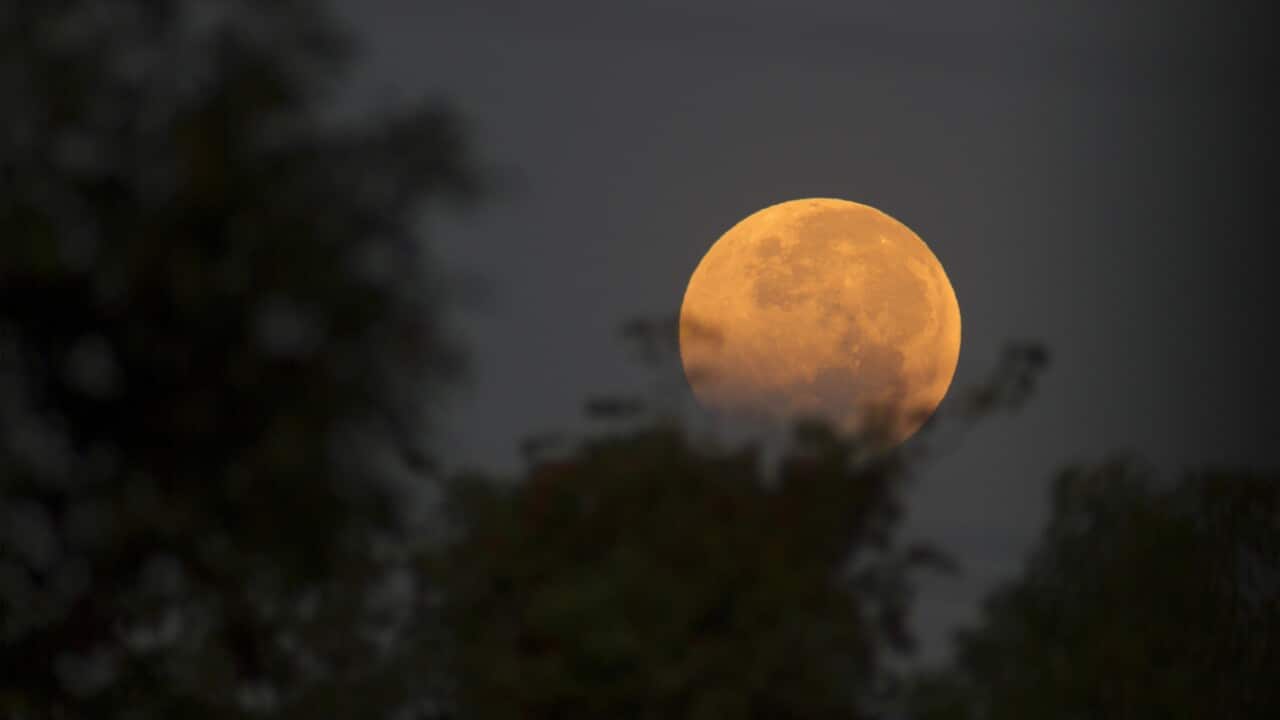
Stargazers in Sydney were left disappointed by cloud cover, but that didn't stop the blood moon awing hundreds in other parts of Australia, Asia and the Americas.
During the total lunar eclipse, light beams into earth's shadow, filling it with a coppery glow that gives it a red hue.
Hundreds gathered in spots across the city to see the rare eclipse, but their changes of seeing it clearly were slim due to thick, heavy low cloud.
"That doesn't help anyone see through it," a Bureau of Meteorology spokesman told AAP.
"Ironically (Thursday) night is probably a much better night for viewing the sky, which tends to happen with these things sometimes."
West Australians were able to see the total eclipse but missed the full passage of the earth's shadow across the face of the moon because the eclipse begins before the moon rises over the state.
NASA provided live footage via telescope of the eclipse, showing a black shadow creeping across the moon in a crawl that took about an hour.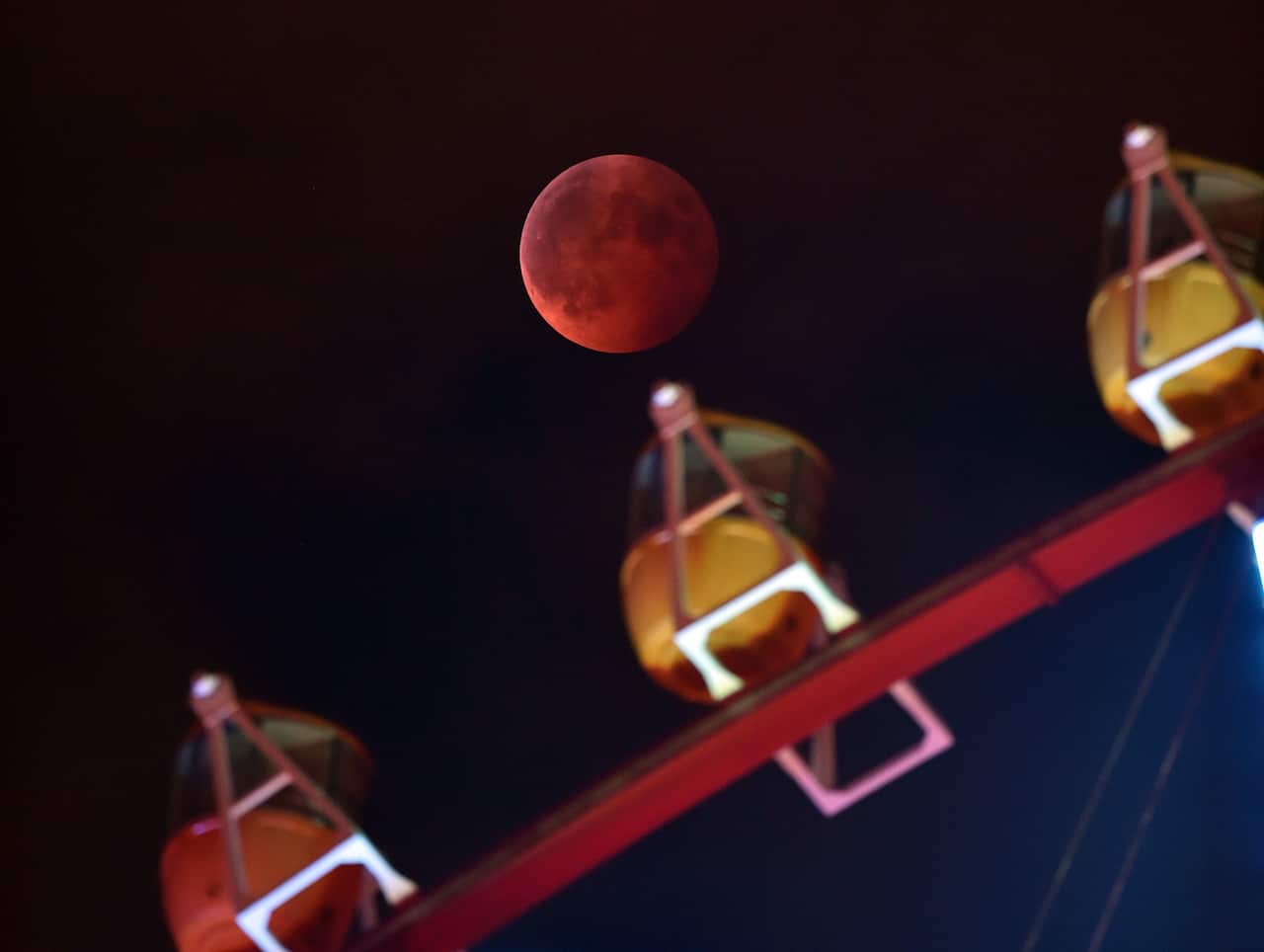 A NASA commentator explained that during the total eclipse, if you were standing on the moon and looking at the earth, you would see it all black, with ring of fire around it.
A total lunar eclipse is seen behind a ferris wheel in Tokyo. (AFP PHOTO / Yoshikazu TSUNO)
In Hong Kong, free viewing locations were set up on a harbourside promenade by the Hong Kong Space Museum for the public to observe the various phases on telescopes.
In Tokyo's Roppongi fashion and entertainment district, enthusiasts performed yoga exercises under the blood moon. Many others had climbed atop the city's skyscrapers to view the sky.
In New Zealand, the moon will be close to its highest point in the sky, according to Auckland's Stardome Observatory & Planetarium, making for a view of the spectacle unobstructed by buildings.
The event was not visible in Africa or Europe, NASA said.
The eclipse is the second of four total lunar eclipses, which started with a first "blood moon" on April 15, in a series astronomers call a tetrad.
The next two total lunar eclipses will be on April 4 and September 28 of next year.
The last time a tetrad took place was in 2003-2004, with the next predicted for 2032-2033. In total, the 21st century will see eight tetrads.
Share


