In brief
- US President Donald Trump has accused Iran of shooting down a US military helicopter.
- Despite Iranian demands, Israel has continued its attacks on Lebanon.
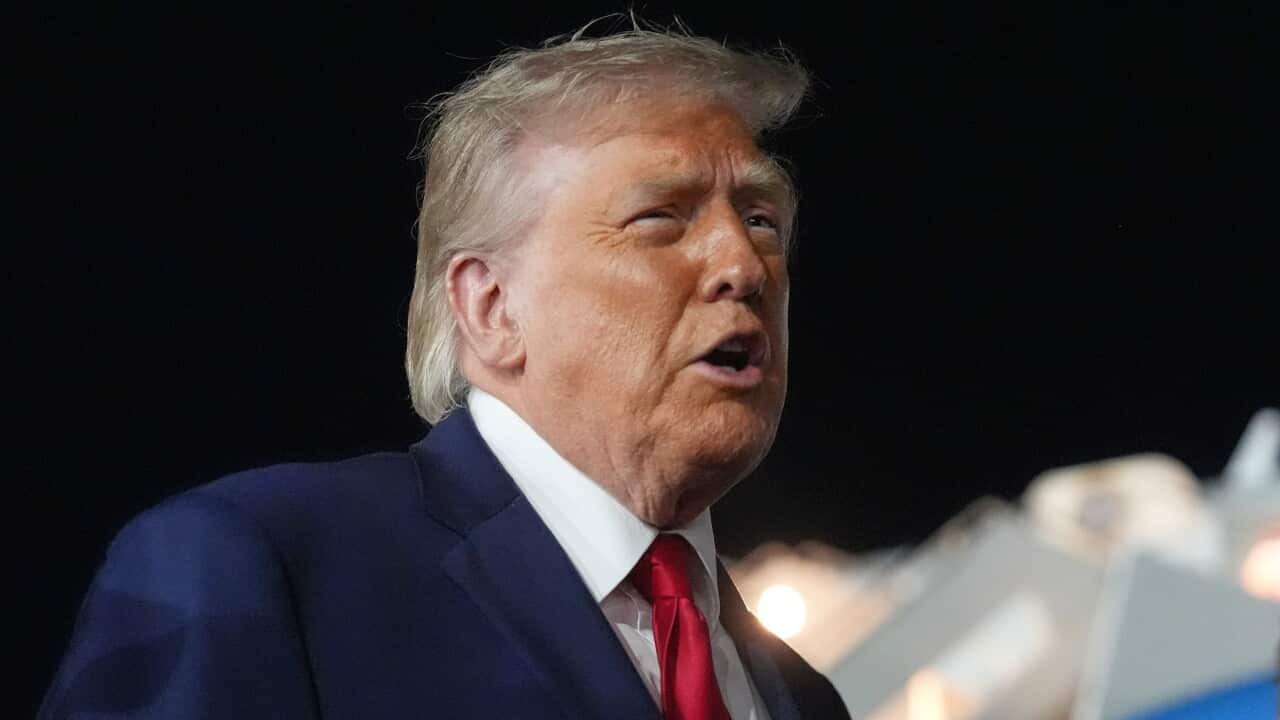
United States President Donald Trump vowed on Wednesday to respond after he accused Iran of shooting down a US military helicopter the previous night, hours after he said negotiations to end the war in the Middle East were in their final stages.
Iran's Foreign Minister Abbas Araghchi later urged foreign forces to leave the Strait of Hormuz and surrounding areas, warning they faced a persistent risk of being caught in the crossfire if they remained.
The comments came a day after Iran and Israel halted attacks that threatened to reignite the regional war, which was sparked by US and Israeli strikes on Iran on 28 February.
In a statement, Trump said he had been informed "that last night the Iranians shot down one of our highly sophisticated Apache Helicopters while patrolling over the Strait of Hormuz".
While the crew members were uninjured, "the United States must, of necessity, respond to this attack," he said.
News that makes sense
Your trusted source for staying up-to-date with the world around you. Get free daily news updates and analysis, straight to your inbox.
Trump's comments were followed by a statement on X by Araghchi.
"The Strait of Hormuz is NOT international waters but shared between Iran and Oman ... Foreign forces in proximity to our territory are at constant risk on account of their own human errors, plain accidents, or potentially being caught in crossfire," he said.
"To reduce risk, best solution is for them to leave. We prefer language of diplomacy but speak other languages too," he added.
On Trump's orders, US forces later carried out "proportional" strikes against Iran in response to the downing of the helicopter, the US military said.
American forces "began launching self-defense strikes against Iran, at 5.00pm ET (7.00am AEST) today at the Commander in Chief's direction, in response to yesterday's downing of a U.S. Army Apache helicopter," US Central Command said in a post on X.
"The mission is a proportional response to unjustified Iranian aggression," it added.
The Apache helicopter is the second crewed aircraft that Washington has confirmed was shot down by Iran during the war, following the loss of an F-15 fighter plane in April.
The downing and the prospect of a US response pose the latest threat to a shaky ceasefire in place since 8 April, as the US and Iran struggle to negotiate an end to the conflict.
Iran has insisted a halt to the war must include a truce in Lebanon, which was drawn into the war when Hezbollah militants fired rockets at Israel on 2 March.
Israel responded with an extensive campaign of airstrikes and a ground invasion that have killed more than 3,600 people. Exchanges of fire with Iran-backed Hezbollah have not stopped despite an ongoing truce.
Oil prices fall
Iran fired missiles at Israel on Monday in response to strikes against Lebanon's Hezbollah in the southern suburbs of Beirut, before Israel struck back despite Trump's efforts to dissuade Israeli prime minister Benjamin Netanyahu from doing so.
The Israeli leader said of Iran that the "fire on that front is contained" hours after Iran said it had stopped its military action.
But both sides warned they could resume hostilities, even as Trump indicated diplomatic efforts were progressing.
Iran and Israel "were going back and forth and now they both agreed through me to stop and we're in the final throes of what will be a very, very good deal," Trump told reporters earlier Tuesday.
When asked whether a deal would be a matter of days or weeks, he said it would take "two or three days".
Following Trump's comments, oil prices fell around five percent to below $90 a barrel.
The conflict has severely disrupted shipping via the Strait of Hormuz, through which about a fifth of global oil usually passes, while Washington has imposed a blockade on Iranian ports.
Trump had earlier urged both sides to stop "shooting" and said that "final negotiations" towards peace would proceed.
In the recent escalation of attacks, Iran fired nearly 30 missiles at Israel, according to the Israeli military, while Israel struck military sites in the Islamic republic.
Iranian state media reported on Wednesday that three people including two members of the "Army Air Defence Force" were killed in Israeli strikes a day earlier. No casualties were reported in Israel following the exchange.
Iranian media reported early Wednesday that Iran's international airport — closed during the missile exchanges — had reopened, allowing flights carrying hajj pilgrims from Saudi Arabia to land.
Lebanon city evacuates
Despite Iranian demands, Israel has kept up its attacks on Lebanon, where it is fighting Hezbollah.
On Tuesday, Lebanon's health ministry said an Israeli airstrike on Tyre killed at least eight people, with the Israeli military warning the entire city to evacuate shortly after the strike.
Lebanon's state-run National News Agency reported a "heavy strike" on Tyre, and raids on more than a dozen other locations across the country's south.
A correspondent from the Agence France-Presse (AFP) news agency saw residents of Tyre, including from the Christian quarter, fleeing and heavy traffic heading north after the Israeli warning.
Last week, Israel's military alleged that Hezbollah members were operating in the Christian quarter and said it would warn people to leave if the group remained there.
The heads of the Pakistani and Lebanese armed forces meanwhile agreed to boost cooperation on Wednesday as they met in Pakistan.
On another front of the war, Israel's military said early Wednesday it had intercepted an aerial target from Yemen, but reported no casualties.
For the latest from SBS News, download our app and subscribe to our newsletter.