


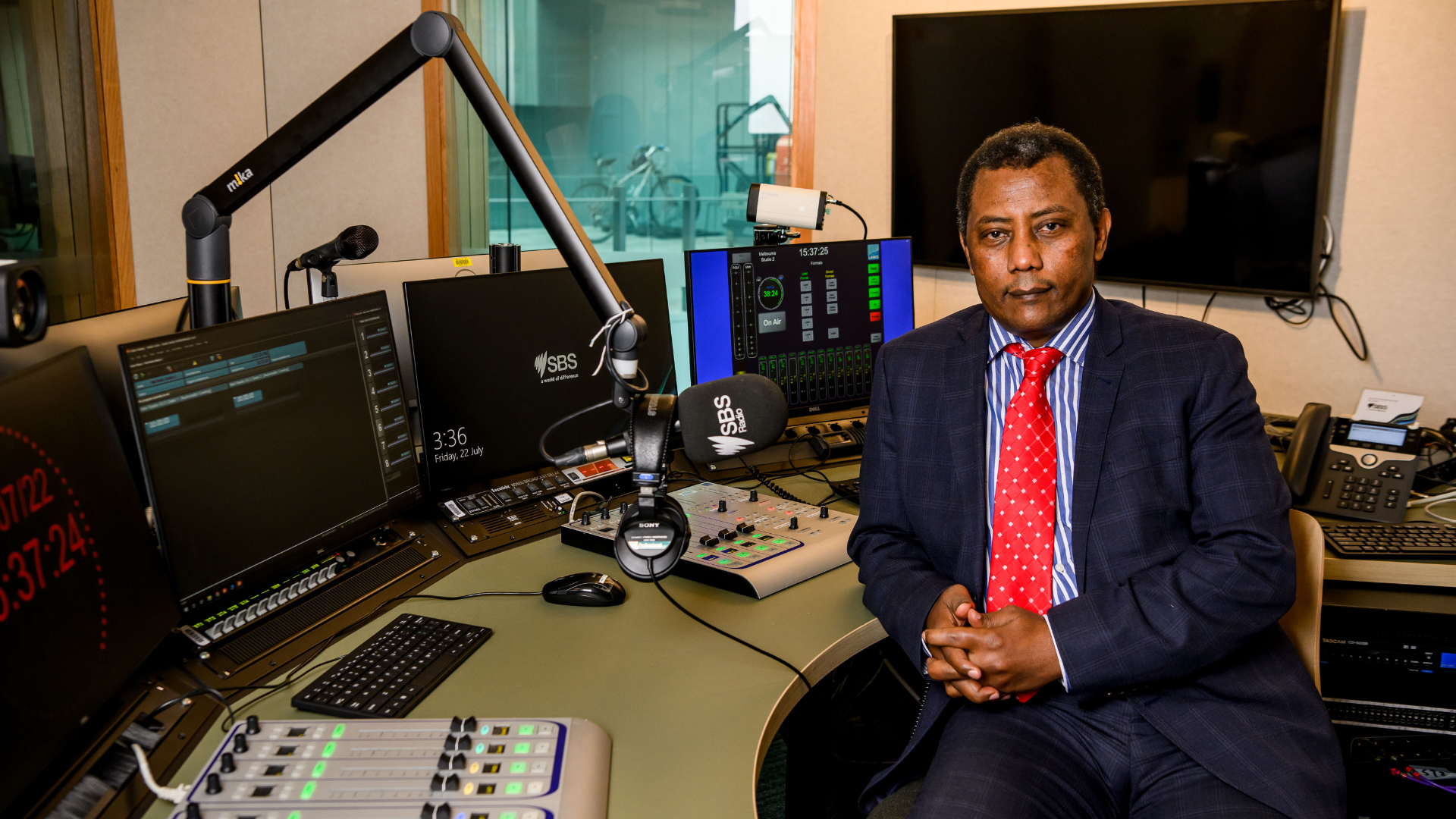
Meet Kassahun Negewo, SBS Amharic Executive Producer
Fleeing Ethiopia and arriving in Australia as a refugee in 1998, Kassahun Negewo is an accomplished journalist and Executive Producer of SBS Amharic.
Recently he was recognised with one of journalism’s highest accolades – the Melbourne Press Club’s 29th Quill Awards for Excellence in Victorian Journalism – Multicultural Affairs and Media.
Below Kassahun shares his views on why multilingual media is so important for migrant communities, alongside some of his most memorable moments on air.
When did you join SBS, and why?
I was previously an Editor-In-Chief for a major national newspaper in Ethiopia and began my radio career after settling in Australia as a refugee in 1998 and starting the country’s first-ever Amharic radio program. I joined SBS Amharic in 2015 as an RMIT University radio intern.
Working at SBS as part of 60+ language programs collaborating harmoniously daily makes me feel like a true global citizen. It instils hope for a future where different peoples, cultures, and faiths interweave seamlessly. This is the unique power of SBS.
What led you to Australia?
I arrived in Australia on 10 February, 1998, as part of a refugee resettlement program. I left Ethiopia due to the press freedom restrictions imposed by the government at the time, which included personal threats from security forces in response to our newspaper’s news reports.
Why is multilingual radio important for our migrant communities? SBS Amharic helps migrant and refugee communities to navigate their new environment and access essential services such as healthcare, education, employment opportunities, language learning, and legal information, so they can participate in society and feel they belong.
We also produce content directly from Ethiopia about events, politics, and cultural developments, which helps to nurture a sense of connection to their roots and maintain cultural ties. In this way, listening to Australian-based in-language content differs from listening to content broadcast from the home country, because it’s tailored to their specific needs and interests.
Why is radio unlike any other medium? Radio stands out from other mediums due to its simplicity, ability to provide real-time information during emergencies, and the personal connection listeners develop with hosts through their spoken words and tone of voice. It’s also readily accessible via multiple platforms, including car radios, online streaming, and television.
What’s one of your most memorable moments on air? Listening to people’s powerful stories firsthand – about the Nauru refugee camp, domestic violence, and tales of survival in war-torn areas – always evokes profound emotions, often accompanied by sorrow and tears. It is emotionally challenging as a journalist; I would like to detach myself and let individuals share stories while experiencing a deep empathy for their pain and suffering.
On the other hand, cultural and religious community events filled with joy, happiness, and hope provide comfort and inner peace. For example, every Ethiopian New Year in September, the Australian Prime Minister and the Leader of the Opposition address the Ethiopian community through SBS Amharic, which holds great significance and privilege for our listeners.
What’s something we mightn’t know about your language community?
One of the unique aspects of Ethiopians is their rich cultural heritage and history. Ethiopia has never been colonised, and the Amharic language, distinct script, and calendar (which currently marks the year 2016) contribute to its uniqueness. Ethiopian cuisine, featuring dishes like Injera (a sourdough flatbread) and Doro Wot (spicy chicken stew), is renowned for its flavour traditions.
How are you leveraging the power of new audio formats?
New audio formats such as live streaming and podcasts, as well as the use of photos, videos and infographics online and on social media, are helping us to reach broader audiences. This cross-platform approach has provided a transformative shift for multicultural media in terms of engagement, meaningful representation, and the inclusion of diverse voices and perspectives in Australia, as I experienced during SBS Amharic’s coverage of the 2023 Australian Indigenous Voice Referendum.
What advice would you give someone who wants to work in the industry today?
Pursue relevant education fields such as journalism, media studies, communications, and/or broadcast production. Be open to learning new technologies and continue to adapt to the evolving media landscape. Networking, following ethical guidance, staying curious, and honing critical thinking skills are vital aspects of success in the industry.
With content in more than 60 languages, SBS Audio serves the 5.6 million Australians who speak languages other than English, with SBS PopAsia, and SBS Chill showcasing global music, and SBS Arabic24 and SBS 中 (SBS Chinese) serving Australia’s largest language communities.