







Inside Goa Hippy Tribe: The New Generation

Mon 15 Oct 2012, 12:00am
Share This
+ Comment
1

We heard stories from the original Goan hippies in SBS’s 2011 interactive documentary, Goa Hippy Tribe. Now meet the hippies of the new generation.

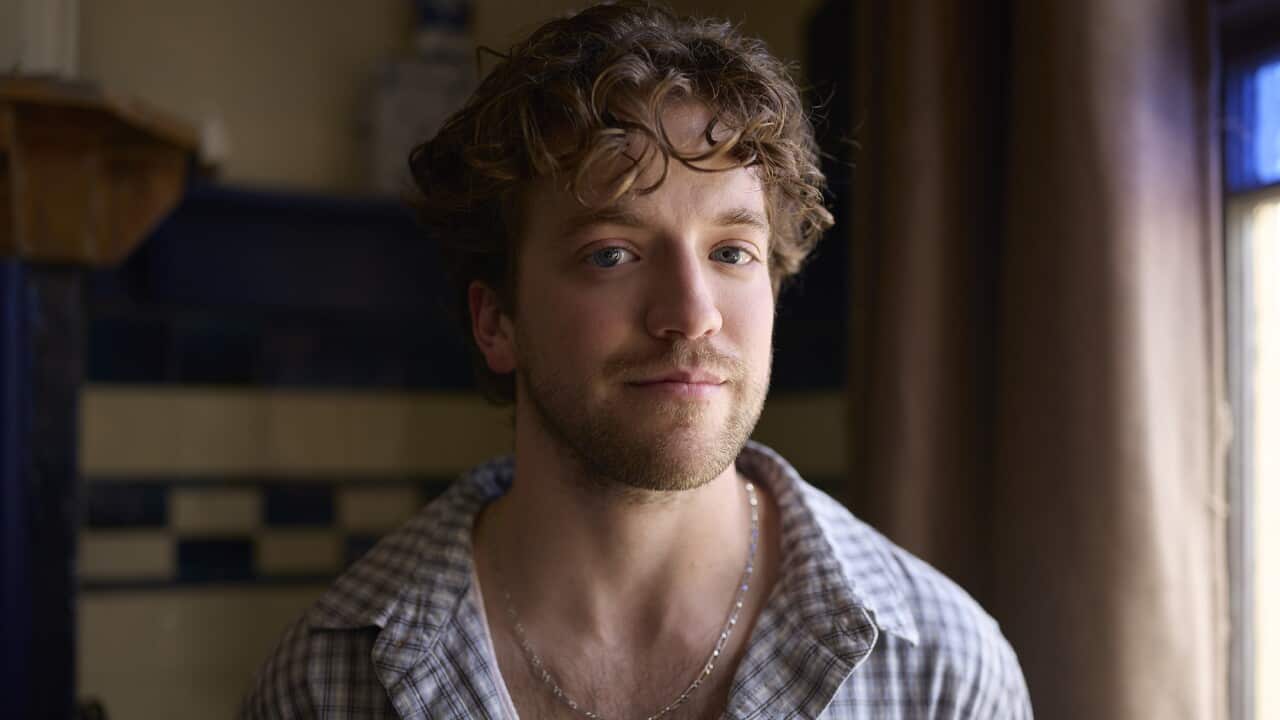
In a new eight-part video series, Goa Hippy Tribe: The New Generation we travel to Arambol, the modern-day mecca for young, free-sprinted westerners who, like the generation before them, continue to be drawn to the shores of Goa. Six individuals – Alina, JuditCraig, Chinua, Darius and Dalini – with diverse backgrounds and creative interests, reveal their motivations for discovering Goa’s historic hippy trail.


Director Darius Devas speaks to SBS Documentary about how the project came together and what he was trying to achieve with it.

What was the inspiration behind Goa Hippy Tribe: New Generation video series?

While I was in Goa for the Hippy Tribe reunion I kept hearing people talk about Arambol, so I decided to go there for a week right at the end of my stay. When I found Arambol it was exciting for me because it felt like Anjuna, which was the original gathering place in the '70s. I felt like there was such a strong link to those original times that I thought it would be interesting to document this new generation of people, who still go to Goa. So I went back to Arambol the following year and then shot all the interviews during the Australian summer of 2011/2012.

How many people did you talk to in Arambol and how did you select the six you interviewed?

Something that makes Arambol really unique is the drumming circle that happens on the beach. If you want to, you could talk to 50 people each night; there’s just so much happening and it’s a real meeting point. I talked to many different people so when I was selecting the interviews I wanted to create a cross section of different nationalities and genders. It was a toss-up between needing to be diverse and also trying to find the most interesting characters.

What’s your Goa story?

I lived in Goa from when I was five weeks old until I was three, nearly four. I think spending those really formative, developmental years there established some sort of connection. It sounds weird but it’s like a smell. The smell of Goa is relaxing. It’s kind of crazy because it’s not a very nice smell.

One of the original Goa hippies said, “What is a hippy? Today that word is meaningless”. What’s your take on this after having spent a lot of time in Arambol and meeting many so-called hippies?


I feel like the word hippy has become a cliché. Even its original connotations are quite negative. It just got picked up by popular culture as an easily labelled broad movement. There would be individual characters that might associate with the word, but for the most part, people just don’t want to be labelled. I doubt almost any of the characters I interviewed for the New Generation would associate with that word. As they are in Goa and its part of this hippy lineage, a cross-over happened.

The hippies of the ‘70s used to congregate on Anjuna Beach. Do you think people will move on from Arambol like they did with Anjuna?

I think change is really inevitable. I grew up in Byron which used to be a sleepy little hippy town; now it’s different. Arambol is already changing. It will get to a breaking point, then a little seed will spark somewhere else and people will start going there, then that place will expand and probably overpopulate. When a strong cultural place is formed, it draws people in then becomes the snake that bites its own tail, and I don’t think that’s a bad thing. It becomes a bit tedious listening to expats talk about what Goa used to be. Sure it’s sad when development happens and places get spoilt but there’s not much that can be done to stop progress. Inevitably somewhere else will form down the track.

We see a lot of different sides of Goa in the final video of the New Generation series. What kind of message were you trying to put across?

That video is probably the most personal of the entire project. It was special for me because I shot it over all three seasons I spent in Arambol. I always had my camera with me and I was just shooting what I was seeing. I wanted to create something that gave a more rounded image of Goa and all the different aspects of what it is. As a storyteller, you generally focus on one thing but there are so many different aspects to any place. Goa particularly has a lot of aspects, a lot of beautiful aspects and a lot of ugly aspects.

What kind of equipment did you use to shoot both the old and new generation interviews?


The original footage was shot on a Sony EX1, which was a camera I borrowed from the production company. All the new stuff was shot on the (Canon) 5D. The portability of the 5D really allows for greater access to things and gives you the ability to do more filming on the fly, which I really like.

So the old-fashioned look you see in the Goa Hippy Tribe reunion footage was done in post-production?

Yes, that’s when the grade came into play. I just wanted to give it that feel of being a bit faded, the aesthetic being washed out, like an old film.

Similarly to the original Goa clips, these New Generation videos will be gradually released online via Facebook. How do you think Goa Hippy Tribe’s 35,000 Facebook fans will receive them?

It’s hard to say, I think the internet is a complete quagmire. There are many different factors – for instance you can spend a lot of money paying a team to activate online discussions and have very poor results. Then on the flip side, a video can just go crazy with very little input. As the project already has a strong foundation and an established audience, I think people will appreciate seeing new content.

Since working on my latest documentary project This City Speaks, I’ve got the sense that Facebook is changing. It doesn’t feel as personal as it used to be, less discussion is happening. I feel like it’s more about sharing content, less about dialoguing, particularly with content that is professional. Facebook seems to be going into more of a business model, making it less casual, which perhaps discourages people from using it as a place to discuss things.

Now you have finished the New Generation series, do you feel the Goa project is complete?


Ultimately I would really love to make a feature length documentary about Goa. There’s definitely the space to make a more conventional documentary, like a Goa chronicle. Goa Hippy Tribe gives an insight into a lot of the characters and through that you get a patchwork history of how it unfolded, but there’s so much more that happened which could be explored. There are many people who are fascinated by those times who would love to see it, and I would love to make it!

Watch the Goa Hippy Tribe: New Generation video series.


Explore the Goa Hippy Tribe interactive documentary.

Join the Goa Hippy Tribe Facebook community.


Your Say

Add your Comment

  • verification image

All submitted comments become the property of SBS. They are moderated, so we reserve the right to edit comments and remove HTML tags. Not all submitted comments will be published. Publication does not mean we endorse the opinions expressed. Please read our terms and conditions for more information.

ADVERTISEMENT

SBS Shop

Food Safari, Series 2 (DVD)

The Fabric of the Cosmos (DVD)

Physicist and author Brian Greene, brings us a mind-blowing new exploration of space, time, and the very nature of reality.

Buy Now
Food Safari, Series 2 (DVD)

The Dust Bowl (DVD)

Acclaimed filmmaker Ken Burns chronicles the worst man-made ecological disaster in American history.

Buy Now
Food Safari, Series 2 (DVD)

East to West (DVD)

A fresh perspective on the birth of civilisation in the Near and Middle East and its dynamic influence on the West.

Buy Now