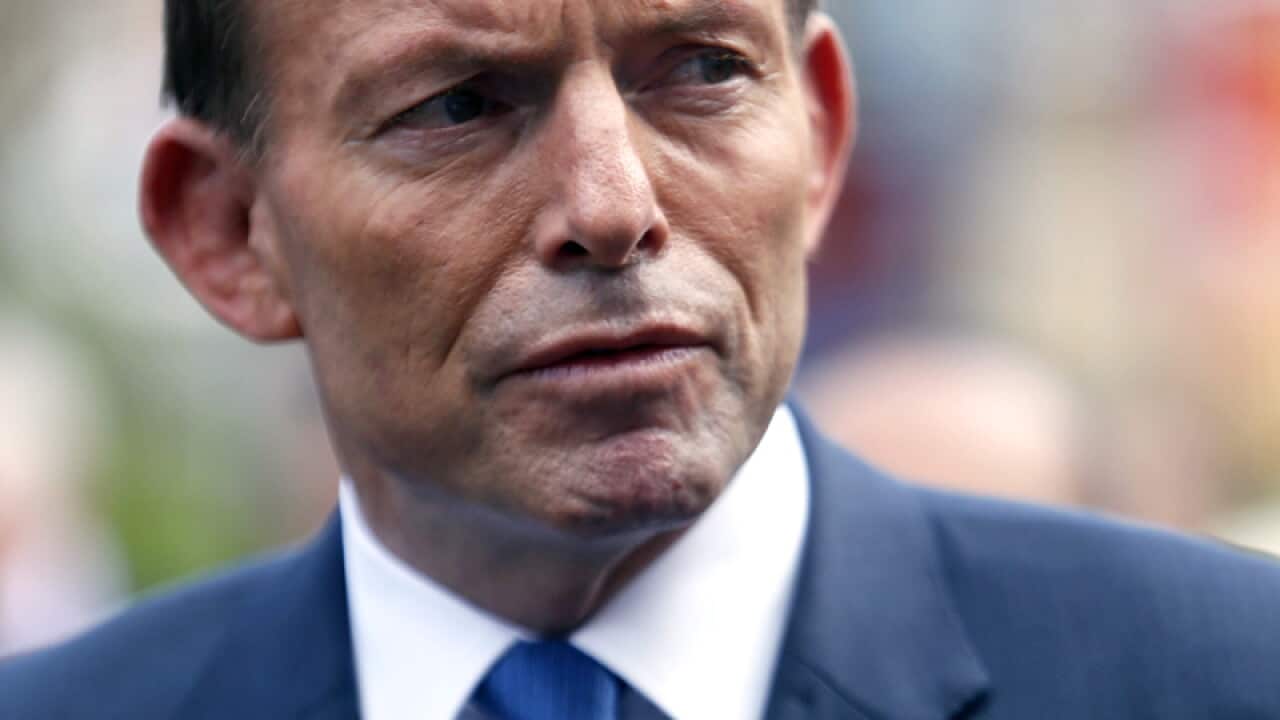
Prime Minister Tony Abbott has warned there's still a risk of conflict between China and its neighbours in the South China Sea, one of Australia's major trading routes.
China's festering territorial disputes with Japan, Malaysia, Vietnam, the Philippines and Brunei were once again a key focus of the East Asia Summit, which brings together 18 regional nations.
Mr Abbott joined with other leaders in calling for a clear code of conduct to help ensure no conflict erupts over the oil and gas-rich waters.
He says that would be a disaster not only for the countries directly involved but also the wider region, including Australia.
"Almost 60 per cent of our trade goes through the South China Sea, so strategic stability is very important," Mr Abbott said on Thursday at his second international summit since becoming prime minister.
News that makes sense
Your trusted source for staying up-to-date with the world around you. Get free daily news updates and analysis, straight to your inbox.
He warns the risk of conflict has not entirely receded.
"There's some risk, no doubt about that. But I think it's a risk that's reducing because of the kind of work that is happening at a conference such as this."
Mr Abbott's comments came after a meeting with Japanese Prime Minister Shinzo Abe, in which he expressed support for Abe's plan to amend Japan's pacifist constitution so it can build a bigger military - something China opposes, and has the potential to increase tensions in the region.
"As time goes by, and as Japan puts the wounds and the scars of World War II increasingly behind it, and other countries put the wounds and the scars of World War II behind them, Japan is going to play a more important part and, dare I say it, a more normal part in the life of the world," he said.
"And that's encouraging. Japan's a democracy, it's been a stable democracy for 60-odd years now."
Mr Abbott left Brunei on Thursday after five days of international talks. He earlier attended the APEC trade talks in Bali.
Mr Abbott confirmed he also wants free trade deals with Japan and South Korea sealed in the same ambitious 12-month timeframe he's attached to the Australia-China Free Trade Agreement.
"If you don't set some kind of a target you don't have the incentive to get things done," he said, adding the other leaders were "receptive" to his timetable.
He admitted he did not raise human rights concerns in his talks with Chinese President Xi Jinping and Premier Li Keqiang, nor the issue of Japanese whaling during his meeting with Mr Abe.
But China knows how Australia feels about the rule of law, Mr Abbott said.
"We will say our piece when there are major human rights abuses taking place but, generally speaking, it's not the job of the Australian prime minister to stand up and give lectures to the wider world."
Mr Abbott's due back in Canberra on Friday.