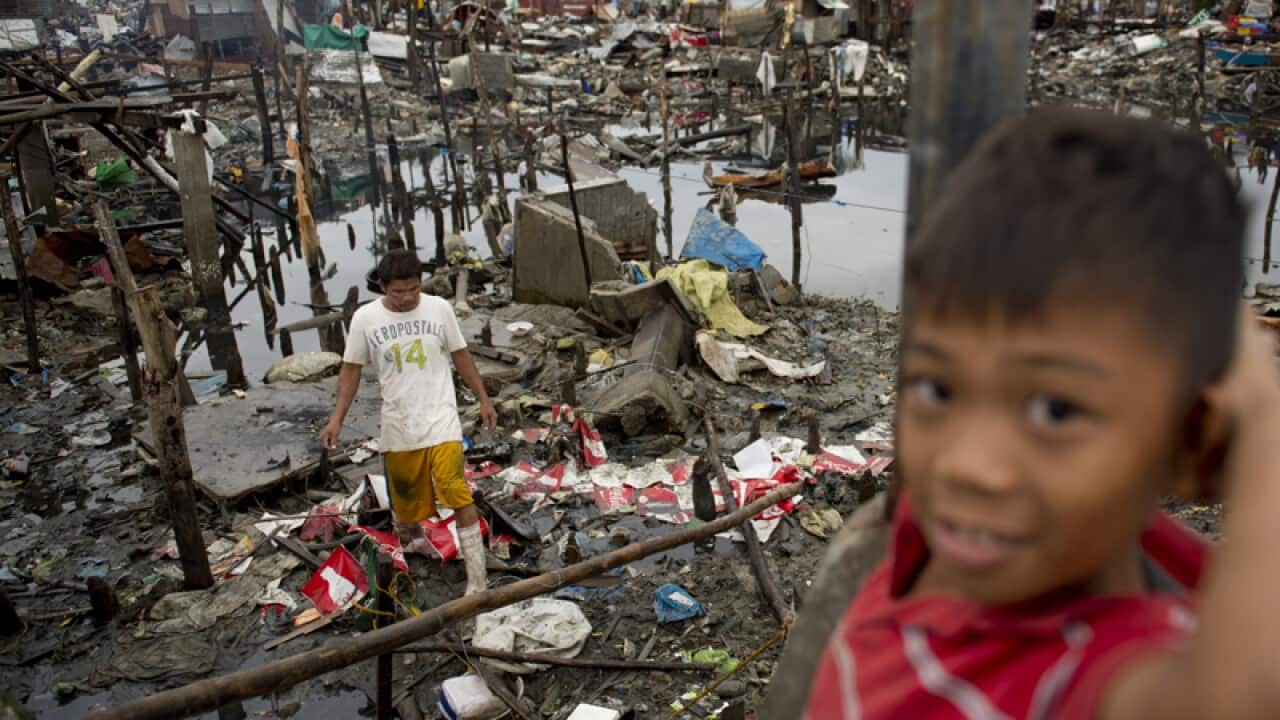
The death toll from Super Typhoon Haiyan has risen above 5,200, making it one of the Philippines' deadliest ever natural disasters, the government says, two weeks after the devastating storm struck.
The number of people confirmed killed jumped by nearly 1,200 to 5,209, with another 1,611 people still unaccounted for, the spokesman for the disaster management council, Reynaldo Balido, said on Friday.
The typhoon flattened dozens of towns across the central Philippines on November 8, bringing some of the strongest winds ever recorded and generating tsunami-like storm surges.
Balido said the death toll rose sharply on Friday, increasing from 4,015, after officials reported body counts from communities outside the worst-hit areas.
"If you notice, there was not much movement in the death toll for the past few days. This was because the reporting rules required a casualty report signed by the city mayor and his health officer," he said.
News that makes sense
Your trusted source for staying up-to-date with the world around you. Get free daily news updates and analysis, straight to your inbox.
"Now, the reports are coming in from the entire typhoon area."
The Philippines endures a seemingly never-ending pattern of deadly typhoons, earthquakes, volcano eruptions and other natural disasters but Haiyan now stands as one of the deadliest natural disasters ever recorded in the country, and the worst typhoon.
The only other natural disaster to rival Haiyan was a tsunami triggered by a magnitude 7.9 earthquake in 1976 that killed between 5,000 and 8,000 people on the southern island of Mindanao.
The typhoon has triggered a huge international relief effort but the UN warned 1.5 million children are at risk of malnutrition, calling for greater efforts to provide food and water.
A UN appeal to cope with the aftermath of Haiyan has been increased from $301 million to $348 million as the extent of the storm disaster becomes clear and UN humanitarian chief Valerie Amos said the death toll would climb higher.
"I am very concerned that some 1.5 million children are at risk of acute malnutrition and close to 800,000 pregnant and nursing mothers need nutritional help," Amos told a news conference at UN headquarters after a trip to the Philippines.
Amos said large numbers of people are still exposed to bad weather in the nine provinces ravaged by the storm. An estimated four million people have been left homeless.
The World Bank on Friday added $US480 million ($A522.34 million) in emergency aid to the Philippines, taking its support to nearly $US1 billion ($A1.09 billion).







