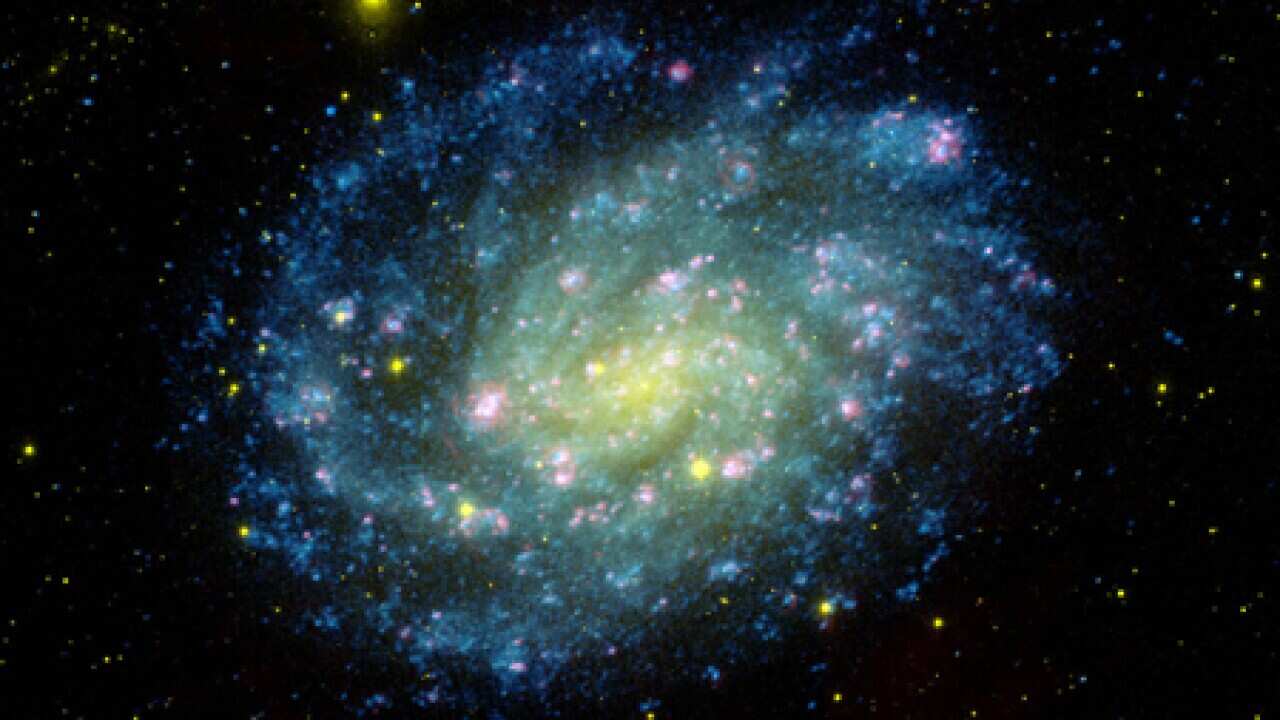
In addition to turning-point years such as 1607, 1776 and 1969 (first person to walk on the moon - have you forgotten already?), future schoolchildren might have to memorise 2013, the year that astronomers established with reasonable certainty that there could be as many as 40 billion habitable planets about the size of Earth in our galaxy.
That significantly improved the odds there is life of some kind out there somewhere. According to calculations by Berkeley astronomer Erik Petigura, one out of five sun-like stars has a planet the size of Earth or close to it orbiting in what scientists have come to call the Goldilocks zone - not too hot, not too cold and compatible with liquid water.
"It seems that the universe produces plentiful real estate for life that somehow resembles life on Earth," Petigura has told The New York Times.
For centuries, astronomers assumed our solar system and its planets, not to mention ourselves, were unique in the universe. Then, in 1992, the first planet outside our solar system was discovered.
Since then, more than 1000 exoplanets have been discovered and 3500 candidate planets have been identified.
News that makes sense
Your trusted source for staying up-to-date with the world around you. Get free daily news updates and analysis, straight to your inbox.
The work of identifying and confirming planets limped to a near-halt when the Kepler space telescope malfunctioned after four years, but not before sending back so much data that it will take another year to sort through.
To date, astronomers have discovered planets that are about the size of Earth, are rocky instead of being composed of ice or gas and have atmospheres containing water - basically, all the ingredients for life.
The possibility was intriguing enough to prompt the United States' House Science Committee to conduct hearings on life on other planets.
"The chance that there's a planet like Earth out there with life on it is very high," MIT professor Sara Seager told the committee.
Democrats ridiculed the Republican majority on the committee for trying to hunt up space aliens, but this is important science.
"The question is: Is there life near here, in our neighbourhood of stars?" Seager asked. "We think the chances are good."
Unfortunately, many of the answers will have to wait until 2018, when the next-generation James Webb Space Telescope is launched.
But the question of other Earths and other life forms is no longer a matter of if but when, and the quest picked up new urgency this year. 2013. Remember that year, kid.







