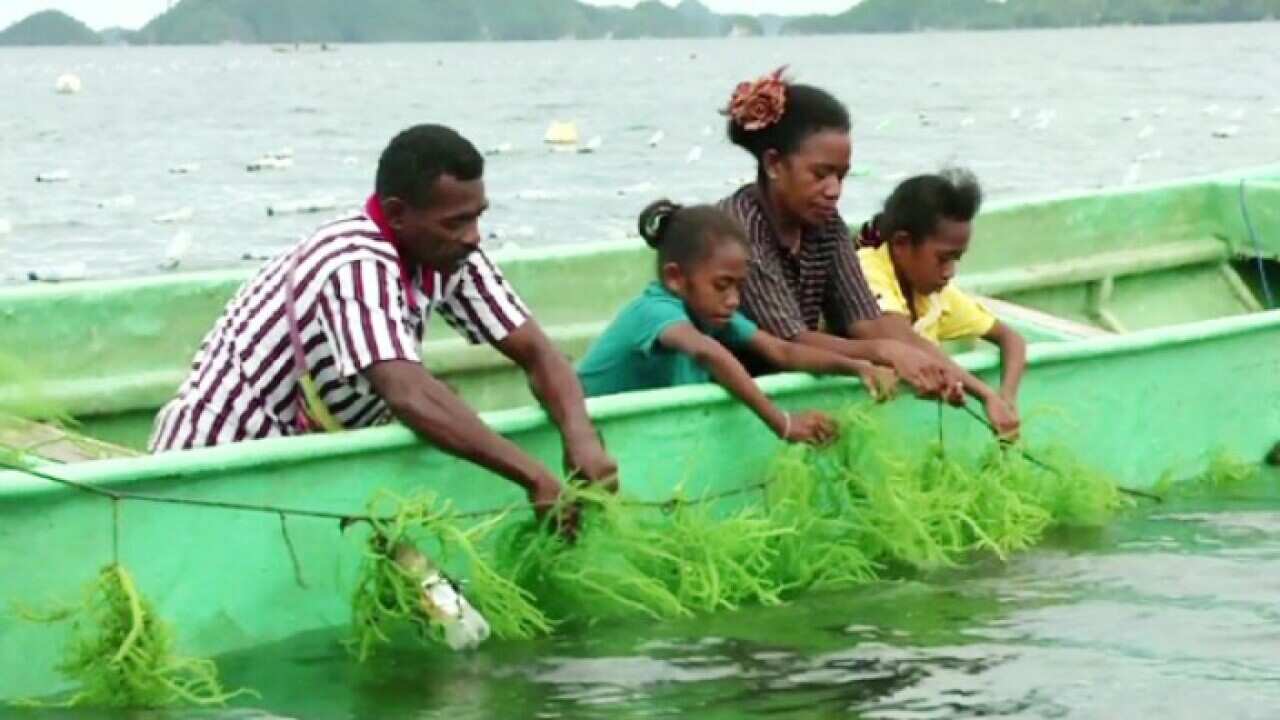
West Papua is a remote province, 3000 kilometres from the Indonesian capital Jakarta. The region has seen decades of conflict. But thanks to the growing seaweed industry, the UN hope farmers in the region will be able to dramatically change their lives.
Despite a long tradition of fishing in these coastal communities, seaweed farming was only introduced three years ago as part of a project funded by the Indonesian government and the United Nation's International Fund for Agricultural Development (IFAD).
IFAD say farmer Abdul Golap has qaudrupled his income from less than $50 a month to over $200 a month.
"Before I didn't have enough money to send my children to school. But with seaweed our children can go to university," he says.
The seaweed industry is worth around $6 billion and demand is growing rapidly, something Indonesia is hoping to tap into.
News that makes sense
Your trusted source for staying up-to-date with the world around you. Get free daily news updates and analysis, straight to your inbox.
By the end of 2015, Indonesia is hoping to become the world's biggest seaweed producers, overtaking the Philippines. Indonesia has set a production goal of 10 million tonnes in the next year and that's where these remote coastal communities play a major part.
The plant is used in food and cosmetics and plans are being developed to use seaweed as a cheap fuel.
Ron Hartman at IFAD says financial security was one of the aims of the project.
"The main impact coming out of this project is that people have been able to generate more income, they have been able to reinvest that income into education for their family and children, in nutrition, in improving nutrition, particularly for children, but also reinvest in other productive activities on the land, or also on seaweed."
For the first time, a buyer from Indonesia's biggest seaweed processing company has visited the region.
Iskak Indrayani has never been this far east before but has come because she has heard farmers are producing great seaweed. Indonesia's lofty goals mean buyers like Ms Indrayani have to travel further to meet demand and at the same time, offer farmers in remote and often poverty-stricken communities hope and opportunity.
"Coastal communities are no longer marginalised communities. They have a great chance to improve their living conditions. One way is through seaweed," she says.
"Our future plan is if the community welcomes an initiative to work together and they can produce enough seaweed, we want to build a long relationship with them so they become a fixture of the company and the company can depend on them."
IFAD say the farming is a chance to secure the future for families in the region as parents pass their knowledge down to future generations.







