
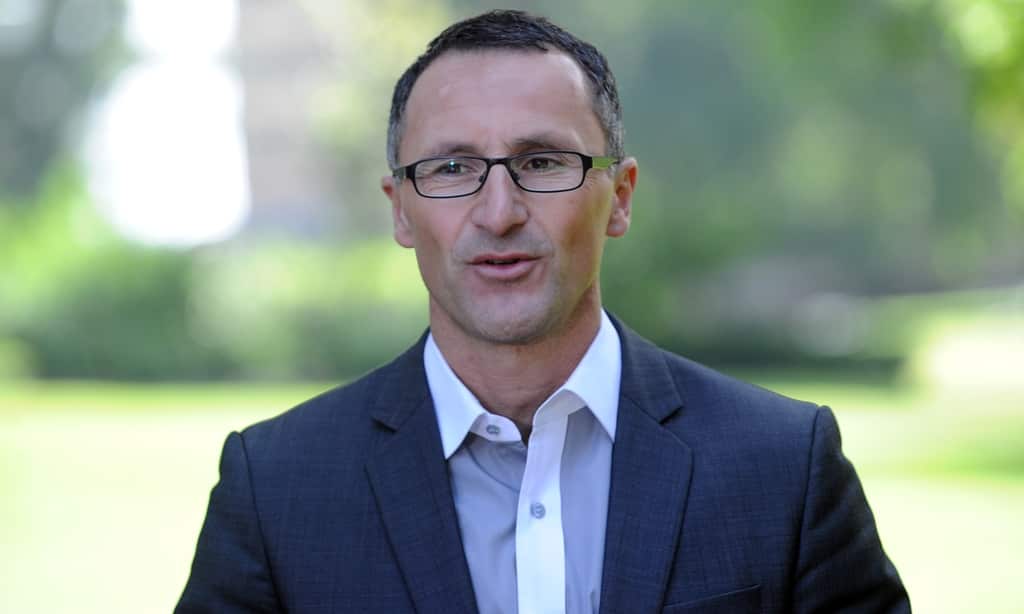
Acting Greens leader Senator Richard Di Natale has called for an end to the Christian-monopoly on state-endorsed reverence. Prayers recited at the beginning of sitting days in Parliament and the Senate are an "anachronism", he says. But that's putting it mildly.
Plainly, the Lord's Prayer is irrelevant. The aching monotony of its archaisms aren't even sincerely said by most believers anymore let alone taken seriously by those of different spiritual persuasions.
Although the 2011 census did mark another year in which a majority of us identified with a Christian religion, 61 per cent, the question begs: How many are true, practicing believers? About 29 per cent of them, if believing in the Australian Survey of Social Attitudes isn't sacrilege. If we count everyone, including from other faiths, a total of 17 per cent of Australians attend religious services at least monthly.
Speaking of which, there are plenty of non-Christian or even non-religious alternatives to choose from. Hinduism is currently the fastest growing religion in Australia and the irreligious in 2011 singularly outnumbered all but Catholicism. (The Christians were forced to team-up to earn their 'majority'; forbidden topics at the celebration party included Henry VIII and family planning.)
News that makes sense
Your trusted source for staying up-to-date with the world around you. Get free daily news updates and analysis, straight to your inbox.
"So let's make it more relevant, more multicultural," I hear you say.
Okay, that's a nice, lofty idea. We'll all take turns. Mondays can be the Lord's Prayer, Tuesdays the Al-Fatiha, Wednesdays the Amidah, Thursdays the Gayatri Mantra, and Fridays the Great Compassion Mantra. Oh, wait, we've missed a few, including our prayers to Satan - the awkward part is that you think I'm joking.
It might sound like something out of an edgy sitcom, but after a stone monument imprinted with the Ten Commandments was built outside Oklahoma's state Capitol in the US in 2012, the local Satanic Temple submitted its own plans to erect a 7ft-tall statue of Satan. Completely serious, a spokesman described how the design would allow people of all ages to "sit on the lap of Satan for inspiration and contemplation."
I don't even need to go through some of the more satirical proposals to demonstrate what a mess opening up our parliament to every religion under the sun (including the ones that worship it) could be. Oh, yes, and let's not forget those pesky atheists and agnostics. We can't have anyone left out. Perhaps they could just read a short excerpt from Richard Dawkins.
Of course I haven't yet mentioned the most serious and obvious problem that this issue brings to the fore: our democratic intuition of a separation between Church and State. I admit it's not a formally-held ideal here like it is in the United States. Technically, being that our Head of State is also the head of the Church of England, perhaps our government is more safely described as Anglican. Somehow, though, I don't imagine many of us thinking in those terms.
We don't reserve sections of the upper house for clergy and we don't have to endure the Queen's speech every time we get a new parliament. Nor does our 'acting' Head of State give a weekly sermon or blessing. We have, in most essential and practical ways, a secular government. So why not let go of a few old words?
Not only would scrapping the opening prayers be more true to ourselves, but it would be less ceremoniously alienating to many members of our community who don't identify as Christian. The 17 per cent of us who attend religious services can continue to do so freely, and the rest of us can attend to our spiritual lives as we see fit. Most importantly, our government isn't officially taking one side over another. Indeed, the most respectful solution is to have no state-sanctioned prayers at all, especially in the chambers that claim to represent everyone.
Tom Burns is a Melbourne-based writer who studies bioethics and neuroscience.







