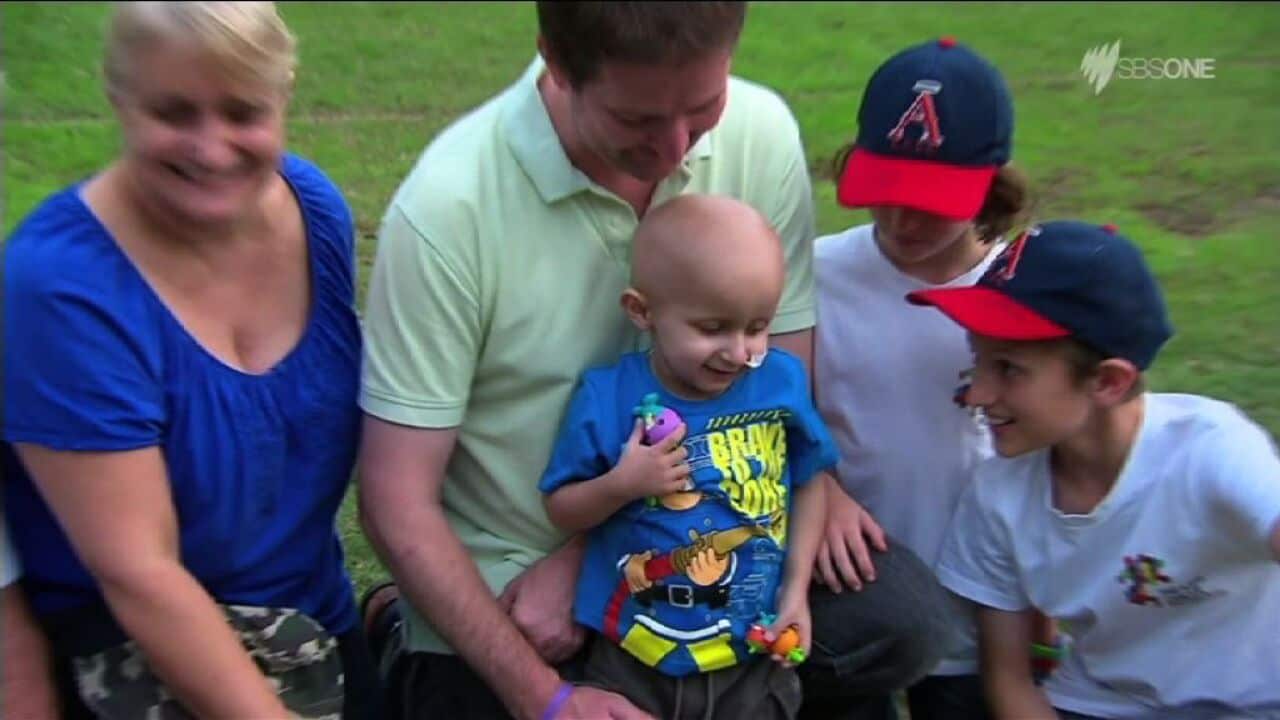
An anti-cancer therapy has been pioneered by Australian researchers looking to treat a common, fatal childhood cancer.
The treatment, which could be trialled as early as next year, will be used on children suffering from neuroblastoma - the most common kind of cancer affecting infants.
The University of New South Wales (UNSW), cancer research charity The Kids' Cancer Project, biotechnology company Novogen and an American children's hospital are working together to bring the treatment into hospitals as soon as possible.
"Neuroblastoma is a cancer that you find in children and often in very young children. About fifty per cent of the high risk patients will die from the disease because they will reach a point where there is no treatment available," said Professor Peter Gunning, Head of the Oncology Research Unit at UNSW Medicine.
Childhood cancers claim the lives of three children every week. Researchers say children are currently treated with aggressive chemotherapies developed for adults. It’s estimated these children will age at twice the rate, which can cause heart problems later in life.
News that makes sense
Your trusted source for staying up-to-date with the world around you. Get free daily news updates and analysis, straight to your inbox.
"One of the drivers for this [research] was not only therapies that are new and effective, but also less toxic. Many treatments that are used for children will impact their later growth," said Professor Gunning.
"Really the trick is to find a way of dismantling the architecture of cancer cells but not having adverse side effects on the heart – which is what we’ve achieved."
SBS reporter Romi Levine spoke to Professor Peter Gunning, the head of oncology research at the University of New South Wales.
The clinical trials are due to start next year. Professor Gunning said the trials are promising, and if approved, the treatment could be rolled out into hospitals within a matter of years.
"We are at the point where we are getting regulatory approvals. We expect that we will initiate trials next year. There’s no reason to believe that this will not go ahead.
"The ability to take something that’s promising – and move it through to routine treatment – has really sped up as a result of regulatory agencies recognising that we have to be able to fast track effective therapies."
As well as treating neuroblastoma, Professor Gunning believes this research will eventually treat solid tumours in children and adult cancers.
"Although the focus is neuroblastoma, we expect that it [the treatment] will advance to solid tumours in children… and it will also be trialled in adults for a range of different cancers."







