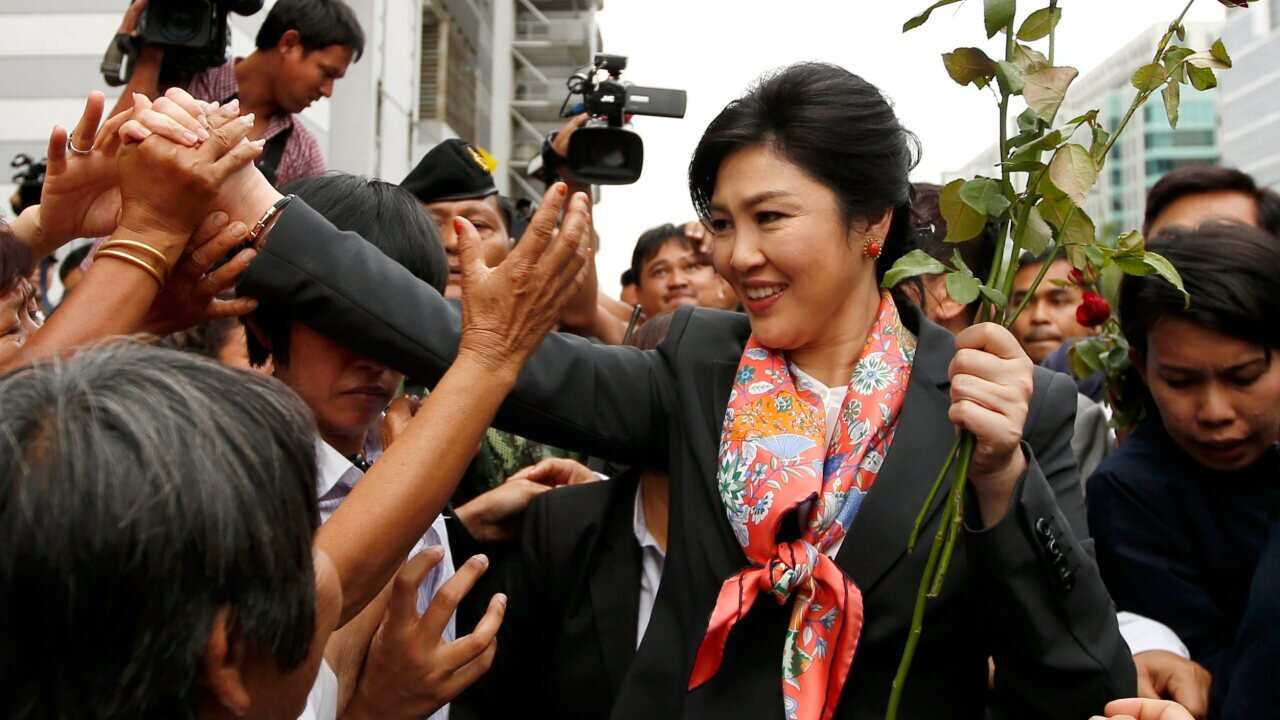
It’s been six months in the making, but Thailand Prime Minister Yingluck Shinawatra has finally been pushed from her precarious perch of power.
The Southeast Asian nation’s Constitutional Court dismissed Ms Shinawatra and nine cabinet ministers on Wednesday for abuse of power.
The court found Ms Shinawatra guilty of abusing her authority by replacing Thailand’s security chief with a relative in 2011.
The decision comes after months of sustained protest by Thailand’s opposition led by Suthep Thaugsuban, and his army of Yellow Shirt supporters.
Supporters of Yingluck Shinawatra, including pro-government Red Shirts, have taken to the streets of Bangkok overnight.
News that makes sense
Your trusted source for staying up-to-date with the world around you. Get free daily news updates and analysis, straight to your inbox.
They claim that the country’s legal system is being unfairly used to topple the elected government.
Dr John Blaxland, a Thai politics expert from the Australian National University’s College of Asia and the Pacific, agrees.
“This is essentially an attempted constitutional coup,” he said.
“This is the courts deciding to overthrow an elected government that protests have failed to overthrow.
"And that the military refuses to overthrow, because the military knows that if they intervene, the consequences could be cataclysmic.
“The military knows that it could be strained to breaking point by overtly taking sides.”
Thailand has been undergoing sustained political turmoil since Ms Shinawatra's brother Thaksin, was deposed as prime minister in a 2006 military coup amidst allegations of corruption.
Blaxland added that the current government - elected in February - hangs by a thread. Not all ministers had been dismissed in Wednesday's ruling and Ms Shinawatra had been replaced as prime minister by Commerce Minister, Niwatthamrong Boonsongphaisan.
"He's taken the mantle from Yingluck as her brother Thaskin's proxy," Blaxland said.
"But this saga is far from over.
"There is another wave of constitutional effort to remove this government on its way through the national anti-corruption commision, which is stacked with anti-Shinawatra forces," he said.
Thailand is due to go to the polls on 20 July. Whether that date is a democratic horizon too far, remains to be seen.
Article by Belinda Cranston and James Giggacher and first published at the ANU College of Asia and the Pacific.







