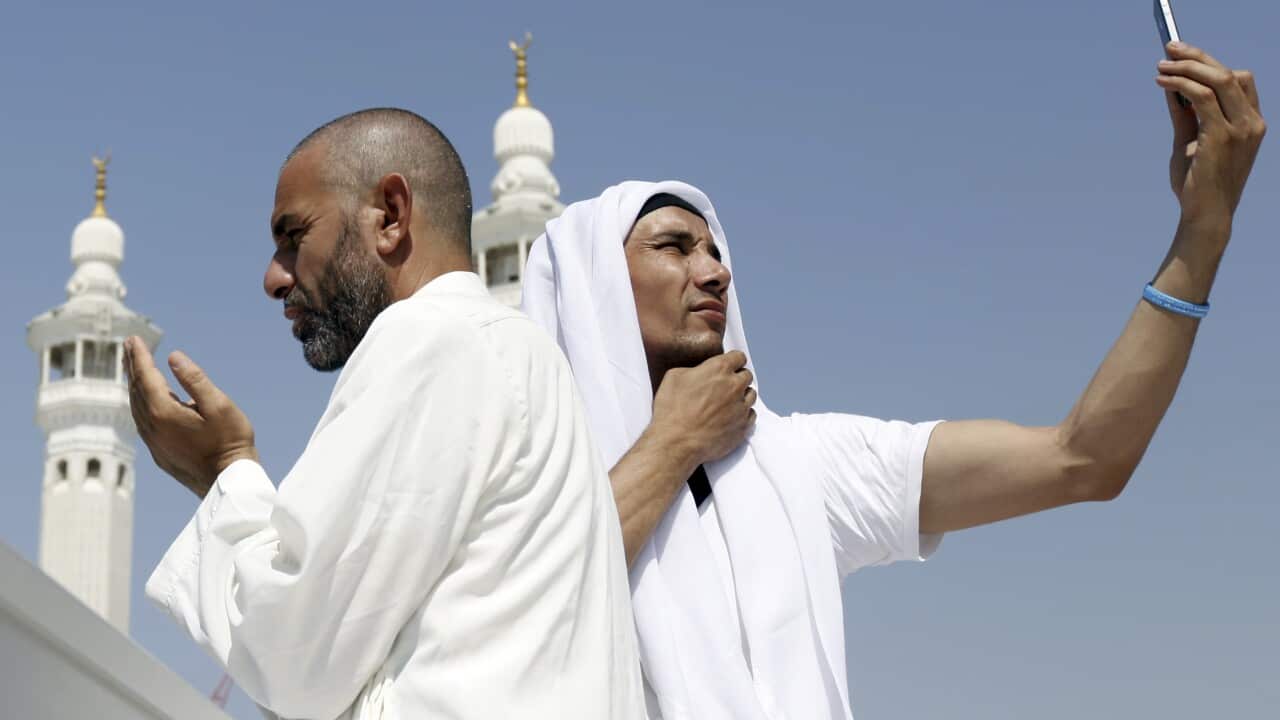
One of the oldest rites in the world, the Hajj pilgrimage in Saudi Arabia's Mecca, hasn't been able to resist the selfie fever that abounds almost everywhere else.
Saudi authorities had previously forbidden pilgrims from taking photographs at the Holy Mosque in Mecca and the courtyard around it. Those found with cameras or camera phones could be denied entry.
But a recent lifting of a ban on cell phones around holy sites in Mecca has led to some of those pilgrims to take Hajj selfies. Images of pilgrims clad in white “Ihram” attire with the crowds of Mecca behind them are prolifically circulating Facebook, Twitter and Instagram.
The selfie fever has prompted criticism from Muslim leaders. According to Arab News, Muslim clerics were quick to denounce Hajj selfies as “touristy behavior” that “defy the wish of our Prophet” because they betray Muslim notions of modesty. They also argued that it destroys the tranquillity and humility required for acts of worship during the holy pilgrimage.
News that makes sense
Your trusted source for staying up-to-date with the world around you. Get free daily news updates and analysis, straight to your inbox.
Scholar Sheikh Assim Al-Hakeem said, “Photography without a legitimate reason is an issue of dispute among scholars. However, despite this difference of opinion, there shouldn’t be any dispute when it comes to the real meaning of Haj and the essence behind it. It is based on sincerity and following the sunnah. The Prophet (peace be upon him) when he went for Haj, he said: O Allah, I ask of you a pilgrimage that contains no boasting or showing of. Taking such selfies and videos defy the wish of our Prophet.”
Many Muslims are unable to make the trip for economic or health reasons and these photographs offer a glimpse inside an otherwise unknown territory. It also gives non Muslims a view into a 1,400 year old tradition.







