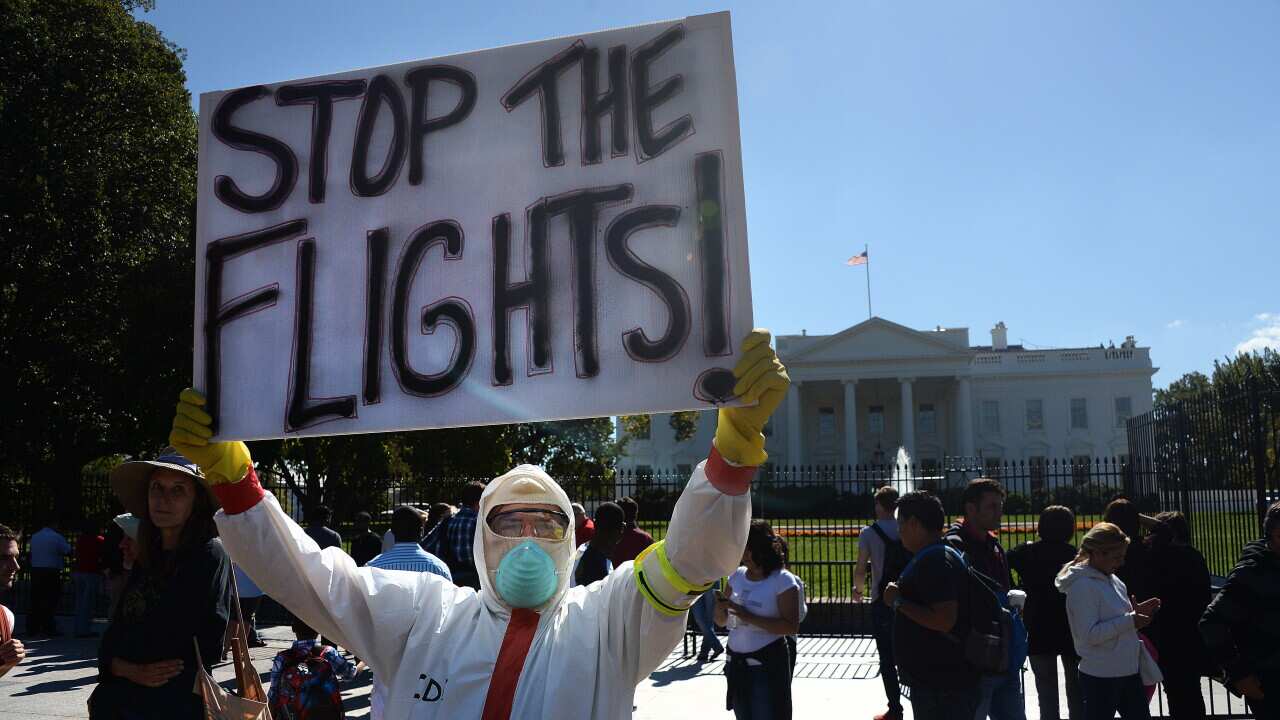
In his weekly address to the nation, Obama also played down the idea of a travel ban from West Africa, the epicenter of the outbreak, saying such restrictions would only exacerbate the crisis.
"All of us -- citizens, leaders, the media -- have a responsibility and a role to play," Obama said.
News that makes sense
Your trusted source for staying up-to-date with the world around you. Get free daily news updates and analysis, straight to your inbox.
"This is a serious disease, but we can't give in to hysteria or fear -- because that only makes it harder to get people the accurate information they need. We have to be guided by the science. We have to remember the basic facts."
It comes a day after the World Bank warned the fight to stop Ebola was being lost and the World Health Organization said that, as of October 14, 4,555 people had died from the disease out of 9,216 registered cases.
The United States -- where a Liberian man died from Ebola on October 8 and two American nurses who treated him have tested positive -- was not seeing an "outbreak" or "epidemic," Obama stressed.
But as fear of Ebola heightens across the United States, Obama admitted more "isolated" cases were possible.
"But we know how to wage this fight," he said.
"And if we take the steps that are necessary, if we're guided by the science -- the facts, not fear -- then I am absolutely confident that we can prevent a serious outbreak here in the United States, and we can continue to lead the world in this urgent effort."
However, cutting off West Africa, for example by way of a travel ban, was not the answer, he cautioned.
"Our medical experts tell us that the best way to stop this disease is to stop it at its source -- before it spreads even wider and becomes even more difficult to contain," he said.
"Trying to seal off an entire region of the world -- if that were even possible -- could actually make the situation worse.
"It would make it harder to move health workers and supplies back and forth. Experience shows that it could also cause people in the affected region to change their travel, to evade screening, and make the disease even harder to track."







