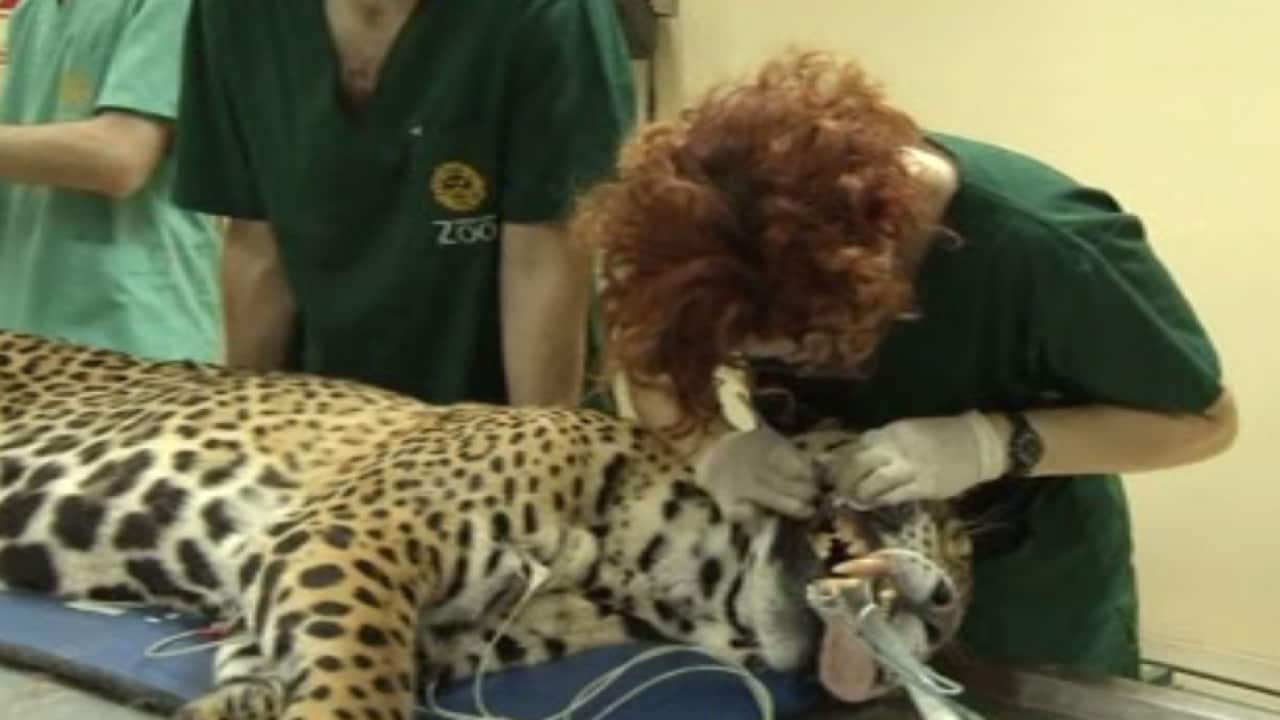
Staff at the zoo's Biotechnology Reproduction Lab have taken blood, hair and semen samples from its 11-year-old jaguar Tango, in order to capture a significant representation of the species' gene pool to aid rescue efforts for the majestic feline.
With an estimated 200 jaguars left in the wild, lab director Adrian Sestelo says that technology could do its part to save the animal.
"In Argentina there are just 200 jaguars, they're very few and are dispersed across three environments in Argentina's north," he said.
"So every time work is done to develop technology that aids in conservation it is very important for Argentina that we do this.
"We are lucky to be the country with ten feline species in South America in our country and we are losing the jaguar.
News that makes sense
Your trusted source for staying up-to-date with the world around you. Get free daily news updates and analysis, straight to your inbox.
"So, the more we do to bring together all the conservation works for this species the more we can achieve."
The Argentine jaguar used to roam up into southern parts of the United States and down to Patagonia, but they now occupy only 40 percent of their historic range.
About 18,000 jaguars were killed globally every year for their fur in the 1960s and 1970s, but hunting still remains a threat to them today despite anti-fur campaigns.







