

Climate scientists in three different countries agree 2014 will be Europe’s hottest year on record.
They worked simultaneously, using three different methods, to arrive at “very similar” conclusions: Europe is getting hotter, and human activity is to blame.
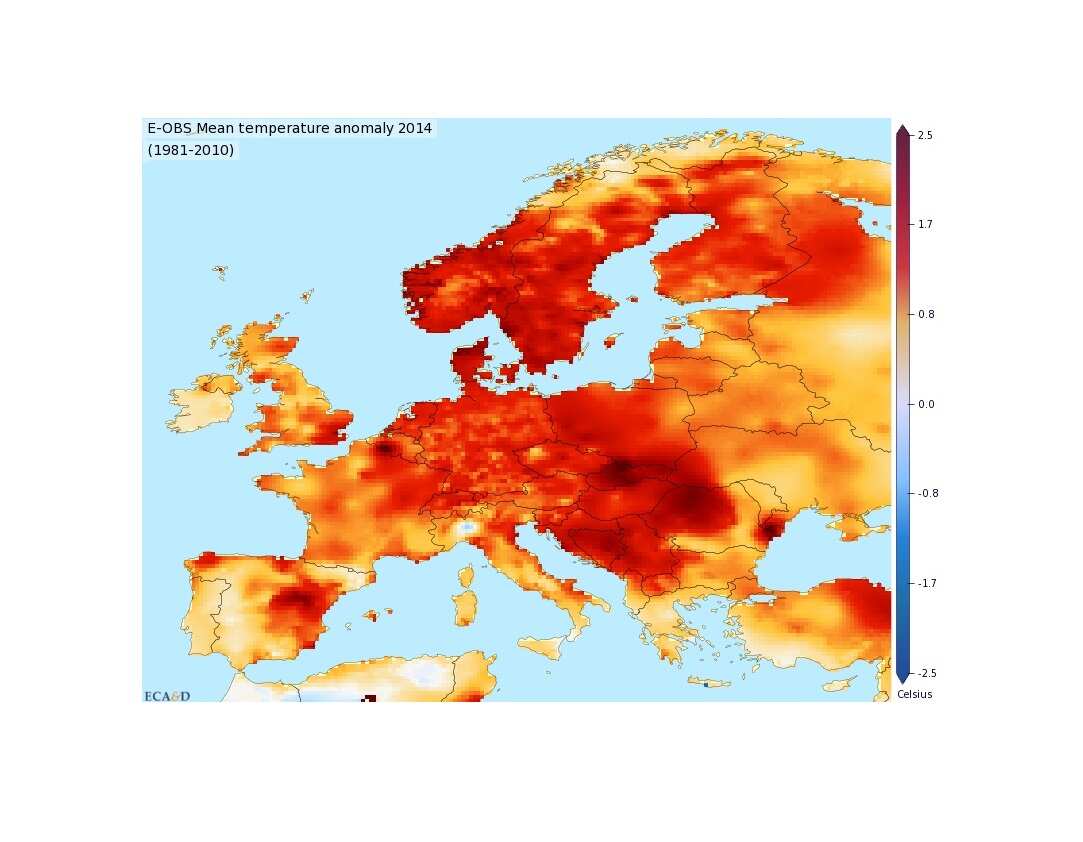
This map, from Climate Central, shows how the average temperate for 2014 compares to the average temperatures between 1981 and 2010.
A new record for average European temperature was certain, Professor of Atmospherics at the University of Melbourne David Karoly said.
“It is clear that human influences on climate have been the dominant factor in breaking of the previous record temperature averaged across Europe,” he said.
“This is further evidence that climate change is affecting all regions and an indication that urgent action from all national governments is needed to slow global warming by reducing greenhouse gasses.”
Scientists were not debating climate change, Prof Karoly said.
“Ninety-seven per cent of climate scientists agree that human influence [is the cause],” Prof Karoly said.
“Unfortunately, 97 per cent of Australian politicians don’t.”
Methods
- The Melbourne team utilised hundreds of climate model simulations and found the odds of temperatures across Europe reaching these levels were increased by at least 35 times due to human influences.
- The Dutch team used long records of observed temperatures across Europe and estimated that the chances of a very hot year like 2014 over Europe has been increased at least 80 times by the human influences on climate.
- Oxford scientists used a large computing network (weather@home) to simulate possible European weather based on the observed global ocean temperatures. At the same time, they simulated an alternative 2014 with no human-influenced climate change. The comparisons revealed 2014 European temperatures were more likely in the world with climate change than the one without.