- Viewer discretion advised as this article contains an image that may offend some people.
- Read more: First French Charlie Hebdo copies sell out
- Read more: Al-Qaeda in Yemen 'claims Charlie Hebdo attack'
Charlie Hebdo’s latest cover showing the Prophet Mohammed has drawn mixed reactions around the world, with many Muslims labelling it blasphemous and offensive.
The front page of the magazine shows the Prophet holding a sign saying "Je suis Charlie" ("I am Charlie") under the slogan "All is forgiven".
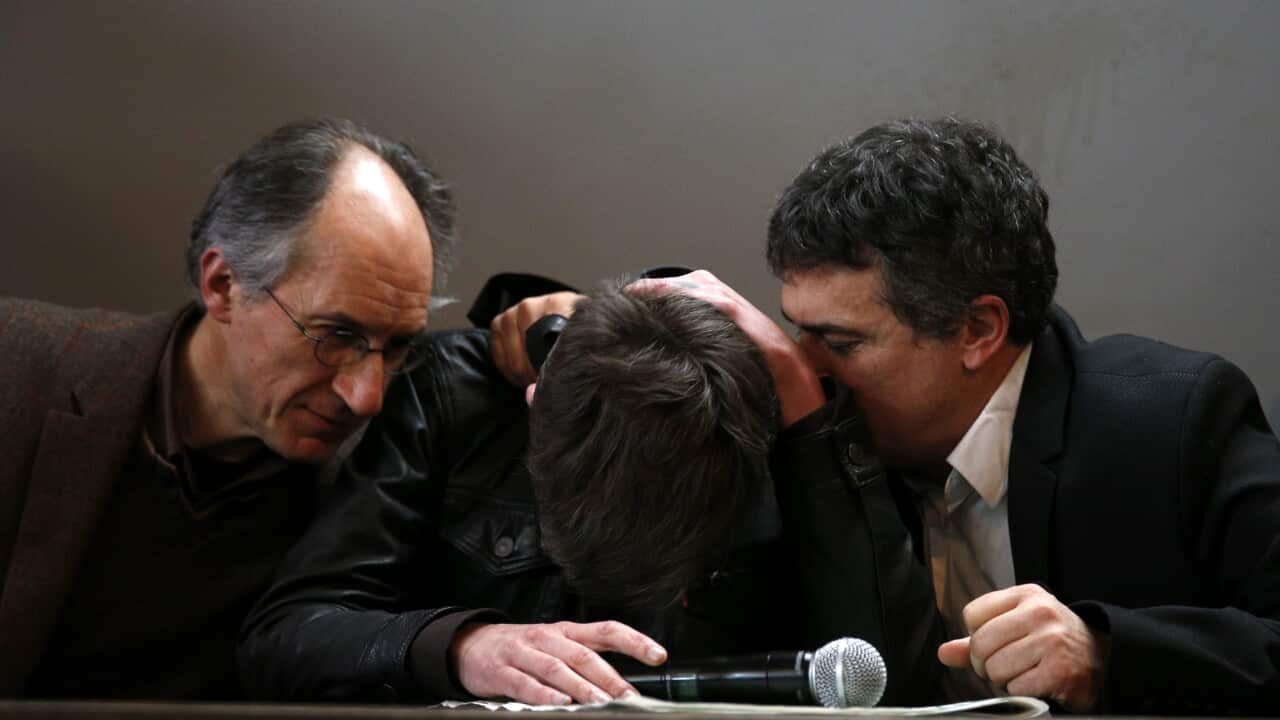
It is the first edition of the magazine since 10 people connected to the publication, including its editor, were shot and killed last week.
Media outlets in many Western countries chose to publish the front cover image but those in many Arab countries, and some African and Asian countries, did not.
The cover has sparked fierce debate online and while some have praised the editorial team:
Others have condemned it:
Ahead of the cover’s publication, Australian Iman Yahya Adel Ibrahim posted a series of guidelines to Facebook for Muslims on how to deal with the depiction of the Prophet:
"Muslims have to remember that by depicting the Prophet, no one can ever tarnish his image, as he is way beyond what is depicted, as Allah says, 'We have elevated your remembrance'," he said in the post.
"Engage with others about your feelings. Speak of your love for the Prophet and do not be shy to let your non-Muslims friends know your justified anger at the mockery that is made of our faith.
"As it is clear that the cartoons are to be published again, Muslims will inevitably be hurt and angered, but our reaction must be a reflection of the teachings of the one we love & are angered for.
"Enduring patience, tolerance, gentleness and mercy as was the character of our beloved Prophet (peace and Blessings be upon him) is the best and immediate way to respond."
Charlie Hebdo is expected to print up to three million copies of the issue and money from the sales will go to victims' families.
Could we have Charlie Hebdo in Australia?
The debate around Charlie Hebdo’s provocative cartoons has triggered discussion in Australia about the right to freedom of expression here and renewed calls for changes to the Racial Discrimination Act.
France is a republic and fiercely secular, meaning it does not recogise any official religion and does not collect data on its citizens' religious beliefs.
Freedom of speech is also indoctrinated in the country's constitution, unlike in Australia where it is established at common law and subject to legislation.
"While we’re rightly disturbed by events that are happening in France, we should not be drawing the wrong conclusions from that tragic incidence."
Proposed changes to Australia's Racial Discrimination Act were scrapped last year after a strong public backlash.
But Liberal Senator Cory Bernardi this week called for this debate to be reopened in the wake of the French tragedy.
Australian Human Rights Commissioner Tim Wilson also favoured changes to the law, saying yesterday that under current law, Charlie Hebdo cartoons would have faced censorship in Australia.
"What we do know is that at least some of the cartoons in Charlie Hebdo would have faced, certainly faced, complaints under this Act, may have been censored and certainly through legal processes and delay it would have been very hard for Charlie Hebdo to be published in Australia," he said.
"It's important to make it clear that section 18C doesn’t cover issues of religion but there are some religious groups that are the same as ethnic groups and therefore would be covered by the Act."
But Racial Discrimination Commissioner Tim Soutphommasane said the shootings in France should not trigger misguided changes to legislation in Australia.
"The law only covers racial vilification at the moment; it doesn’t cover religious vilification,” he said. “So while we’re rightly disturbed by events that are happening in France, we should not be drawing the wrong conclusions from that tragic incidence."
Minter Ellison Media Law expert Peter Bartlett told SBS that state laws would cause bigger headaches for Charlie Hebdo in Australia than the Racial Discrimination Act.
"More relevant are the state laws, which clearly cover religion,” he said. “So you would find many complaints against the magazine."
Watch the full report:
What did you think of the cover? Let us know in the comment section below or tweet @SBSNews.