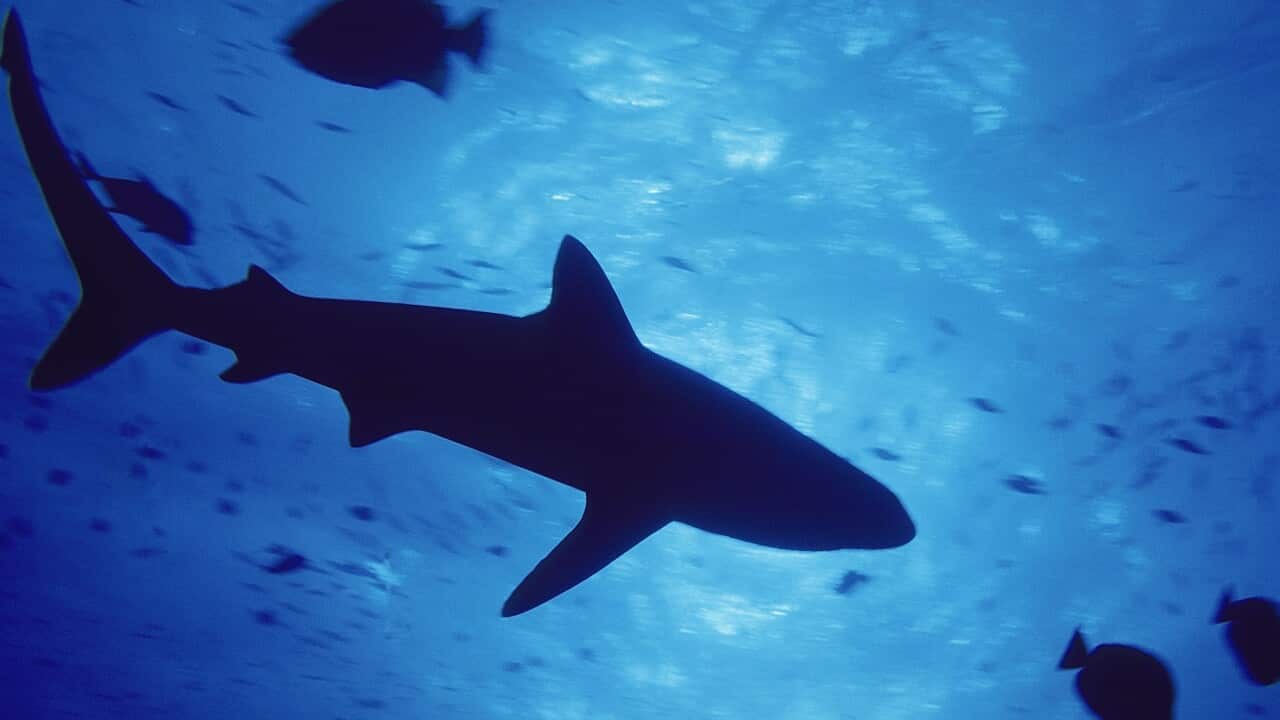
Three people die from shark attacks on average in Australia each year, despite intense media coverage that can make such attacks seem more frequent.
In 2015, shark attacks killed two people in Australia, while the year before saw five people dead after fatal shark attacks, data from the Australian Shark Attack File (ASAF) reveals.
This week shark attacks have again made headlines with a man losing a leg in Western Australia. He was in a critical condition in hospital on Wednesday morning.
Over the past five years, three people have died on average each year, while just one person died on average during the preceding 16 years, from 1995-2010.
News that makes sense
Your trusted source for staying up-to-date with the world around you. Get free daily news updates and analysis, straight to your inbox.
However, Australia had a smaller population in 1995 compared to 2015.
In the two decades between 1995 and 2015, Australia's estimated resident population grew from 18 million to 23.8 million people, according to data from the Australian Bureau of Statistics.
ASAF's John West wrote in 2011 that rising numbers of shark attacks in Australia were consistent with the global trend, as more people spent more time in the water.“The rise in Australian shark attacks, from an average of 6.5 incidents per year in 1990–2000, to 15 incidents per year over the past decade, coincides with an increasing human population, more people visiting beaches, a rise in the popularity of water-based fitness and recreational activities and people accessing previously isolated coastal areas,” Mr West said.
He noted shark attacks attract "a high level of media interest", despite being relatively infrequent.
Shark attacks are so infrequent that you are far more likely to be accidentally suffocated or strangulated in bed (eight deaths in 2014), or die from a fall involving a chair (26 deaths in 2014).
In the last decade, shark attacks have tended to occur around the population centres of Sydney, Brisbane, the NSW's north coast and Perth.
When shark attacks do occur, it is most often surfers who are the victims.
During the past 20 years, surfers were the most likely to be involved in a shark attack, according to the data from the Australian Shark Attack File.
The recorded numbers of 221 shark attacks that were fatal or resulted in injuries were mostly unprovoked between 1995 and 2014, with only 66 provoked attacks.Most incidents on the Australian Shark Attack File in these years were unprovoked.
Unprovoked attacks were more likely than provoked attacks to result in deaths during the past two decades, the ASAF database revealed.
Incidents where people were uninjured were the second most prominent, while fatal incidents were the lowest group.The figures in this article will be different from the information published on the ASAF webpage, where criteria is used to determine if an incident is eligible to be included. Criteria for that site include unprovoked attacks that do not involve fishing boats, among others. This article has included all attacks in the database since 1995, including provoked attacks and fishing boats.







