
Fifteen years ago this week two very different Australians representing the aspirations of very different communities signed a document outlining a shared vision for a better future.
One was Yvonne Margarula leading the Mirarr people, the traditional owners of large parts of Kakadu. The other was Peter Garrett, famous at the time for fronting Midnight Oil and president of the Australian Conservation Foundation.
Their names concluded the Kakadu Charter - a short document with a modest style that disguises its continuing significance.
The Kakadu Charter was refined and signed at a time of great stress for the Mirarr people, against a backdrop of concerted company and government pressure for uranium mining at Jabiluka.
Fifteen years ago, when this document was signed, the Mirarr were at the forefront of protest action escalating across Australia and around the world in opposition to the plan by Energy Resources of Australia (ERA) for a massive new underground mine on Mirarr land and perched atop Kakadu’s World Heritage listed wetlands. ERA was at that time majority owned by North Ltd.
News that makes sense
Your trusted source for staying up-to-date with the world around you. Get free daily news updates and analysis, straight to your inbox.
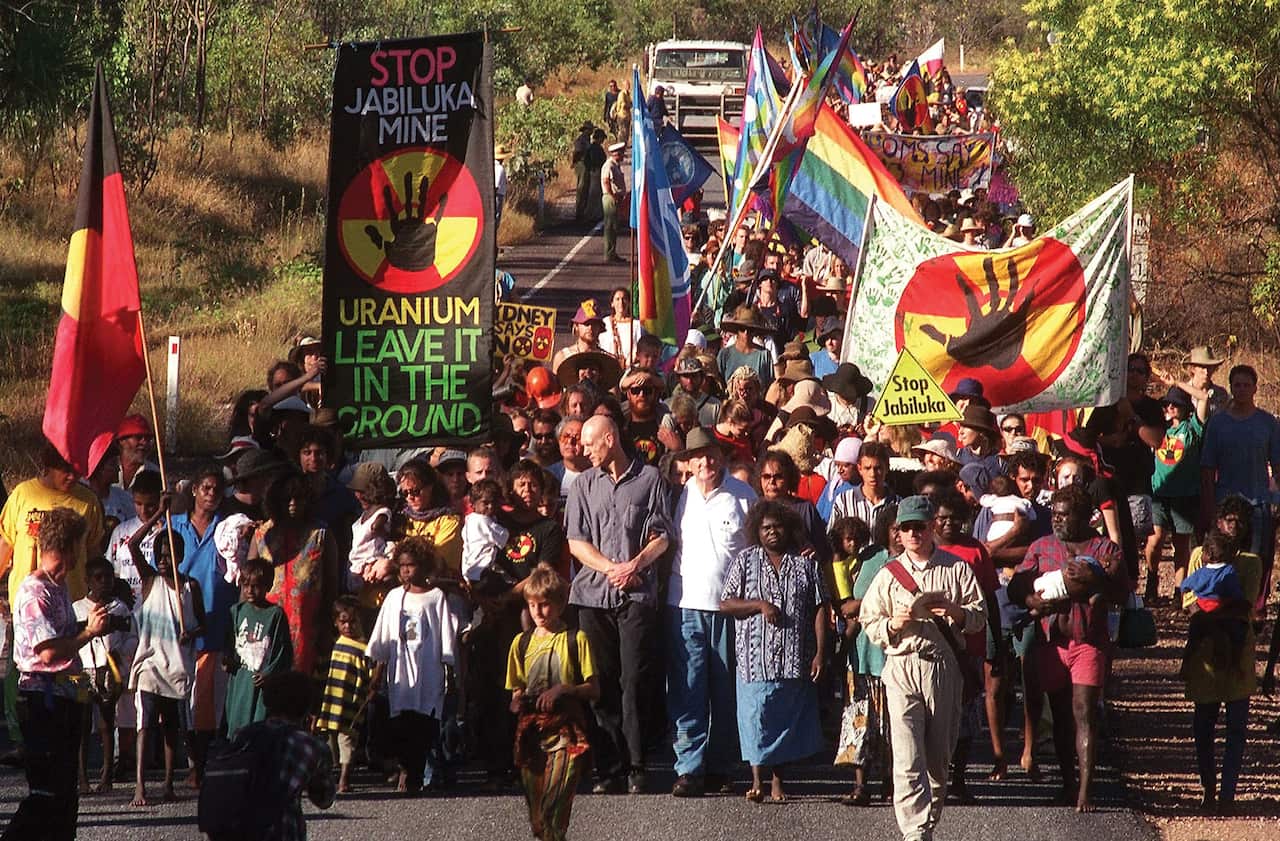
In 1998, more than 500 people were arrested for engaging in non-violent direct action over the course of a sustained blockade of the Jabiluka mine site.
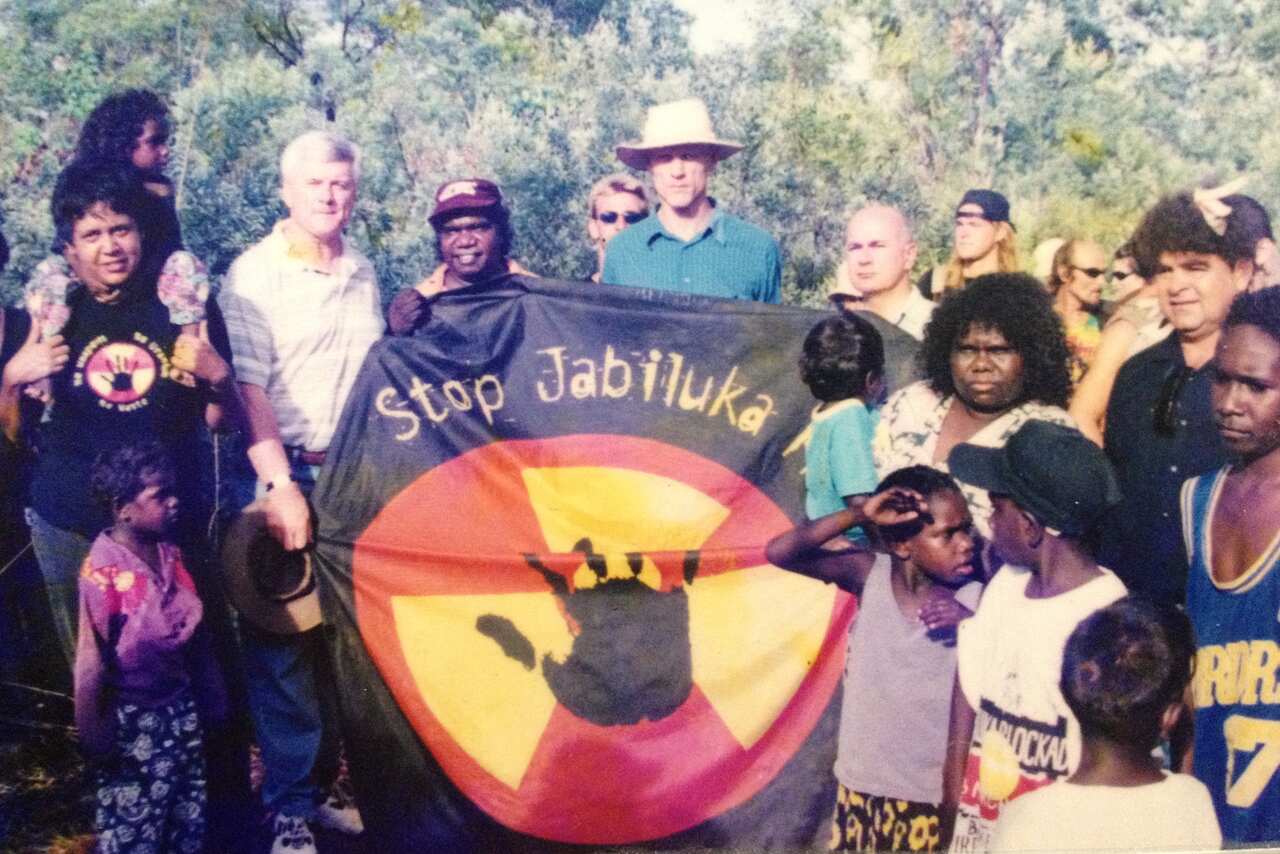
Many thousands took part in protests right across the country targeting the company, and hundreds were arrested. Company meetings bristled with security, campus groups divested funds, faith groups prayed and fasted, trade unions took solidarity actions, green groups saw red over yellowcake and internationally UNESCO’s World Heritage Committee saw fit to dispatch a scientific mission to investigate the potential impact of the mine as the clash between corporate and cultural values grew more heated.
That the long-term roadmap reflected in the Kakadu Charter could hold against such a clamour is a tribute to its architects.
The Charter is a simple document with a complex under-pinning. It acknowledges the importance of culture and country and captures the Mirarr community’s desire for a viable regional economy and the protection of the land that both sustains and gives meaning to life.
It recognises the significant adverse environmental and social impacts of uranium mining in the region and seeks to develop a cohesive community and a vibrant, sustainable and culturally appropriate post-mining future for the Kakadu region.
What started as opposition to plans for uranium mining at Jabiluka has grown into a powerful platform for a different and better way of doing business in Kakadu. ERA is now majority owned by Rio Tinto who have publicly vowed not to mine Jabiluka without the consent of the Mirarr. This significant improvement in circumstances was bolstered by the end of threatened uranium mining elsewhere in Kakadu when the former Koongarra Project Area was incorporated into the surrounding Kakadu National Park and permanently protected from mining.
The continuing need for such a co-operative approach in the Kakadu region is increasingly apparent. The clock is ticking for Ranger uranium mine with mining company ERA required to end all mining and processing by January 2021. The end of uranium mining in Kakadu is likely to be sooner than that - in June of this year ERA was advised that its parent company, Rio Tinto, does not support any further mining operations at the site.
In mid-October, after the Mirarr formally confirmed their support for the position taken publicly by Rio Tinto, ERA advised the Australian Stock Exchange that it respects "the views of the Traditional Owners and will undertake a review of its business in the light of their decision".
The challenge now facing ERA, Rio Tinto and the Northern Territory and Australian governments together with the Mirarr is one of comprehensive rehabilitation and facilitating the transition to a post mining regional economy – a vision clearly expressed in the Kakadu Charter.
The 15th anniversary of the Kakadu Charter is a good time for Aboriginal and environmental advocates to re-confirm our shared concern, action and effectiveness for the long awaited total rehabilitation and completion of Kakadu National Park.
Dave Sweeney is a nuclear free campaigner for the Australian Conservation Foundation and Justin O’Brien is the Executive Officer of the Gundjeihmi Aboriginal Corporation.







