
The eruption began with a fountain of lava stretching one kilometre in the sky, then an ash plume reaching three kilometres.
The show lasted 50 minutes, spewing ash plumes and lightning in what is called a “dirty thunderstorm”. Meteorologists say the phenomenon occurs when ash particles collide to create electrical charges, similar to the static generated when rubbing a balloon against your head.
No injuries were reported.
Sicilian photographer Marco Restivo overlapped five images to create one single photo showing the dirty thunderstorm.
News that makes sense
Your trusted source for staying up-to-date with the world around you. Get free daily news updates and analysis, straight to your inbox.
Restivo also created a timelapse video of the eruption using photos he took at an altitude of 1,800 metres.
He said the sheer size and power of the eruption is often hard to describe, with many expressing wonder at the phenomenon he has caught on camera.
“On Etna you are surrounded by a primeval environment and you can feel the earth alive - it's a really amazing experience,” he told the UK newspaper, the Express.
“People have been fascinated by the size of the eruption and many do not believe it when they see my pictures.”
The smoke, ash and sulphur dioxide cloud from the eruption could also be seen from space.
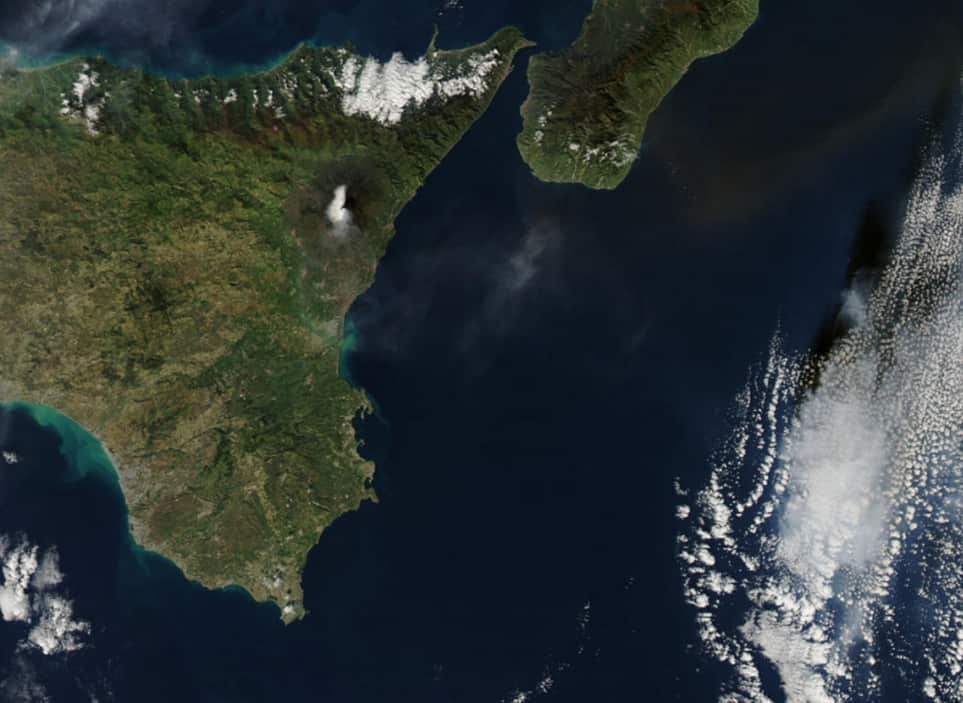
The cloud’s movement was captured by EUMETSAT's Meteosat-10 satellite from 36,000 kilometres above the Earth.
The remnants of the eruption, wisps of white plume, were also spotted by meteorologists.
The volcano’s geographical location in the Mediterranean Sea means it has longest documented record of continuous eruption.
Roman records from 122 B.C. suggest a particularly large and violent eruption caused widespread damage to the town of Catania on the coast, after blocking the sun for several days. Roman taxes were scrapped for a decade to assist the process of rebuilding the town.
The volcano lies near the east coast of the island of Sicily and stands at 3,329 metres in height.







