More than 80 per cent of state is drought declared and rural towns are being depopulated, with little or no work available.
Longreach is a vital hub for central western Queensland and its local government area is home to about 4,000 people.
If the farmers have no income, then the drought hits the main street just as hard as the land.
"With the lack of cash flow that's coming through, about $2m per annum that's not coming into the town that usually would, that's leading to roughly 60 per cent downturn in business turnover and 40 per entc lay-off of staff," said David Phelps, chair of the Western Queensland Drought Appeal.
The charity of others is keeping many in the town going, including $700,000 in donations to the appeal being funnelled into local businesses.
"So the Western Queensland Drought Relief cash cards, they've got $250 on them that we send to farming families to spend locally," Mr Phelps said.
"Every business is showing signs of stress and hardship.
"In general our business community feels they are not being listened to or considered by government agencies to the extent they should be.”
Related reading
Farmer drought loan schemes under fire
Mr Phelps believes Longreach has lost about 15 per cent of its population.
Traffic is thin on the streets, but the show must go on and the talk is of diversification.
Former grazier Richard Kinnon has moved from the land into town, confident he can beat the four-year drought with a tourism venture.
“We do get dry spells and we realised we had to diversify, and we diversified into tourism,” he said.
“Our cattle and our sheep are our hobby now, to be honest with you. This here is our cashflow.
“This is allowing me to stay on my land and do what the seasons allow me to do with it.”
Kinnon & Co offers paddleboat rides on the Thompson River, Cobb & Co coach rides and a old pub converted into a cafe, steak house, gift shop with a replica of a old-time country tent show out the back.
“Free tickets today, free tickets today,” spruiks Mr Kinnon in a ringmaster costume on the main street.
“We're going to show you three things out the back here you'll see nowhere else on this planet.“
The drought of the 1960s saw outback Queensland turn to tourism for a second income.
Longreach boasts the Qantas Founders Museum and the Australian Stockman’s Hall of Fame, attracting grey nomad tourists and hundreds of millions of dollars in trade to the region as a whole.
In town, most businesses are small family run enterprises and the tourist trade will never replace the livestock industry out here.
After migrating from Lebanon, Gaby Janho has cut hair for 45 years in Longreach and witnessed the ups and downs.
“This is the worst drought I've seen, thank God for the tourists,” he said.
“It used to be a thriving town in those days, a lot of shearers, cafes on the main street. In those days every weekend the cafes were full.
“The government hasn't done anything for small businesses, we're both in small businesses,” his client adds.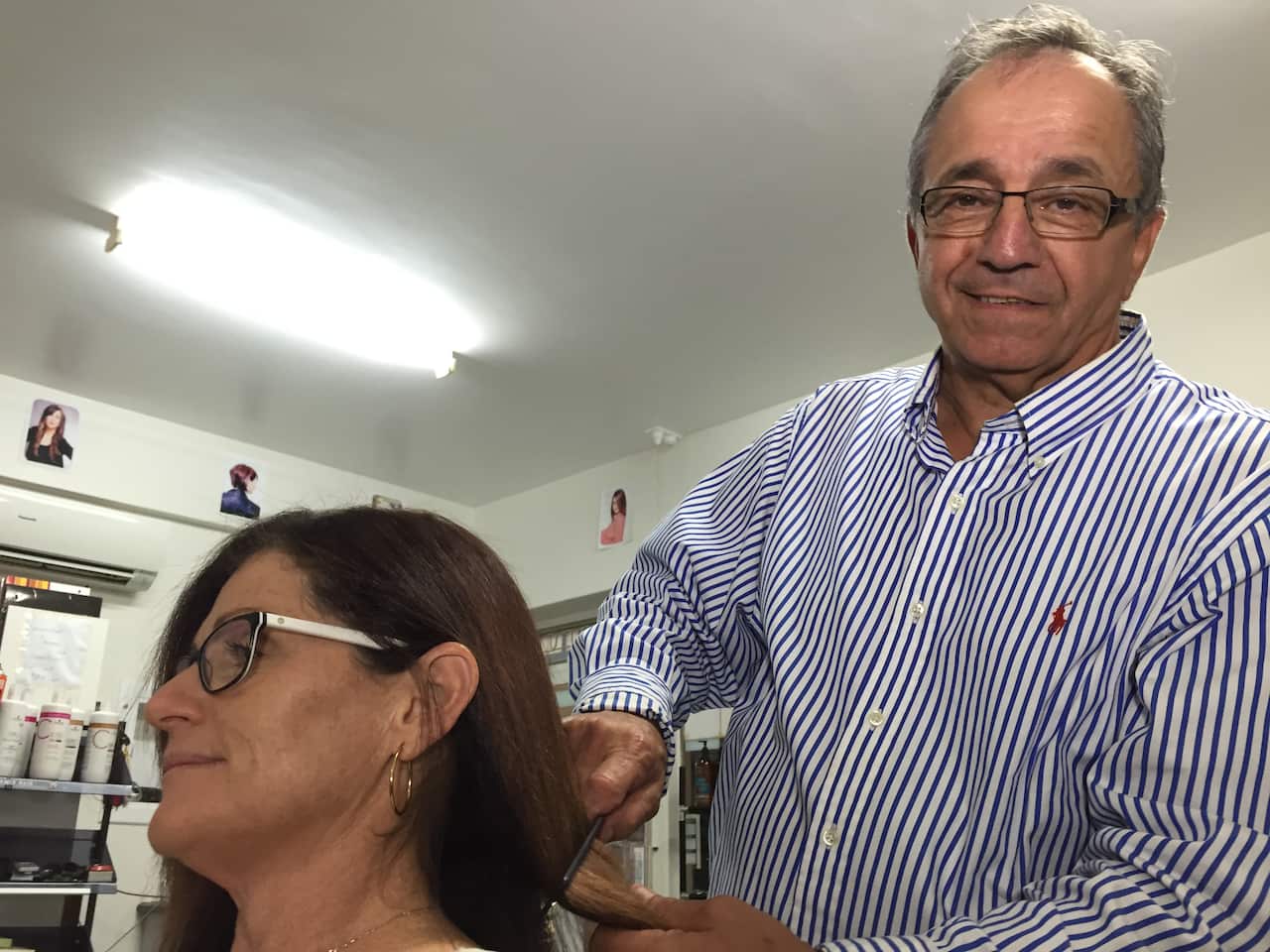 Mr Janho also blames deep public servant job cuts in Longreach under the previous Campbell Newman Liberal-National Party state government.
Gaby Janho says the drought is the worst he has seen. Source: Stefan Armbruster SBS
“They took 70 families from town and it makes it worse,” he said.
The Queensland government has funded one financial advisor to help Longreach businesses but thinks more help is needed.
“If small businesses aren't assisted right now, they're going to be more impacted into future,” said Russell Lowry from the Small Business and Individual Financial Counsellor program.
“As towns continue to suffer and reduce population, the population suffers further. It’s a snowball effect.
“As they lose population, they lose services and population. As they lose population, they will lose services.”
“It is going to be a struggle for a while longer, even if we do get rain. It’ll take three four years to restock and for money to come into town.”
Share


