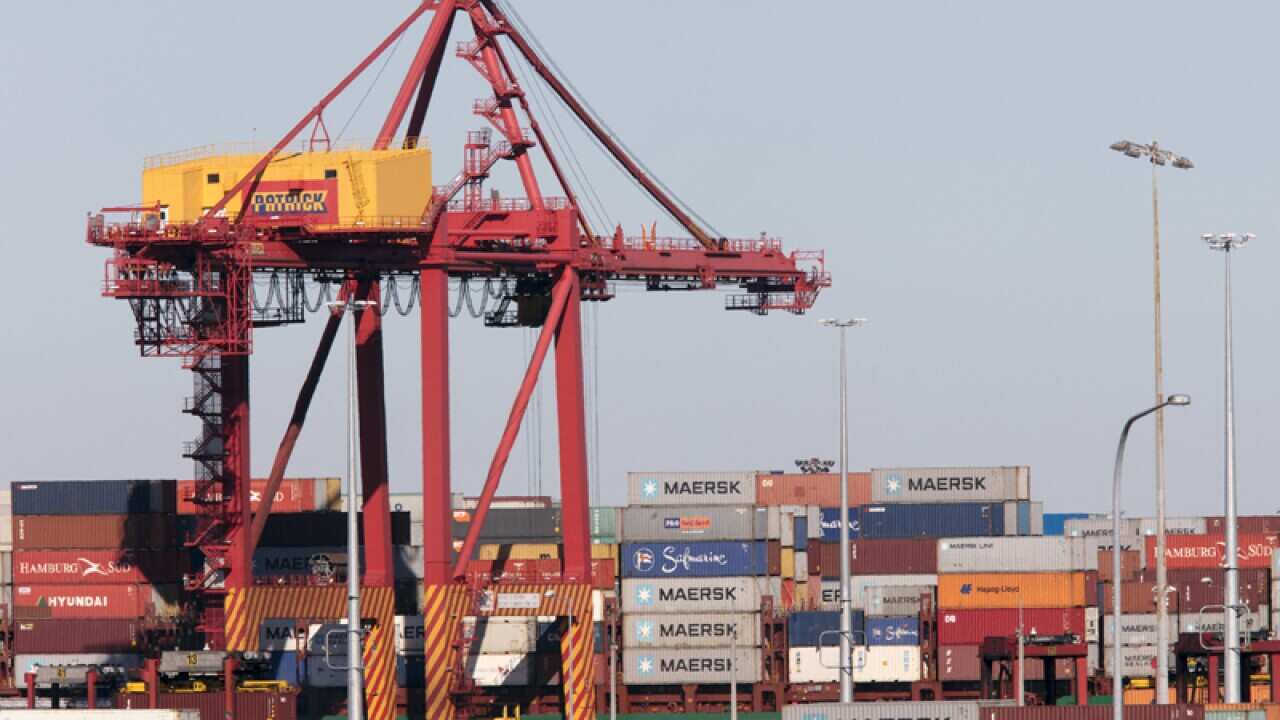
Cyclone Debbie caused a sharper than expected fall in coal exports in April, which is likely to weigh on Australia's economic growth in the current quarter.
Australia's trade balance narrowed sharply to a surplus of $555 million in April, as the the coal sector, the country's second largest export earner, was hit hard by the tropical cyclone.
Economists had expected the surplus to ease to around $2 billion in April, down from $3.1 billion in March.
Exports fell by $2.8 billion in April, or eight per cent, on a seasonally adjusted basis, dragged down by a 45 per cent slide in the value of coal exports after mines, rail lines and ports in Queensland were closed when Cyclone Debbie hit the east coast in late-March.
Imports were down $171 million in April, or one per cent.
News that makes sense
Your trusted source for staying up-to-date with the world around you. Get free daily news updates and analysis, straight to your inbox.
"While we had expected Cyclone Debbie to have an impact on coal exports, we underestimated its effect for the month of April," Citi analyst Josh Williamson said.
He expects a moderate rebound in coal exports in May, but said a full recovery may have to wait until shipments are back to full speed in June, or even later.
Exports in real terms fell 1.6 per cent in the first three months of 2017, which contributed to the economy's growth slowing to 0.3 per cent in the March quarter.
The sharp fall in mining exports in April is likely to further increase concerns about the rate of economic growth in the June quarter.
"While today's weakness should prove temporary and volumes will rebound in May/June, we expect these disruptions will have a non-trivial negative impact on net trade in the second quarter," JP Morgan economist Tom Kennedy said.
Mr Kennedy is forecasting GDP to increase 0.4 per cent in the June quarter.
Capacity constraints in the coal sector will limit the rebound in export volumes, meaning output lost in April is unlikely to be recouped in the near term, he said.
There has also been a steep decline in both iron ore and coal prices since March, he said.
The worse than expected trade numbers caused a temporary fall of nearly a tenth of a cent in the Australian dollar, but it has since recovered to remain at around 75.5 US cents.







