SYDNEY, NEW SOUTH WALES - NOVEMBER 18: FFA CEO David Gallop (R) welcomes former Young Socceroo Captain Peter Raskopoulos during the 2016 Football Federation Australia Hall of Fame Induction Ceremony at the FFA Offices on November 18, 2016 in Sydney, Australia. (Photo by Brook Mitchell/Getty Images) Credit: Brook Mitchell/Getty Images
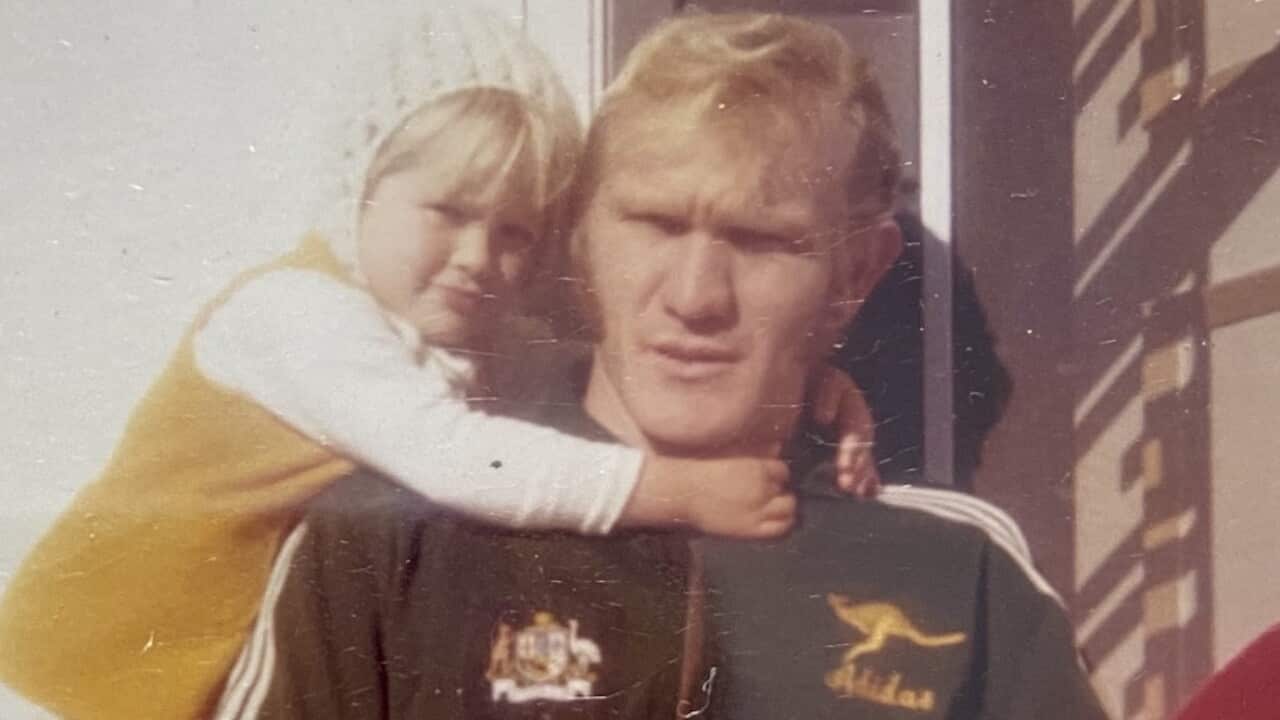
Peter Raskopoulos became the youngest captain in Socceroos history, wearing the armband at a time when the world game was dismissively labelled "wog-ball." Today, Peter reflects on identity, belonging and community pride. He explores how being raised by Greek family that fled war-torn Europe shaped shaped both his life and his love of the game. He also recounts an experience of discrimination during the rise of Australia's national youth team, and reflects on the path that led him to make history as the youngest captain of the Socceroos.
Peter Raskopoulos became the youngest captain in Socceroos history, wearing the armband at a time when the world game was dismissively labelled "wog-ball." Today, Peter reflects on identity, belonging and community pride. He explores how being raised by Greek family that fled war-torn Europe shaped shaped both his life and his love of the game. He also recounts an experience of discrimination during the rise of Australia's national youth team, and reflects on the path that led him to make history as the youngest captain of the Socceroos.
The captaincy of the 1981 Australian youth team was taken off me because of my surname, because they thought it'd be good and broaden the game not to have a 'wog' as the captain... It really affected me in a way because I was a kid, and I'd seen racism and people call people 'wogs' and 'olive' and all these other things around me, but never directly to me. And soccer, my love, was the first time I personally saw racism.