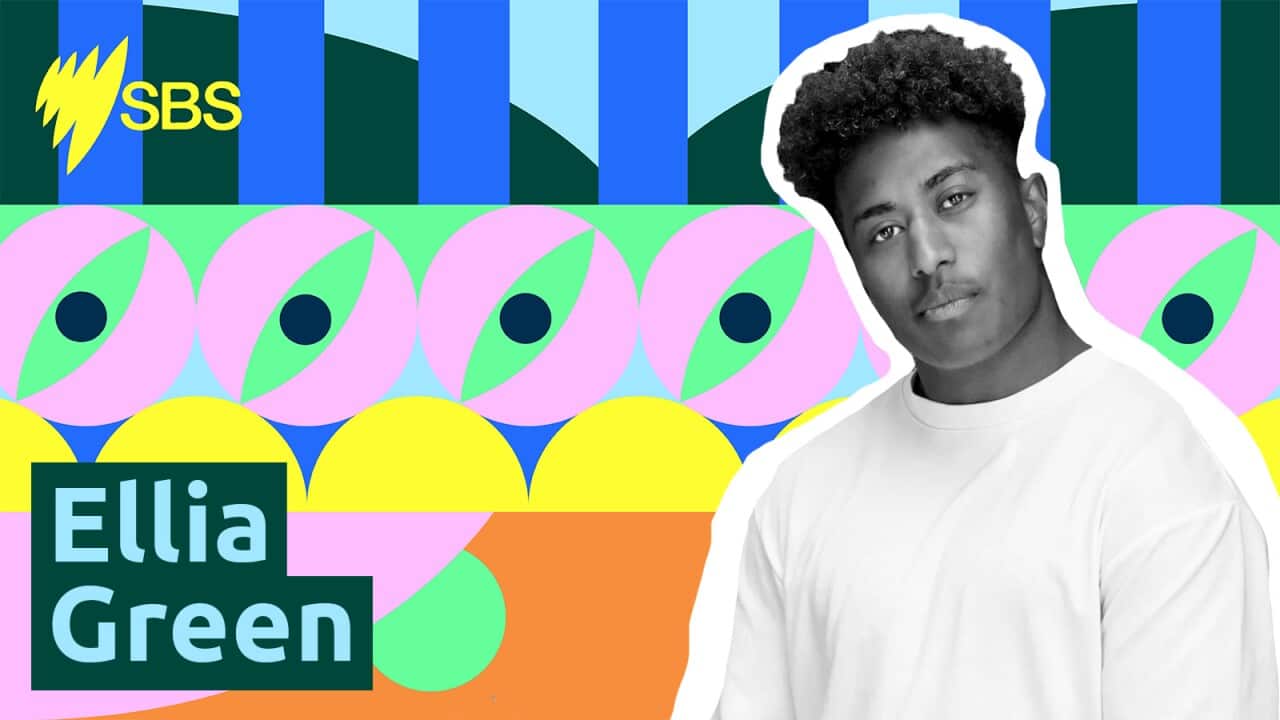

All eyes were on Ellia Green when he won gold at the 2016 Rio Olympics with the Australia rugby sevens team, but there was only person he needed to know was watching. In the final episode of this first season of Seen, Yumi Stynes speaks to the first Australian Olympian to come out as a trans man, Ellia Green, about his upbringing in Fiji and Australia, his journey to the Olympics, and the women who helped him feel seen.
Adopted as a baby by a Polish woman named Yolanta Green, Ellia Green had a deep desire to return the love and gratitude he felt for being chosen as her son.
Mum would be watching on the fence and the whole race, I watched her. I didn't even look straight. And it happened to stay with me as I grew older. My coach even said to me, “Eli, do you realise that you run with your head slightly turned to the right all the time? Why aren't you running with your head straight?”Ellia Green
In this final episode of Seen, Yumi Stynes speaks with rugby sevens player and Olympian Ellia Green about winning gold for his mum and being the first Australian Olympian to come out as a transgender man. Ellia talks about the life-changing moments of being seen by his Fijian nanny and his baby daughter.
Hosted by Yumi Stynes, Seen is a podcast series about cultural creatives rising to excellence despite arriving in a role-model vacuum. Hear from trailblazers like scientist Professor Veena Sahajwalla, journalist Narelda Jacobs, activist Hannah Diviney and more, about the transformative moments they felt seen.
Follow Seen in the SBS Audio app, Spotify, Apple Podcasts or wherever you listen to podcasts.
Host: Yumi Stynes
Created by: Bernadette Phương Nam Nguyễn
Executive Producer: Kate Montague
Producers: Bernadette Phương Nam Nguyễn and Cassandra Steeth
Junior Producer: Alison Zhuang
Sound design and mix: Ravi Gupta
Theme music: Yeo
Art: Evi-O Studios
SBS team: Caroline Gates, Max Gosford, Joel Supple
Clips featured in this episode:
Olympics 2000, Channel 7 network
Olympics 2016, Channel 7 network
Transcript
(Theme music building)
Ellia Green: I feel like I was never physically strong enough to protect my mum in these circumstances, being physically incapable to protect my mum is something that just, like, haunted me for a very long time.
Yumi Stynes: Seen is a podcast about the importance of being visible - of being seen, when people like you don’t exist in the mainstream.
For some, that can mean being seen and embraced by the medical fraternity and the patients you serve. For others, it could be writing books that are read by the very people they’re about, winning awards and being accepted as a literary giant.
Or it could mean something different: something closer to the heart and way more personal.
On today’s episode, we’re going to hear from an athlete who needed to be seen by three people, his nanny, his daughter and his mother.
(Music stops)
Stynes: And a warning, this episode talks about domestic violence and suicidal thoughts.
Green: I'd go to visit at the hospital, and my brother and I would, you know, bring her flowers and everything. And that kind of never stopped because she had so many health issues after that, because of the environment that we had at home with her ex-partner. For seven years, mum was in a domestic violent situation. He was very violent with her.
Stynes: Ellia, do you think that influenced your desire to be strong?
Green: Massively.
Stynes: Yeah.
(Theme music)
Stynes: Ellia Green is a retired professional Rugby Sevens player. In 2022 Ellia became the first Olympian to come out as a transgender man.
Like a lot of exceptional people, his origin story is fascinating. He was born in Fiji to Fijian parents who were experiencing hardship. A white Polish woman, called Yolanta, and her husband, author and rally car commentator Evan Green, were living and working in Fiji at the time…
Green: It wasn't like a plan to adopt me at all. She was really just helping my birth mother. She wasn't there to take ownership of her baby. It was just, I want to help you to raise your baby. So my mum went to the supermarket and bought her everything that she'd need. Gave her some money just to, you know, to start her off, to give her the confidence to keep her baby. (Mmm) And um, she said to my mum, I'm not going to keep the baby the baby will go to an orphanage.
And I think my mum just had a breakdown (chuckles). And she said I can't, I can't let this happen. I'll at least look after your baby until you've recovered. And I'll bring the baby back to the village. And so that's exactly what she did.
Green: And then it was a very emotional moment of when we went back to the village because my dad actually took a video of the whole thing. And it was just an emotional, emotional moment. Where there- it's just me getting passed to, you know, the Fijian family back to my, my Polish mum and back and forward, back and forward. And then the last pass was to my, my Polish mum Yolanta.
When I have seen it, I've watched it with my mum. And I guess it's just, I can't help but think how lucky I am. I sometimes think like, wow, why me? Why did I get chosen? We used to say all the time, like, we were destined to be together. And I like and it might sound a bit corny, but I really do think like it was meant- everything was meant to happen the way it did. And we found each other.
Stynes: I’m Yumi Stynes and this is Seen, a podcast about trailblazers, who might not have had a role model exactly like them… but who carved out space and rose to excellence anyway.
We start by acknowledging the Traditional Owners of the land on which we record, whose culture includes a rich tradition of playing games and sporting excellence, the Cammeraygal and Gadigal people, and their Elders past and present.
(Music fade out)
Stynes: Before we get to those 3 important people Ellia Green needed to be seen by, let’s talk about one person he SAW - as an impressionable child, watching the Sydney Olympics in the year 2000.
(Archival sound: 2000’s Olympics commentating of Cathy Freeman winning 400m race)
Green: I remember watching it with my mum and my brother and it was just silence because there was just no words for that performance and how and the strength and the power that she- that she shows in her love for her culture, it was unbelievable.
Stynes: Growing up, Ellia wanted to be like the athletes he saw on television.
Green: I told my mum that I was going to go to the Olympics. I'm going to run for Australia. And I'm going to win gold. My whole room was like a gallery of who I was going to become. And I had all these pictures of athletes that really inspired me. But the one thing they had in common, is that they were all really strong black athletes.
Stynes: And of course the main athlete up on the wall was Cathy Freeman.
Green: She's a massive, massive driver in why I was just so focussed on getting to the Olympics like Cathy.
(Music)
Stynes: Before Cathy Freeman, before the turbulent household, before wanting to be like the strong athletes he saw on television, Ellia had an idyllic upbringing in Fiji.
Ellia Green’s mother, Yolanta, had a deep love and respect for the Fijian culture. At home she would speak Fijian and made sure that their family was engaged meaningfully with the community.
She also understood that Ellia and his brother, who was also adopted, needed living, active connections with Fijian culture. One woman in particular helped shape Ellia’s connection to his Fijian roots, he calls her Na.
(Music fades out)
Green: She initially was a nanny to us in Fiji. My dad wasn't too well and then he was also writing his book and so my mum needed some help with us obviously had two babies. So she hired this beautiful nanny, and her name is Joanna. She taught us how to speak Fijian at home. She took us into the village quite regularly. Every time we were in the village we were only allowed to speak Fijian. She bought us our own personally made afro combs. Doing Fijian dances at home, singing in Fijian, everything. So the importance of keeping our culture strong. So nana became a huge part of our life from the very beginning and she still is.
(Music)
Stynes: During this time Evan’s health began to deteriorate and he was diagnosed with cancer. After five years in Fiji, Ellia’s family packed up and moved to the Central Coast in New South Wales. Shortly after Evan passed away.
Dealing with grief, Yolanta also had to adjust to being a solo parent and the culture shock of their move. At the time, most of the Central Coast was typically made up of white nuclear families. So a white woman, with two Fijian kids, attracted scrutiny.
Up until this point, Yolanta hadn’t really explained to the kids that they were adopted. Ellia and his brother were like – “this is just our normal.”
(Music fade out)
Green: One of her girlfriends said to her, “Yol, you got to tell the kids. Like, it's getting ridiculous. Like, they're going to go to school soon and then there'll be so many questions asked. You've just got to, you've just got to tell them.”
So she sat us down and I remember this so vividly. She had a book, the parents in the book were white and the kids were brown and her way of explaining it to us was through the book. And then she said “so I didn't birth you out of my body, but I know that we were destined to be together. And I'm lucky to be your mummy.” And, like, in a very simple way and the book, that's how she explained to us.
Stynes: Do you remember your reaction?
Green: Yeah, I was like, cool. I didn't really like, it didn't change anything (Laughing).
Stynes: Cool, what are we watching on TV tonight? I love that.
Green: Like, what's for dinner? Yeah. It wasn't really, like, a big deal.
Stynes: But at school, it was a big deal.
Green: My most memorable moments of experiencing racism at school was probably just people making comments about my hair, my skin. Why is my mum white and you're black? You know, all the things that kids can come up with.
Stynes: Ellia was assigned female at birth but at 5 years old was presenting quite masculine, which meant that at school the other kids’ teasing didn’t just end at racism.
Green: Most like a lot of people that I hadn't met before, thought I was a boy. And I used to get really upset about it, because in primary school it was used as kind of like a bullying tool from other kids. I can remember this time when this boy forced me into the boys toilets and said, that's where you belong in the boy's toilet. And then he pushed me in there and then I was really distraught. (Mmm) And I went and found my brother. And then my brother beat him up in the middle of the school oval (Laughing).
Stynes: Ellia would come home from school and tell Yolanta the hurtful things the kids would say. And Yolanta would write up sassy comebacks for Ellia to say to those kids. She was relentless in her allyship. And Ellia wanted to return that energy.
They say when it comes to success, goal-setting is everything.
Green: I told my mum that I was going to go to the Olympics so that I could buy her house. And I wanted to buy her dream car. That was like my goal. I just wanted mum to have everything. I wanted her to have everything from, like, shit. ‘How am I going to be rich when what I need to do? Okay. You need to be really good at something. Well, sport, I'm not really that academic at the moment. I'm not doing that great at school. I'm going to be a really great athlete.’ And so that's what inspired me to want to make the Olympics.
Stynes: Ellia wanted to run for Australia. On his bedroom wall he would write his goals, his running times and hang up pictures of all the athletes he looked up to. On this wall you’d see strong black athletes like Carmelita Jeter, Asafa Powell, Maurice Greene, Patrick Johnson and of course Cathy Freeman.
Green: And like the physical build in them was something that I wanted to work towards all the time. From a very young age, I just wanted to become the most strong, like strong, masculine version of myself that I could be.
Stynes: What does being strong mean to you? What does it… What are the connotations of being strong?
Green: Well, in a physical sense, to me, it was like I have to be able to lift heavier. I can lift heavier than that. I got my goal yes, but I'm going into 20 kilos more on the bench. I'm going to do more and more and more, nothing is ever enough.
(Music)
Stynes: At this point the strong black athletes on Ellia's walls were just people to look up to, admire and work towards their physiques. But Yolanta had a way with making dreams come true and for Ellia’s 10th birthday, he got to meet the one and only Cathy Freeman…
Green: Mum hadn't really told me that we were going to meet her, we just went there and I was like, ‘oh, I'm so excited to watch a run.’ And then Mum said to me at the end, “bub we're going to go to the warmup track.” And then I see Cathy walking towards us, and I was just like, my whole jaw dropped. Think I - I thought I was going to faint. (Laughing) And she gave me a poster with ‘Happy Birthday, Ellia. (Aww) I hope all of your dreams come true,’ signed. And then it was a big picture of her with like First Nations art in the background and a big Nike tick, because that was her main endorsement at the time. And it was on my bedroom wall and I slept underneath it because I was just like I was, it was never leaving me. (Laughing) But I'm like, How'd my mum manage to do this?
Stynes: I never met Yolanta - but the phrase “tiny, but mighty” comes to mind…
(Music fade out)
Green: You know, she would really, really, really have a lot to say. Like I won this one tournament that I was- I'm pretty traumatised by. It was like a big event for like, for that time of the maybe 16 or something. I think I was talking to some of the other athletes in the warm up and like I had my headphones on. I think I got silver. My mum in the car home gave me the biggest blow up, lecture of my life.
She said “you would have won if you were actually focussed. You skip around like a fairy and you're not focussed. You're talking to all the other athletes like you're not really there to achieve what you're there to achieve.” Everything she was saying is very valid, but then she snapped my headphones and then threw them out the window (gasp) and told me to walk home. (Laughter) Yeah. (The window?) Yeah. My brand new headphones I got them for my birthday or something. Yeah, she snapped them in half and threw them out the window. (Laughing) So… And I'm not trying to demonise my mum at all cause she's like queen, but I'm just saying this was the kind of, I guess drive behind why I just couldn't not do well. I just knew that she had so much faith in me of being better. I don’t know if it was because, I just feel like she just gave me the world so I want to show her that she made a good choice (Laughing).
(Music)
Stynes: So, you know, this podcast is called Seen and Ellia, you needed to be seen by your mum.
Green: Absolutely.
Stynes: So much.
Green: Yes. I was a little show pony.
Stynes: You were but a show pony to an audience of one.
Green: Mum would be watching like on the fence. And I, the whole race, I watched her. I didn't even look straight (Laughing). And it happened to like stay with me as I grew older as an athlete. Because sometimes, like my coach even said to me, “Eli, do you realise that you're- you run with your head slightly, turn to the right all the time. Even like, and so why aren't you running with your head straight?” And this was like this took, like really stuck with me for years.
Stynes: Because you were checking to see if she was watching?
Green:Yeah! (Oh wow!) It stuck with me that I always had to like tilt my head a bit, but it was just because I was always looking for my mum in the crowd.
Stynes: And the thing is… Ellia’s mum was always there. She never missed a meet.
When Yolanta was first diagnosed with breast cancer when Ellia was 10, it was one of the scariest experiences of his life.
(Music fade out)
Green: Seeing her lose her hair and everything and just seeing her so sick because the treatments back then were just like really harsh. The chemotherapy then was pretty brutal. Just throughout that whole process, it was yeah, it was really seriously traumatic. But at the same time, I loved caring for her.
Stynes: At this point Yolanta had re-partnered, but Ellia wanted to be her carer.
Green: I'd make her meals, when she was in bed. I'd go to visit at the hospital, and my brother and I would, you know, bring her flowers and everything. And that kind of never stopped because she had so many health issues after that, because also of the environment that we had at home with her ex-partner. He was very violent with her. It was very physically violent with her and emotionally and financially everything. For seven years, mum was. Yeah. In a domestic violent situation. (Mmm) Our household was. (Mmm) Yes. That was between the ages of about six to twelve. And then we ended up running away to Melbourne.
Stynes: Ellia, do you think that influenced your desire to be strong?
Green: Massively. (Yeah). I think like something that I've that I guess the trauma that I'm working through all the time is that and thinking about is I just, I feel like I was never physically strong enough to protect my mum in these circumstances, which happened weekly. Being physically incapable to protect my mum is something that just, like, haunted me for a very long time.
I think of that sometimes when I was playing rugby. (Mmm) I would imagine that I think of everything that he did to my mum and I use that when I'm going into contact, which is really bad. But like, somehow, I'm not an angry or a violent or aggressive person at all. But when I think of that kind of thing, it brings out a different side to me, which is kind of what gave me like a bit of fire. So in terms of being in the gym and wanting to also be physically strong was helping with my mental health because of the trauma that happened throughout all that as well.
Stynes: So as somebody who's still in high school, there's a lot of focus and attention on fitness, diet, which can be tricky for a teenage person. And also just your body and your physical appearance. Was dysmorphia starting to rear its head for you?
Green: Yes, not as strongly as it did as I got older. I didn't actually want to wear a shirt ever, especially when I was playing with my brother. I guess I started to realise that my brother and I are quite- are we are different in our anatomy. Like I was like, okay, we are, we are definitely different, but I don't feel different to you. But then I was starting to realise as I got older that, you know, my body is changing and I am different.
I can remember, like I really struggled with going through puberty because that meant my body was changing and I just I didn't know how I felt about it. It was a bit alarming. But I had really like I just kept it to myself, like, because, I mean, how can I possibly have this conversation? Like, it- it's doesn't feel safe at all (Mmm).
It wasn't something that I could explore because it's not something that was really been talked about. I didn't see it. It's not something you talk about at school. I don't even remember seeing much like many different gender identities on T.V. at that time. Like, yes, it was a lot of the like the queer community was quite talked about. And my a lot of my mum's friends were gay, but it wasn't something often that I saw, like trans people when I was a young kid.
I have no idea how my mum would react to this. Like at the time that's what I was thinking. But as an adult I learnt about my mum that she loves me no matter what, regardless of who I am or what I'm doing. She's, she's always loved me, for me. And one thing she said to me was even if you weren't even if you weren't my child, you're someone that I would want to be best friends with. And it's the truth.
Stynes: When Ellia graduated from high school, things were on the up. Yolanta had survived breast cancer, Ellia got a running coach and was going to meets. He also began his degree in nursing, inspired by his mum.
So when his cousin called and said “hey do you want to try out for the rugby sevens team?” It was like asking someone who never sang to join a band. Yes, he was a great runner - but rugby? He barely even knew the rules!
Green: And I went there with my hat backwards, I don't know what I was thinking. Like, a little cool kid that, that's just here for, here for the lols. (Yeah) Here for fun.
Stynes: So weeks later when Ellia receives a letter in the mail saying something along the lines of “hey we're interested in you to come to the next stage for the final selection to join the squad....”
Green: I was like, What? I almost fell off my chair. And so did my mum. And then that's when mum said, Well go get it, bub. Like this won't happen. You know, these opportunities won't come up every day and you know, worst case you don't make it, you go back to training, that's it.
I was pretty shocking. Even to this day my like one of my coaches, Tim Walsh, he says like it was actually hilarious (laughing) to see you when you first came to sevens cause. Yeah. It was-
Stynes: You didn't know what you were doing?
Green: No. Absolutely not.
Stynes: No. Amazing! But so what happened? You got through?
Green: Yeah, I got through.
(Music)
Stynes: It took a while for Ellia, formerly a solo artist like… Cathy Freeman for instance, to understand the rhythms of playing a team sport. But through work and grit and fitness regimes that frankly, I find unimaginable, Ellia and his team qualified for the 2016 Rio Olympics.
Green: That was a dream come true. It was something that mum and I had manifested for so long. So to be in that moment, in that stadium, in that village, even just at the airport going to Brazil, (yeah) it was just like a little I felt like a kid again. I felt like a little kid getting the uniform. Oh, my gosh. (Laughing) I remember unpacking it all, thinking it was Christmas. Like it was unbelievable. The excitement you couldn't wipe the smile off everyone's faces. (Really?) I could see how much all of this has paid off. But this was only going to be the beginning of it. (Chuckle) Winning the gold was going to be the real like cherry on top. (Mmm) And we were only going for that.
(Archival sound: 2016 Rio Olympics, Australian Rugby Sevens winning gold)
Stynes: When you're playing that game. Did you know that you had won the gold medal when the siren sounded?
(Music)
Green: No. I knew it was very close and it was, it was going to be the difference between like one try. And so I knew if I looked at the score, it would just frazzled me. So I just decided not to look at it at all until the whistle blew. So when it was a blew and I looked on the- I didn't even actually look at the scoring. And I just looked at the reaction of my team-mates. And that. And then I looked at the score and I was like, (gasp) Oh my God. And then I just looked for where my mum is, because she's wearing this massive yellow hat and I just had to look for her.
Stynes: And was that a moment of being seen for you Ellia?
Green: It was. It was being seen by my beautiful mummy and also not just that seen by the world. (Mmm) It was a massive, massive like step for rugby sevens at that stage. You know, being the first time in the Olympics. It was a massive impact and it to be seen like all over the world, in that moment in our game.
(Music fade out)
Stynes: During this time Yolanta had been diagnosed with cancer again, this time in her lungs and eventually her brain.
Ellia finally winning gold at the Olympics with his mum watching in the crowd, was a moment to be utterly cherished.
Green: The thing that I'm most grateful about, that rugby gave me, was the happiness that it brought my mum. And I know I talk about my mum so much but it's, she's such a huge part of me. She's my heart and soul. And from the beginning of my career to the very end when she passed away, she absolutely just lived for those moments of me running out in the field. She just, she didn't miss a beat. (Mmm) And I think that, like, that just never changed from the time that she first saw me run to the time she was sitting in the crowd at the Olympics, like it just never changed her, her joy watching me run on the field, on the track everywhere.
Stynes: In 2018, Yolanta passed away. Shortly after, I remember seeing Ellia on social media, talking about not getting selected for the next Olympic team. And it was pretty raw. I’d only met Ellia once at that time, but keenly saw these feelings of rejection and hurt.
Green: They said to me that I wasn't the same athlete anymore. And that there's other players that are better than me now. It was very hard because I really felt like I let, I let my team-mates down. I let so many people down and I let my mum down like, cause I couldn't help but think like, oh, my goodness, what would she say to me right now? (Mmm) Because she-she was such a critique in everything that- especially when it came to sport. (Mmm) And my mum would be so, like, have so many questions to ask me about that. Like, “what did you do wrong?” Is what she I feel like she would have been saying. So I just went into shutdown. I couldn't even leave my house for months after that meeting. I-I was just so disappointed in myself in every way that I hadn't, I hadn't made the team. I lost a lot of sense of self.
Stynes: You'd also lost your mum.
Green: Yes. And something that we shared together very strongly. All the grief in so many different parts of life caught up with me. It was a really dark time. It wasn't just the not getting picked, it was more so just the feeling of failure. (Yeah) I know I have so much more to offer than just being an athlete, but I think it's just it was really driving me to a, like a very bad place. So I knew something had to change. My poor, my poor fiance, I put her through a lot in the sense of like my mental health since August last year. You know, like I've been in and out of hospital, you know, I've tried to take my life. It's been really, really, really full on. And then in between all this, the birth of my daughter.
Talking about this and having these discussions and sharing my voice is actually what's healing me because, this is nothing what I was like a couple months ago. I was being admitted into psychiatric ward. I couldn't leave my house. I couldn't open a window. I couldn't open a blind. Me shaking on the ground. And I'm sure I'm not the only one I know. I'm not the only one that is going through something like this, this isolation, you know, all these mental health illness (Mmm) and everything so…
(Music)
Stynes: The stepping stones that have helped you towards your recovery, Ellia, Besides being able to talk about it. Do you have any moments when you went, Oh, that's when I started to turn it around or that particular thing really helped?
Green: Looking at my daughter. In particular I had a moment with Waitui. And it was when she came to visit me in hospital, and I started to have flashbacks of me going to the hospital to see my mum. Like, I've never I've never forgotten it and I was thinking, oh, my gosh, she's coming to visit me in hospital. Like, I don't want her to remember this because babies remember like things, you know, they might not physically remember being there (Mmm), but like, I feel like it is stored in their, you know, somewhere in the in their in the memory. And so I thought of her then and I said, like this really has to change.
My beautiful fiancé lost her mum to suicide, so I can't bring this kind of trauma back into this household. She doesn't deserve that, and neither does my daughter. Kids mirror your behaviour, they mirror you. I've mirrored, I've mirrored my mum in a lot of ways when it comes to grieving and mental health and in a lot of positive ways. But they mirror. So I, that really snap me out of a state. And since then, I've really been working my way up the hill.
(Music fade out)
Stynes: Tell me about when you felt ready to talk about your transition, publicly.
Green: It was actually the day that. I looked at Waitui. And I looked yeah, I looked at Waitui and I said to myself, “I don't want you ever to think that I was, too nervous, too ashamed to tell the world that I'm your dad.” Everywhere that we go, I'm her dad. On her birth certificate. I'm her dad. Like everything says “I'm a dad” and I know in my heart and so does she. And except for I just I'm too, too scared to tell the world because I don't know how they're going to react to that. It was really unbelievable when I saw how much love that I got back because it was like. Almost nothing but love.
Stynes: So Ellia was seen, truly, as himself, through the adoring eyes of his baby. And had been seen on the medal dais, getting gold, by his Mum. But there was one more person whose acceptance would mean the most to him.
Following his public announcement, Ellia decided to take a trip back to Fiji, back to the village to see his Na, the nanny, friend and carer who’d helped look after him and his brother for their first 5 years.
Green: And this is a 75 year old woman who doesn't have a phone, at the time. Not, no social media. She had no idea that I had gone through this transition. She didn't know I had a daughter. She didn't know I just got engaged, you know, any of this. She was really just going to see me and then be like, here I am!
Stynes: It's a lot to take in for Na.
Green: Yeah like, exactly.
(Music)
Green: I was holding my baby and I saw my Nana and she looked at me and, and then she just kind of she looked away because I didn't think she recognised me, right? And, and she's sitting with the other elders on her mats that she weaves. And then she looked a second time and then she just stared at me for about 3 seconds and then her face just like burst with the biggest Fijian smile I ever did see.
And then the tears just running down her face. And she looked at me and she said, “my baby, my baby, my baby boy, you're home.” And then that's it. And it was just the most the most special moment and one of the most special means I've ever, ever experienced. And then she held my baby. And she hugged Vanessa, talked about being a mum, you know, and it was just like that was truly special.
Stynes: Wow! So she saw you and she said, “my boy”.
Green: “My baby, my baby boy.” And the whole time we were in the village. No one there addressed me with the wrong pronouns (Mmm) and I hadn't even said a single word about how I identify. They literally saw me naked with clothes on. And that’s it. They just saw me as I am without zero explanation.
Stynes: Ellia, you've had a career where you're so visible, you're literally in the public eye and people literally looking at you and seeing you. What do you think it means to be seen?
Green: To be seen in general is putting yourself in a vulnerable situation, but also seen for others. And that comes down to race, gender, talent, it’s- it's in all categories. So I think being seen is something that others can others can also see and believe it.
To be seen is nothing that should be taken for granted. And I don't, never take this for granted. The fact that my voice is able to be speaking to you right now and being heard by the people listening. And I'm sure there are so many out there that can relate, even in just one part of what I've been talking about and being seen is just so important. It can save lives. It can make someone feel accepted, can make someone feel loved. And it can make someone feel like they're not alone.
(Theme music)
Stynes: This has been Seen. Hosted by me, Yumi Stynes, created by Bernadette Phương Nam Nguyễn for Audiocraft, in collaboration with SBS.
From Audiocraft this show was produced by Bernadette Phương Nam Nguyễn and Cassandra Steeth, our Junior Producer is Alison Zhuang. Sound design and mix is done by Ravi Gupta, and executive producer Kate Montague.
The SBS team are Caroline Gates, Joel Supple, and Max Gosford.
Our podcast artwork is created by Evi O Studios. Special thanks to Jasmine Mee Lee. Music is by Yeo.
And if anything came up for you listening to this episode, you can call Life Line on 13 11 14.
(Theme music fade out, music sting)
Green: Hi it’s Ellia again, what you’re about to hear next is what it sounded like when I walked into the village and first saw my na again after a long time in between seeing each other. And the one thing that nana is going to recognise is the baby Ellia that she’s always known. And it was truly one of the happiest moments of my life.
(Archival sound of Ellia in Fiji seeing Na and the elders)
(Music sting)