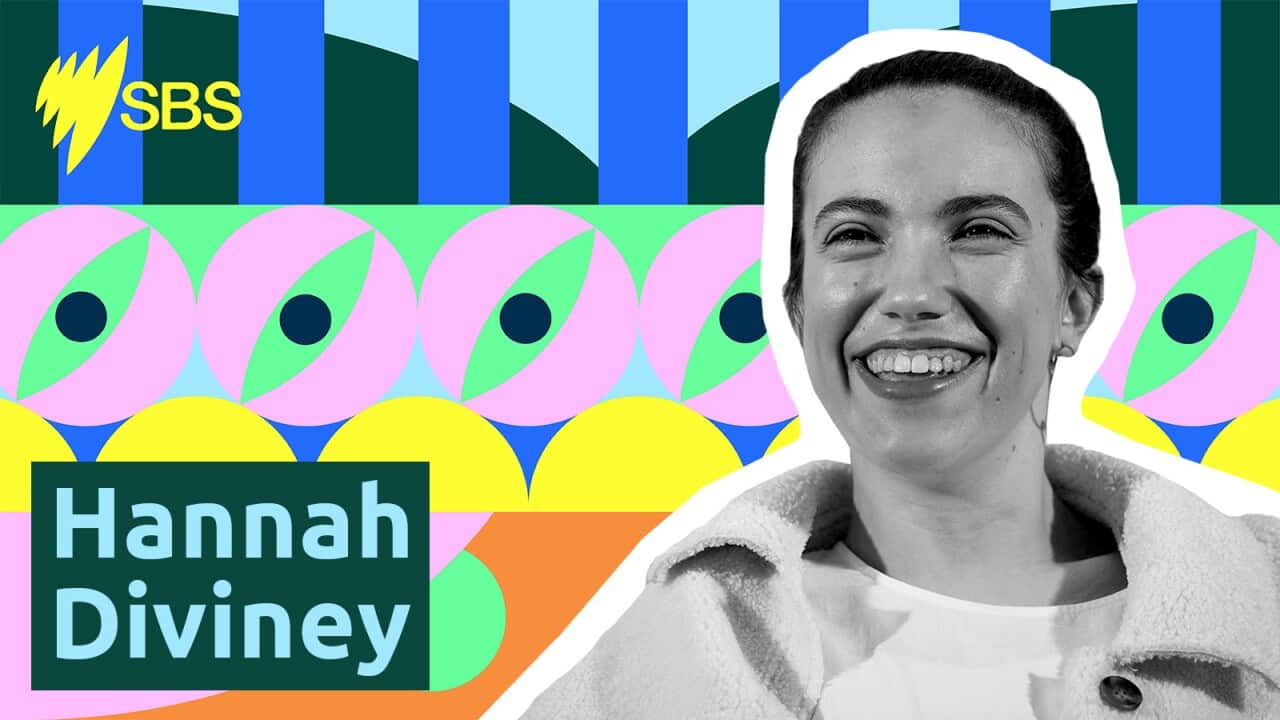

Growing up, Hannah Diviney was constantly asked what her paralympic sport was going to be. “I would always turn around and be like, see my two sisters over there. How come you're not asking them what their Olympic sport is going to be?” Join Yumi Stynes as the pair discuss why representation is so important, taking on Lizzo, and how Hannah is working to shatter misconceptions about disability.
Tired of the misconceptions placed upon her, disability activist and writer Hannah Diviney has made it her mission to ensure that disability is represented in nuanced and accurate ways in pop culture.
I think we just need to show disabled people that they can be visible in all arenas of life. Basically, wherever you see people out and about, disabled people should be part of what you seeHannah Diviney
In this episode of Seen, Yumi Stynes talks to Hannah about growing up watching stereotypes, her own visibility, and taking on Disney, Lizzo and the Twitter trolls.
Hosted by Yumi Stynes, Seen is a podcast series about cultural creatives rising to excellence despite arriving in a role-model vacuum. Over the series you'll hear from trailblazers like writer Yassmin Abdel-Magied, musician Ray Ahn, Olympian Ellia Green and more about the transformative moment when they felt seen.
Follow Seen in the SBS Audio app, Spotify, Apple Podcasts or wherever else you get your podcasts.
Host: Yumi Stynes
Created by: Bernadette Phương Nam Nguyễn
Executive Producer: Kate Montague
Producers: Bernadette Phương Nam Nguyễn and Cassandra Steeth
Junior Producer: Alison Zhuang
Sound design and mix: Ravi Gupta
Theme music: Yeo
Art: Evi-O Studios
SBS podcast team: Caroline Gates, Max Gosford, Joel Supple
Special thanks to Patrick Jhanur
Clips from SBS Digital Original’s Latecomers episode 1 are used in this episode.
Transcript
(Theme music building)
Hannah Diviney: I remember the first time I realised something was different. I was three.
Yumi Stynes: This is disability advocate and writer Hannah Diviney.
Diviney: Figuring out that I was different was a very confusing process. I was at daycare. We just finished lunch. My best friend at the time stood up from the table, pushed her chair away, and ran off to play. I looked up, in my head went, okay, I'm finished lunch too. I'm going to go join her. And then I told my brain what I wanted it to do and got really confused when I was still sitting in the chair.
(Music fade out)
Stynes: When Hannah was a child… working out she was different to a lot of the kids around her… Simultaneously, she was also consuming a lot of media portraying only able bodies.
(Theme music building)
Diviney: I spent a lot of time watching Disney. My mom was the person who went out and bought all of the Disney DVDs before she even had kids. (Laughing) Just she had them, like, ready to go.
I went and saw the Pixar film Inside Out, which is a beautiful, incredibly nuanced film about mental health and mental illness, which I thought was super high concept for kid’s movie. Because it managed to appeal to the three year olds in the front row and the adults at the back like all good animated movies.
Stynes: These formative years watching Disney not only shaped Hannah’s love of pop culture… It made her realise things needed to change.
Hannah Diviney: And after that I thought it wouldn't be too much of a hop, skip and a jump to create a Disney character with a disability. So I wrote Disney a letter like I physically mailed it to Burbank, California, and then I published it online.
Stynes: Twenty years on, Hannah’s become a global force in disability advocacy and a prolific writer… And she’s shattering the assumptions people have about disability.
Diviney: There's just the assumption that disabled adults don't have the same desires, the same dreams, the same needs as their able bodied peers.
I think we just need to show disabled people that they can be visible in all arenas of life. Basically, wherever you see people out and about, disabled people should be part of what you see.
Stynes: I’m Yumi Stynes, and this is Seen. A podcast about trailblazers who, unseen by the mainstream, rise to excellence anyway.
(Music fades out)
Stynes: As we kick off, we acknowledge the Traditional Owners of the land we’re recording from whose culture includes a rich tradition of yarning and culture-keeping, the Cammeraygal and Gadigal people, and their Elders past and present.
Hannah Diviney: My mom found a Barbie that was in a wheelchair and she took a photo of it and sent it to me and I was like, “Oh, that would have meant, like, the world.” (Aww) Can you buy that? Just so we can like have it? (Laughing)
Yumi Stynes voice over: Hannah lives with Cerebral Palsy, a disorder of movement, muscle tone and posture and uses a wheelchair.
She and I first met a couple of years ago at an event for a Women’s Magazine. The event was glamorous and full of famous people whose attendance was being documented by professional photographers and video crews.
Being able to attend - or not - was something I gave zero consideration to. But for Hannah, who was appearing in an official capacity that day, it was a classic case of “pity isn’t helpful, but actually? Some practical accessibility considerations would be.”
Diviney: I must have checked with the Women's Weekly like four or five times. Do you have a ramp? Am I going to be able to get in the building? Can I use the bathroom, blah, blah, blah. And these are all questions that I will ask because I know that unless people have had a reason to think of it before now, they won't.
I'll never forget when Dylan Alcott was nominated for Australian of the Year and we turned on the broadcast to watch if he would win it or not. And I saw the ramp and went straight away. ‘Oh, he's got it’. Because they wouldn't have put a ramp there otherwise.
Stynes: They wouldn't have bothered.
Diviney: They wouldn't have thought of it. Which is not the way you want it to go. I mean, obviously, we'd like to get to a point where accessibility and accommodations are made regardless and not made for a specific person or for a specific reason. We just want it to be the norm. Like, hopefully we get to a place where if there's not a ramp into somewhere people go, ‘Hey, why isn't the ramp there?’ But we're not there yet. We still got a long, (sigh) long way to go. (Laughing)
(Music transition)
Stynes: In 2016, Screen Australia completed a report called ‘Seeing Ourselves’ which revealed that while almost 20% of all people identify as living with a disability, disabled characters actually only make up 4% of drama characters on TV.
And while it’s easy to feel like TV at the moment is super woke and inclusive, with actors like Chloe Hayden from Heartbreak High and George Robinson in Sex Education… We know the spectrum of disability is wide and the change isn’t happening fast enough.
Because if you don’t see yourself represented on TV, it makes sense that you might feel like you don’t exist, or that you shouldn’t exist…
And for able bodied people? This glaring hole on our screens can lead to a lot of misconceptions about disability.
(Music fade out)
Diviney: There would always be those people who would somehow assume that because I was in a wheelchair, I was deaf or couldn't understand what was going on, and they would come and stand right in front of my face and yell at me. And mum would be like, “No, she can hear you. It's all good. Just talk to her, don't talk to me.” And then just lots of different stuff around, never seeing anyone who looked like me when I grew up. Not in the movies I watched, the TV, the books, the toys. The only time I really saw disabled adults was in therapy settings. So it was very specific to like ‘this is where you come to have your disability like treated and looked after and basically maintained.’
The other thing that happened to me a lot as a kid was being asked what my Paralympic sport was going to be, (laughing) to which I would always turn around and be like, “see my two sisters over there. How come you're not asking them what their Olympic sport is going to be?” Because, number one, people understood that you only go to the Olympics if you're really, really passionate about it. Number two, you only go to the Olympics if you're really, really good at it. (Yeah) Contrary to popular belief, not every disabled person could go to the Paralympics and come away with a medal because they're still elite sport people.
So yeah, I really chafed against that and then wasn't very satisfied with the other narrative that I got fed, which was the one of tragedy. Like we definitely went through a period there growing up, where in an attempt to get people to practise safer driving, like scare them off from speeding or drink driving or driving while tired or all of that stuff. They would show you people who had been in accidents and very much thought their lives were over because they were now in wheelchairs.
Stynes: Which is your life?
Diviney: Which is my life. And I was like, ‘Well, I'm only a little kid, but my life isn't over. My life isn’t all sad. So what do I do now?’ So in my head, I kind of thought that something must happen to you as you get older or that. Something must happen so that all the disabled kids I knew would, like, disappear as adults.
Stynes: Because you never saw them?
Diviney: Because I never saw them.
Stynes: Wow. So you thought they might either be changed or just evaporate?
Diviney: Yeah, pretty much.
(Music transition)
Stynes: It definitely tracks that your sense of self… and who you might be in the future feels questionable or even quite bleak when your reality… your reality is being sold as some kind of worst-case-scenario.
Diviney: I would often spend time as a kid being a poster child for different charities or things like that, which is fine. I was always chosen as like the cute kid because she's got the toothy grin and the big smile and I think people forget that disabled kids who it is often easy to support grow up and this we're still here (mmm)
(Music fade out)
Diviney: And what we need to do is make it so that disabled adults and disabled kids alike can just be considered normal. People will always say, “Oh, the future's blank.” But generally, when they say that, they mean it's filled with possibility. Because you can choose whatever goes there, where as for me. It would almost feel like the future's blank, would be like almost running to the edge of a cliff and being like, ‘oh, that's a long way down. Like, what happens now?’
Stynes: And what does happen when a disabled kid who's got all the supports of being, you know, cute and little and needing help, needing assistance becomes an adult. What happens then?
Diviney: Well, the first thing that happens is pretty much as soon as you have your 18th birthday, you're kicked out of the the kids’ medical system and shuttled into the adult medical system, which is a lot less personal and a lot less information driven, we call it the information desert.
Stynes: Wow.
Diviney: That you end up in because basically finding out things is very much about having a network of friends who are doing it at the same time as you or there's definitely not as much support. That's immediately available to you as an adult. And then I think as well, there's just the assumption that disabled adults don't have the same desires, the same dreams, the same needs as their able bodied peers.
Like, I know for me when I finish high school and decided, okay, now it's finally time for me to probably look into part time work, like it's probably good that I start earning some money and like I don't want to just sitting around at home staring at my bedroom wall. (Laugh) I went to a number of disability employment providers and the general consensus was that they couldn't help me because I was also going to uni. The insinuation being that I couldn't possibly handle going to uni and working at the same time (Oh).
Now for those of you, obviously you can't see Yumi’s face, (laughing) which is just she's just given this really confused, what? Look. And I think it's partly that that has motivated me to work so hard for myself, because I figured out very quickly that people weren't going to give me the opportunities (Mmm) or that like if I were to try and get a job, there would be complications because the office wouldn't be accessible necessarily or I wouldn't be able to necessarily use public transport or different things like that. So I very much worked out how to carve out like a Hannah shaped face myself and then just sort of keep building as many things into that as I could.
(Music transition)
Stynes: When you live life with a visible difference to others, (Mhmm) you can spot it when you enter a room. What's that like? Like, what are those moments where you're the only disabled person in a room full of able bodied people?
(Music fade out)
Diviney: I mean, it's pretty normal.
Stynes: It's pretty normal, right?
Diviney: Generally, it's more surprising if I see another visibly disabled person, I'm like, ‘Oh, there's two of us. Look at that!’ I've definitely been in rooms before where pointing that out has shocked people.
I guess the other thing you notice is, people will, you can see them clocking the wheelchair. Most people are pretty good at hiding it, but some people, there'll be an awkward pause where they're like, ‘oh, okay.’ And then once they've clocked it, they’re like ‘oh okay.’ And generally I use that time and that kind of awkward pause to my advantage and I kind of will use humour to defuse the situation or make it very clear that I'm never not in a wheelchair, which is another thing that people sometimes assume. Lots of people will say, “Oh, what happened to you? Or how did you end up like this?” And I’m like I’ve always been like this, this is my normal. And then generally some people's expressions will transform into pity, which I'm like, get out of here with that. (Laughing) It's not helpful. You can have empathy for my struggles as a disabled person. You can recognise that in some ways my life has been harder than yours. But don't pity me.
(Music transition)
Stynes: Hannah’s here with us today as someone who’s taken all that pity, all those misconceptions… and condescending baby talk and used it as fuel for her advocacy work.
While she may seem confident and unafraid to share her opinions… For a while Hannah actually resisted the idea of becoming an advocate. But she kept returning to the thought that having a voice and a platform is a powerful privilege.
And she’s not afraid to use her voice to call out multi-billion companies. At 16 she wrote a very powerful letter to Disney calling for the creation of a Princess with a disability.
(Music fade out)
Diviney: There was a little bit of interest, but nothing really happened. I didn’t get a reply from them. And the entertainment industry at large were starting to have conversations off the back of that film that Sia had made called ‘Music’, which had unfortunately been really harmful to the autistic community. And off the back of that, I kind of thought, ‘huh, there's a window of opportunity. Maybe I should just dive right through it.’
And I guess the specificity of wanting a disabled Disney princess was very intentional because Disney princesses are the ones who get the bedspreads and the birthday parties and all the merchandise and the books, and they're the ones that the little kids dress up as. And they're basically like the legacy characters of Disney, which of course, on the flip side, makes it harder to convince Disney that they should include a disabled princess in the lineup.
(Music transition)
Stynes: Hannah started the “Create a Disney Princess With Disabilities” petition. It kick started her advocacy career and the campaign is still ongoing.
(Music fade out)
Ultimately what she’s asking for is real and human representations of her experience, because not only is her perspective missing in pop culture, when it exists, it’s often written from a misinformed place… Which is something that seems to happen very frequently with disability.
Diviney: I'm going to use the slur only in the context that I want people to know what I'm talking about.
Stynes: Like most other women in their early 20s, Hannah loves pop culture, and not just animated movies, but everything including music… And it’s an exciting time in the pop loving canon when Lizzo releases a new song. The trouble was…The new song contained a word that is more than just a bit “problematic”.
Diviney: So basically they were using the word “spazz” short for spastic, to sort of reflect this cultural shorthand of losing control or being on the verge of some emotional meltdown or maybe even a lack of intelligence sometimes.
But for me, the specific type of cerebral palsy that I live with is spastic diplegic cerebral palsy. Where spastic refers to spasticity, otherwise known as like this unending, constant, painful tightness that exists in my legs and most of my most of my body. It never goes away. It doesn't have to be triggered by anything specific I can feel right now. While I'm talking to you that my body is practically, vibrating with it.
Stynes: Wow.
Diviney: Even though I'm not doing anything particularly strenuous and it tends to flare up in the cold, all that kind of stuff.
Stynes: So when you hear a word like that and it's used in a derogatory way, do you have a sort of a visceral, physical reaction or instant emotional reaction?
Diviney: Yeah, I tend to get pretty sad and angry and confused because I think for me and so many other disabled people, that word was used against us in the playground or in different contexts growing up. And even though obviously kids don't necessarily know the power of the word that they're using, they still knew enough to like weaponize it.
(Music)
Stynes: She tweeted about Lizzo’s use of the word, and it went viral. Hannah explained that that word had been used to taunt and abuse her. She was quoted in the New York Times, BBC and Washington Post.
And in a pretty breathtaking turn of events, eventually she was putting on her headphones and hearing the new edit of the song ‘Grrls’ where Lizzo replaced the word.
One would think, it was enough of a story that others would take note and we, as a culture, would collectively move on from using such words.
(Music fade out)
Diviney: It was only supposed to happen once with Lizzo, who was incredibly gracious in the way that she handled the situation, the way that she apologised, re-recording the song like thanking the disabled community for teaching her.
It wasn't supposed to happen again, but it did six weeks later with Beyoncé and I have to say taking on Beyoncé is a whole nother level of critique, because Beyoncé occupies a pretty big space in popular culture. Like if she breathes the world writes, think pieces about it. So yeah, (laughing) doing that was definitely like stealing myself for some trolls. It's not what I want my advocacy to be reduced to because as you know, like there's so much more to me as a disabled person and there's so much more that I do.
Stynes: One of the things that happens off screen that we don't see is the trolling response that you get. (Mhmm) It's like the flipside of being seen, you know, in some ways, it's great to be visible. And in other ways, you sometimes pay. Can you talk about what that was like?
Diviney: I always have tried to see trolling or negativity towards me as a sort of twisted compliment, because it means that I'm operating outside the echo chamber of “Hannah! You're doing a great job”, and I got to experience that on a small scale with the Disney campaign. But this particular situation showed me trolling in a way that I did not expect.
It's pretty shocking to have people call you every name in the book or send you gifs of people in wheelchairs being pushed over or pushed off cliffs or just other nasty visual images of what they plan to do to you for calling out someone they admire. It's definitely not for the faint of heart. I will say that. But I think as long as I'm doing things. That feel right or are getting the approval of the people whose opinions I care about, then that matters the most.
I think the most interesting thing also about trolling is it's not very anonymous anymore. There are people who are willing to put their face and their name to their very loud opinions about you. So it's not necessarily like Twitter users with the egg profile picture. (Mmm) It's people who are very much willing to stand by what they say, which can be a bit confronting.
(Music)
Stynes: The viciousness of trolling is hard to understand if you’ve never experienced it. It can, at best, be mildly terrifying. And at worst? I’ve heard people say, “It changed my DNA. I will never be the same again.”
But for every basement-dwelling troll who is just gonna delight in hate, there’s the other kind - who seem to willfully misunderstand and misinterpret - good intentions.
(Music fade out)
Diviney: I do tend to panic sometimes when I get trolled, but particularly if it comes from a place of people accusing me of something or not understanding the intention behind what I was trying to do or, for a lot of people when I called out Lizzo and Beyoncé, the easiest trolling response was to call me racist because, ‘oh, look, she's gone after two black women. She must hate black women. She's a poster child for white privilege. She is the height of anti-blackness, blah, blah, blah, blah, blah.’
And those takes obviously choose not to see that. I called out Eminem, who last time I checked, is very, very white. But again, like, it doesn't seem to matter how many times I say it that it's about the slur, not the person. It just so happened to be that it was the two of them who used it in very quick succession. So that kind of criticism or that kind of assumption of my character has been a hard pill to swallow.
But I do my best to try and explain why I do what I do. To listen to as many people as I can. And to learn, because obviously even though I'm disabled, there is an intersection where I do have white privilege and there are things that I get to experience very differently to disabled people of colour that I won't understand. So it's always about learning and trying to see like, which criticism is coming from a valid place and which is just people yelling into the void because they've decided that I'm who they want to yell at.
Stynes: Back to this idea of advancing the culture. As it is with ableist slurs, there were other hurtful misrepresentations that used to commonly occur - that we all thought were normal! - or even ordinary, that now on reflection …are really gross.
Diviney: There's a phenomenon in Hollywood that they literally call "cripping up," which is the idea that if you want I guess a shortcut to award success or some sort of notoriety in that way, you should think about transforming yourself into a disabled person like (Mmm) on screen because of the level of physical, emotional and psychological transformation that that takes. But there are plenty of disabled actors out there who can give those parts a lot more nuance because they're not wearing it like a costume. They inherently understand what it means to be disabled.
Stynes: In 2022, Hannah made her television acting debut in an SBS comedy drama called ‘Latecomers’ about a couple of strangers with Cerebral Palsy who, after watching their carers hook up, start to explore their own relationships with sex. Hannah plays a character named Sarah…
(Archival audio from Latecomers, episode 1:
Sarah: I’m doing a masters on the intersection of disability and sexual representation in literature…. So actually it’s research!
Frank: So you're actually just reading porn at the pub?
Sarah: [Scoff] I'm only here because my carer is trying to have sex with your carer
Frank: Trying being the operative word
Sarah: She'll wear him down)
Diviney: It was very surreal because while I had always been a drama kid and like found myself on stage, I think I think I loved that because then I could control why people were looking at me in ways that I couldn't otherwise. I didn't think of myself as an actor, but getting the opportunity to play Sarah has obviously changed that.
And I have to say that before going into the project, I was super apprehensive about playing Sarah just because of the number of similarities, obviously between her story and mine. I wasn't sure whether I would be able to draw the line between real and pretend necessarily, or that I would be able to handle some of the more emotional stuff that she goes through as a character. But I'm really glad I did because we've changed Australian television now, (laughing) so it's really exciting.
Stynes: It's so exciting. And you know, talking about wanting to see people that look like you and you being it, I mean, that's kind of the ultimate, isn't it?
Diviney: Yeah, absolutely.
Stynes: Having done that, do you still feel as invested in the Disney Princess idea?
Diviney: Yeah, definitely. Because Latercomers is very much a show for an adult audience. I mean, it talks about explorations of relationships and, you know, there's sex scenes in there and it's very mature in the way that it deals with things. And I think that's obviously not something that little kids can necessarily be watching. But I think it's still really, really important that little kids have a place where they can see themselves.
And I feel like if we start representation and inclusion at the youngest level we possibly can, that will only serve us for the better in the future as those kids grow into adults and allyship towards disabled people, or at least an understanding and empathy towards disabled people is second nature.
Stynes: So being seen and being visible. Have you had any feedback from those young kids who are like you?
Diviney: Most of the time I get feedback from their parents, which generally makes me cry a lot because they'll be like, my son or daughter is like eight years old and I'm so glad that he or she has someone to look up to like you because you're showing them that everything they want is possible. Or when that spread I did for the Women's Weekly came out where I got to dress up like a Disney princess. Someone said, “I showed this to my daughter and she just squealed with happiness.” And I was like, ‘Oh, that's what it's for.’ All of that the trolls and all of the like, emotional labour and all of that. I'll take that any day if it means that disabled kids. Get to see someone who looks like them.
(Music transition, fade out)
Stynes: When do you think you have felt the most seen?
Diviney: I would say, probably, in the period of life that I'm in right now is when I felt most seen. There was a long time there where I felt invisible. Even to the point where as a kid, I would stare really hard at my reflection in the mirror, afraid that if I looked away, I'd disappear. Because no one else was looking.
So I think definitely becoming a writer who has, who has by-lines in different publications or is being recognised by, esteemed places like the New York Times or the BBC that's being seen obviously on a massive scale. And, I think everything that I've done, like the Disney petition, every speech I give, every time I get to talk to a person I admire or become friends with them, that's me being seen.
(Theme music building)
Diviney: Latecomers, the TV show was probably the most seen I have ever felt (laughing) in my life for a number of reasons. But yeah, I think that particular experience, is one that transformed my life.
Stynes: If you’re disabled and find yourself staring at your reflection in the mirror, afraid that if you look away, you’ll disappear, I hope that Hannah Diviney’s active and intentional work in reflecting disabled people back - helps you to feel seen.
And if - able-bodied or disabled - you would like to pass this podcast on to a friend who would delight in hearing, seeing, and witnessing Hannah - please share it.
This has been Seen. Hosted by me, Yumi Stynes, created by Bernadette Phương Nam Nguyễn with Audiocraft, in collaboration with SBS.
From Audiocraft this show was produced by Bernadette Phương Nam Nguyễn and Cassandra Steeth, our Junior Producer is Alison Zhuang. Sound design and mix is done by Ravi Gupta, and executive producer Kate Montague.
The SBS team are Caroline Gates, Joel Supple, and Max Gosford.
Our podcast artwork is created by Evi O Studios and music is by Yeo.
(Theme song fade out, music sting)
Patrick Jhanur: Hey there. My name is Patrick Jhanur. I'm an actor and I play the role of Elliot in the new SBS series Latecomers. There's so many things about this project which makes it so, so special.
During rehearsals we were just talking about my experience as a support worker. I was talking about this one boy in particular and the production team were very kind to offer, to offer a set visit for this young boy on my first day of filming.
He came along and was, you know, calling action and cut and interacting with Hannah and, and Angus, seeing the workings of a film set. He was talking to Angus. And Angus said, “Oh, we should write something together.” And this little boy, you know, that was sitting wheelchair, a wheelchair. He said, “Yeah, I'd love that. I want to be a film director when I grow up.”
Just that experience being on a film set, seeing, seeing people just like himself, front and centre really meant a lot for him. That unlocked the possibility of ‘I can do this’ in his mind. And that's what it's about people seeing themselves and believing that they can, they can represent themselves in any space no matter what.
(Music sting)