Aditya Gautam
I would like to acknowledge the traditional owners of the land I'm recording from. I pay my respect to the Cammeraygal people and their elders, past and present. I also acknowledge the traditional owners from all aboriginal and Torres Strait Islander lands. You're listening from coming up in this
Aliya Kanani
Because in Canada, when I say Canadian, they're like, no. What? Really? Right? And then in Tanzania, when I say, you know, you know, my parents are from here, they're like, but really? And then I go to India and I'm like, I'm from here. And they're like, no, you're not. And I'm like, oh, my God.
Just this unspoken truth that all these brown kids wanted to be black or white. Nobody really celebrated their brownness because it wasn't celebrated. It was really made fun of. Which is so unfortunate because I'm like, man, our culture is so rich, dude. We've got so much. Miss India, Miss Universe
was like, Indian. Every year for like three years in a row.
Aditya Gautam
That changed the white
Aliya Kanani
Were, like, damn you know, like, okay, Indian women, we fly. What's up? You know what I mean? And then.
Aditya Gautam
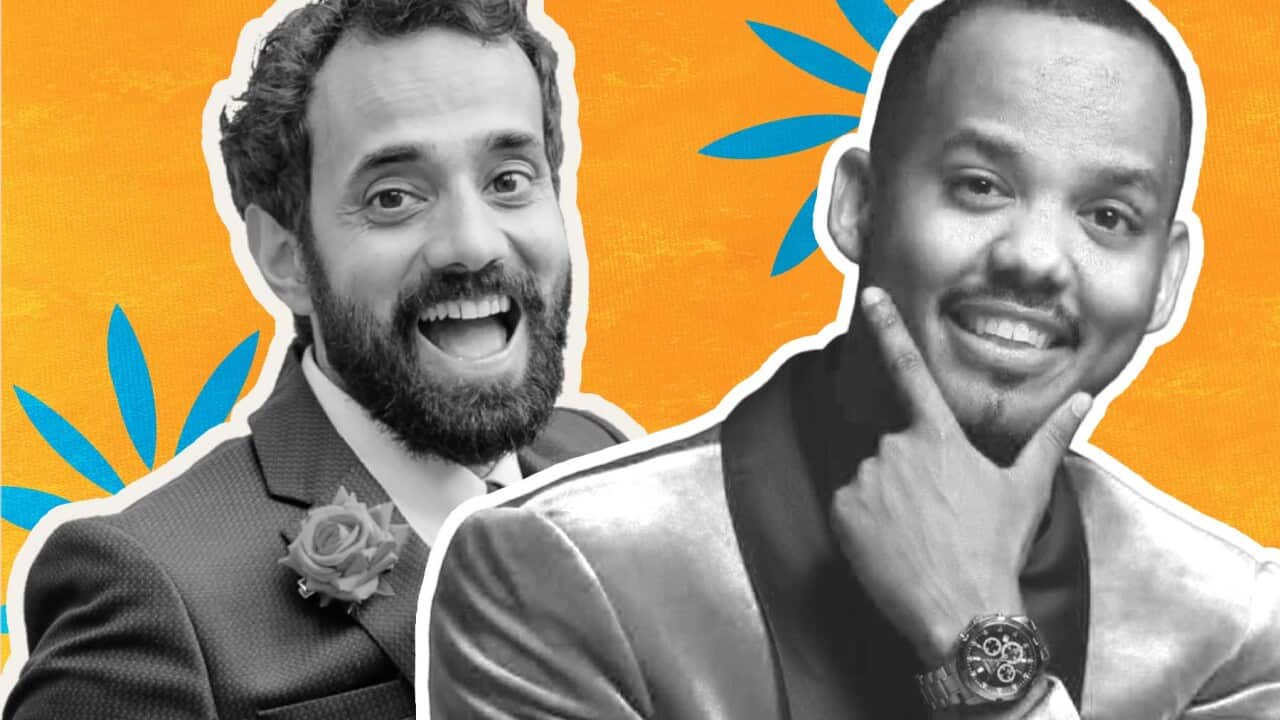
Hello, everybody. Welcome to Comedy Karma season two. Today I'm talking to Aliya Kanani. Aliya is an Indian. Canadian, Tanzanian. Not in that order. We'll check the order with her. She is. She's a writer, she's an actor. She's actually. She won a Canadian Academy Award for her acting. That's how
much she was nominated. Okay, let's. She should have won it is my point. And she is. She's obviously a comedian. That's why she's on this podcast. She's not just any comedian. She is an award winning comedian who's performed all over the world. She performs regularly in Australia, in all the
festivals, and she has more connections with Australia, something we will also talk about today. And yeah, let's start the show with one of her jokes.
Aliya Kanani
Growing up, I get a lot of "where are you froms" from people. A lot of that, which is a question. I don't really mind, but it's a little confusing. I don't know how to answer. And I know a lot of times when people ask that, what they really need to ask is, you know, where you from from? Right. So
when they ask me where I'm from, I just go Canada. Just to watch that disappointment wash on their face. They get so uncomfortable too. They're like, no, of course you are. Congratulations. Sorry, I meant about your. Your parents. Where your folks from? Like cool cool cool cool cool I know what
they meant. But what they don't know is my people have been immigrating for generations. Okay. If they want to know what this look is about, you know, I look like a discount Princess Jasmine. That's India, like 150 years ago. But you can see it, right? You can see that makes sense. You can see it.
The thing is, that's not where my parents are born. If they want to get to India, they got to ask me where from. From, from from. That's not what he asked. I was like, cool, let's keep going. Sure. My parents. Yeah, my parents are from Tanzania, from East Africa. Oh. Africa. That's so nice.
Interesting. Parents are African. So. So. Both. Both.
Aditya Gautam
Hello, Aliya.
Aditya Gautam
Thanks for doing this podcast. Firstly, love that joke. When I was listening to this joke, what it made me think of instantly was the fact that I'm guilty of doing this too. And I've been guilty of it even during comedy shows. I remember asking some, some especially younger people in the crowd and
going, oh, you're, of course you're not Australian. And I can see some of them will pull back and get a bit defensive. And I've realised I'm being a bit of an idiot while doing it now.
Aliya Kanani
I think that this is like, this is the whole point of this joke and more so about the show that I have that's centred around this theme.
Aliya Kanani
Which is called where you from from is because I think that there's this, like, real, you know, thing about identity and labels that, you know, it's so hard to gauge where people stand on the subject because some people will, as you said, get offended and some people won't. And this is what I like
is like kind of like, you know, tap dancing around that line of, like, I'm just being very playful about, you know, like, it's not that I mind the question, it's just that I'm going to mess with you. Do you know I'm going to mess with you? Because I know that what the expectation is and what my
answers are don't match up. I think that there are people that feel, you know, much like myself. Where I've always felt like I don't belong anywhere. Yeah. Because in Canada, when I say Canadian, they're like, no, but really. Right. And then in Tanzania, when I say, you know, you know, my parents
are from here, they're like, but really. And then I go to India and I'm like, I'm from here. And they're like, no, you're not. And I'm like, oh, my God. You know what I mean? And that's. I think, where the greater issue is, is that it's like, you know when you say, like, oh, yeah, no, but you're not
really from here, where you originally from. And people are like, yeah, but I can't identify as originally from there because if I go there, they treat me like a tourist.
Aliya Kanani
So then where do I belong? I think that's like the identity crisis that people are facing from the Diaspora, you know, from all over the world. Yeah. Right. And that's where the sensitivity is. But I also think we're too sensitive. You know what I mean? I think everybody needs to chill because,
honestly, it's like we're just trying to exchange information to make sense of the world. I'll just lighten up, you know? And I think that that's where, like, I love humour. To be able to, like, actually talk about this stuff and show how silly both sides are.
Aditya Gautam
Sure. So you look Indian, right? You look Indian. Straight up. You look very Indian, for sure. So growing up in. Which city did you grow up in?
Aliya Kanani
So that's the thing. I. I also moved around a bunch growing up. Yeah. And this is why, again, it's been a very. It's like that. That question has been a central theme of my life, which is why I started the show, you know what I mean? To, like, talk about what you know. And I'm like, well, I. What I
know is, is that everywhere I've ever lived, everybody asks me this question. And to the point where, like, I talk about. In my childhood, I used to make up stories because I'd get so bored. I got. I got so. I got so bored of, like, repeating the same answers over and over again.
Aliya Kanani
You know, I talk about this. I'm like, I was a new kid at 10 different schools. Imagine how many times people ask me, where you're from? Whether it's the students, the teachers, the blah, blah, blah, everybody, where are you from? Where are you from? Where you from? Especially when I was in places
where I stuck out like a sore thumb.
Aliya Kanani
And then eventually I was just like, Brazil, Argentina, we Moved to Tanzania when I was a teenager, when I was 14.
Aditya Gautam
Oh, I had no idea you actually lived in Tanzania. That's interesting.
Aliya Kanani
Yeah, it is interesting because I think that that's really a big part of why, you know, culturally, I think that we grew up at home kind of confused, do you know what I mean? With, like, we spoke lang, a language that nobody else speaks, because we spoke five different languages at the same time. Do
you know? I mean, we would just, like, mix all the stuff together and even our food, like, the flavours and stuff. And then, you know, when we moved to Tanzania, like, it's so. It's. I try to explain to people how I still call it home, because I think it's the first time where I move somewhere. And
then I was like, oh, everybody here is like us. They all talk loud, they eat with their hands, they touch each other too much. There's no such thing as personal bubble space, you know, I mean, and it was like, oh, okay, this makes more sense now, where. When I was growing up in Canada and, you know,
I'd go to people's houses and I'm like, why aren't they offering me food? Don't they like me? Do you know what I mean? Like, it was really, like, I came home crying one day and my mum was like, what was wrong? I was like, I don't think that my friends liked me, you know, because they were eating
dinner when I came over, because I got there a little bit earlier or something, and they. They were like, oh, we're just finishing up dinner. We'll just be a second. And I was like, what did I do to you? Like, what did I. Why are you not making me a plate? You know, so it's like. Anyway. But we
moved around a tonne. I changed 10 schools growing up, and then I became a flight attendant for a decade. So I was travelling around, flying all the time as well. So this life of mine has been so circumstantially nomadic. I'm not, like, seeking out to be a nomad. It's just that I grew up as a nomad,
then I became a flight attendant because that rhythm was naturally mine. And now I'm a touring comedian. And so when people say, where are you from? I'm like, ugh, like, how do I begin?
Aditya Gautam
How long did you stay in Tanzania?
Aliya Kanani
I was just there for a couple years.
Aditya Gautam
Did you ever feel like being looking Indian was a bit of a baggage? And did you ever feel like you didn't want to?
Aliya Kanani
Oh, you know what? Honestly, that's a really, really good question, because I talk about this a lot, actually. I think that it's. It's somehow, unfortunately, I think that Indian people in North America were the most made fun of culture. You mean they're not. Not most discriminated against? It's
very different, obviously, do you know what I mean? Like, there's indigenous folks, black folks, that have suffered an insane amount of oppression that I wouldn't challenge. But I think that in terms of being made fun of, you know, I remember my dad was so adamant that when he would cook, we. We had
to, like, instantly, like, we had, like, this, like, it was like. It was like dad's cooking. Close all the doors, put all the clothes inside the rooms, because we cannot leave smelling like our food. At home, we used to speak in English because once we started school, the first languages we ever
spoke were Gujarati, Hindi, and Kutchi And, you know, at home, I was fluent in these languages. And then once we started school, my parents were. Were worried that we would have accents. Not because they have a problem with an accent, but because they know how we'll be received with an accent. My
dad used to get beat up when he first moved to Canada because of his accent. You know what I mean? I remember all the brown kids wanted to be black or white, so I think that there was definitely some, like, subconscious rejection of my culture, even though it wasn't really conscious. But in
hindsight, I do look back and remember just this unspoken truth that all these brown kids wanted to be black or white. Nobody really celebrated their brownness because it wasn't celebrated. It was really made fun of. Which is so unfortunate, because I'm like, man, our culture is so rich, dude. We've
Aditya Gautam
Yeah. But I think what you're saying probably is it because the Tanzanian culture, for example, people knew so little about it, that it was. There was less to be made fun of. With us, there is a lot because there's. There's so much out there that's interesting. Okay, I'm gonna play the second joke.
Aliya Kanani
you know, something I get asked all the time as a comedian. Yeah. People come to me. Indian. Yeah, comedian. Your parents must be very disappointed. Rude. And then I always say to them, you know what? Joke's on you. My parents are super dead. They died of disappointment.
Aditya Gautam
So funny. Are they alive?
Aliya Kanani
Okay, what did you like to know? No, they're dead.
Aliya Kanani
Yeah, but I like messing with people sometimes at the end of that joke, if it's a big enough room. Yeah, I'll Be like, oh, no. I'm like, the front row looks so upset with me. I'm so sorry, you guys. I'm like, they actually really. My biggest fans, they're in the back of the room tonight. And then
people start turning around and I go, in spirit.
Aliya Kanani
I like messing with that.
Aditya Gautam
So if you don't mind answering this question, like, so Tanzanian Indian, what was. What was their vibe about your life choices?
Aliya Kanani
They. They haven't been. Well, My. So my mum passed when I was younger.
Aliya Kanani
And my dad very early on into me doing comedy.
Aliya Kanani
Generally, I think it's just I. I grew up a bit different. We moved around a lot, and I lived with different folks as well and stuff, you know, So I think that my. My dad just very early on accepted that he didn't have too much say on what we did. Me and my sisters were all just kind of like, you
know, my eldest sister, she, you know, is a. You know, went all the way on to do her PhD. She's just like a. A student. She's very like.
Aditya Gautam
She's a good kid.
Aliya Kanani
She's. We were all bad kids in our own little ways, but I was always. I was. I always want the beat of my own drum. And, you know, I think that it was very early on, frustration because I used to love acting and dancing and stuff. And at a certain point, with the best of intentions, my father was
like, enough. She's too distracted with this stuff. And I was very good at math and science, naturally. Very good.
Aliya Kanani
So he just got me to get out of all that stuff and put me in math and science. And he's like, this is what you're gonna do. And then, of course, as soon as I finished high school, I'm like, nah, you know what I mean? Like, I went through it because I didn't have a choice. But as soon as I was 18 and
I was on my own, you know, basically I just started working full time. I had to take care of myself, blah, blah, blah. And then when I became a comedian, I remember I had a conversation with him one day, and he's like. It was like a year and a half into comedy, and he was like, so, mama. He's like,
are you making money yet? I'm like, not really, dad. And he's like, you had fun. You tried. And I'm like, no, dad, you can't make money in a year and a half ago. Just. Just chill, you know, we're fine. And it was just like. I think it was just like, you know, Again, it's just, you know, they say
that you can only do what is in the scope of your imagination. And I just don't think that as an immigrant from Tanzania, you know, coming in, all the hardships that he faced, he, you know, I don't think could imagine. Where have you ever seen a brown woman on tv? This is why I tell people, you
know, when we talk about representation, how important it is. I never thought about doing comedy. I fell into it by accident. And the reason I never thought about it is because I'd never seen anybody like me do it.
Aditya Gautam
Yeah, of course.
Aliya Kanani
So for my father, even more so, you know, in my show, I actually have a joke where I talk about. I say, I remember the conversation with my dad, because I say, I tell. I tell folks about how I fell into comedy by accident thanks to a Groupon, which is a true story.
Aliya Kanani
And. And then I go, not that I'd never thought of it. I remember when I was a kid, I told my dad I wanted to be an actress, and he was like, okay, mama, come here. He's like, turn on the tv. And I was like, huh? He's like, change the channel. I was like, okay, again, One more time. I'm like, okay.
He's like, have you seen anybody on there who looks like you? I'm like, no. He's like, turn off and go to bed. That was the end of the conversation.
Aditya Gautam
That's a great. That's a great line.
Aliya Kanani
It's a great line, but it's very close to the truth, Jamie. It's lined up in. In that order for comedy. But it's like very much the conversation that I had with him was like, when I was doing acting and dancing. He's like, this is not a career. Yeah. You think that they're going to put you on TV?
Aditya Gautam
100%. Especially again, like, going back to what you said, especially with an Indian look, you were either someone being made fun of, and I think Asian, Chinese people would relate to that a lot. That was the same for them. It was just people. They were just made fun of.
Aditya Gautam
Forever. Till. Till. I don't know. Till Jackie Chan came along and changed the vibe and Bruce Le came along and changed the vibe.
Aliya Kanani
We tried that, but nobody believed us when we jumped off the rooftops and landed on our feet.
Aditya Gautam
Yeah. They didn't fly with us at all. On that note, what do you think? Because now the vibe has changed. Would you, if you were to. So maybe. Maybe the Chinese can pinpoint to. Okay, maybe it was Bruce Lee, who changed it a bit, at least tried. Can we pinpoint to someone like a brown person who sort
Aliya Kanani
It's a really good question.
Aditya Gautam
It's a hard one, right?
Aliya Kanani
No, I. No, you know what? That's a very good question. You know, I think, I think that like, there was just like slow, slow little things. Like, for example, I remember there was like a point where like, Miss Indian, Miss Universe was like, Indian every year for like three years in a row.
Aditya Gautam
That changed the vibe.
Aliya Kanani
We were like, d***, you know, like, okay, Indian women, be fly. What's up? You know what I mean? And then, and then you started seeing, like. I think that it was more like the. That our culture started seeping into stuff like Gwen Stefani. And all of a sudden you're like, oh, okay, Gwen, we're
Aliya Kanani
Do you mean. And so, like, I don't think it was actually our direct representation fully, but, you know, you started seeing more people go like, like, okay, Indian food is actually really good. We're like, oh, s***, you guys. Like, what do you think all these smelly spices do they create flavour
explosions in your mouth. Thank you very much. You're welcome. You know, and so, like, I think it's like little things like this that kind of. We started to see more seep into culture.
Aditya Gautam
Yeah, you're right. And I think if. If we were going to point to one or few things, I think it would. It would be what you've just said it would be. It would be Aishwarya Rai and Sushmita. I remember seeing Aishwarya Rai in Oprah and, you know, that was like a moment for us. Aishwarya Rai, she was
sitting in Oprah and. And people like, whoa. And she. People were like, f***, s***, she's pretty. And like, people were blown away.
Aliya Kanani
No, all of a sudden we're saying things to me like, oh, you're so beautiful. Look like Miss India. And I'd be like, oh, we like us now.
Aliya Kanani
All my eyes aren't too big now. I mean, like, so it's. It's very interesting. And then, and then, you know, as I said, it's just, you know, I think parts of our culture are still. I don't know that we're there yet. You know, I talk about this sometimes where I say, I remember when Hashtag Black
Excellence started. And there was, of course, a huge celebration from my end. I think it's beautiful thing, but a little bit of like, when's our turn? When are we going to come Together, like, you know what I mean, as brown people and celebrate ourselves and the excellence of who we are. Because I
think that we've, I become a little bit like, you know, we gotta decolonize the mind, you know what I mean? Which is like, you know, stop trying to assimilate and stop trying to play to the European standard, but rather to realise that, that we have so much to offer
Aliya Kanani
From our collectivist culture, from the fact that we, you know, come together as a people in a. And, and the things that we have to offer is so beautiful.
Aliya Kanani
You know, I, I, you know, I still, I, I, I think that there, there still is undoing of the shame that needs to be done. But I think that there is more and more, you know what I mean? Like, yeah, you know, eventually, like, you know, I'm starting to see the brown nod happen where brown people look at
each other going, yeah, I mean like, yeah, where before it was like, oh no, there's another brown person. Let's, let's not be seen together. Then they're just gonna, you know, think that we're right.
Aditya Gautam
Dude, that is like, that is, you're so on the ball with that. That is so right. I've seen that change within my last 12 years of being in Australia. When I first came, I felt that very strongly that, oh s***, I don't want to be seen with just other brown people. And that's come full circle to now
there is that head nod. You see another brown person. Yeah.
Aliya Kanani
Okay, it's changing.
Aditya Gautam
I'm gonna play the third joke.
Aditya Gautam
Cool. The third joke is,
Aliya Kanani
I am from. Canada, but I did recently just move to the United States. Thank you so much. There's no joke there. I just really need your love and empathy. I really do. I don't know what I was thinking, honestly. I packed my bags, moved to the US and started getting a taste of the American life right
away. Do you know what I mean? Like, right as soon as I got to the airport, I got that random check. I was like, oh, yes, here we are in America, you know, you know, the random. He knows, right? You know how they find us randomly, the lineups like, eenie, meenie, minie, Muhammad. I had a quick scan
and found the most Muhammad looking man in the audience. You were definitely targeted for that joke. Listen, hot tip for me to you, I find it a lot easier to travel. Ever since I got rid of my beard, You know what I've been doing? I'll tell you something, bro, you can try this, okay? Like you get
pulled over at airport security. Of course you do. Come on. You know what I do instead of getting upset, I'm trying to find little ways to take back the power. You know what I mean? I think it's important. We got to take back the power. So now instead of getting upset when they start to pat me down
at airport security, I just react with sound effects. Like. It really speeds things up.
Aditya Gautam
That's super funny. How the h*** did you even come up with that joke? Do you remember?
Aliya Kanani
Yeah. Actually, the eeni mini money Muhammad part or like the whole. The whole bit.
Aditya Gautam
The. The security check and. And the sound effects.
Aliya Kanani
Yeah. So, because, listen, I. So I. This is another. I feel like it's so funny when I'm in a conversation. I'm like, so in my show. But it's just like, these are the thoughts that I put into my work. Right. So when I was a flight attendant. So the ex I was talking about, the guy who was from France
and French Caribbean. Yeah. He and I were together for a long time. We're still very good friends. Actually, I talked to him just yesterday, but he is mixed race and he was a pilot and we used to travel around all the time. And I have a joke where I say he, because it's true, he looks Caucasian in
the winter. The moment he gets a tan, he looks Latino or Arab. So his airport security searches are very different depending on his tan. And in the joke, I go. I get seasonal allergies. He gets seasonal racism. Right. And so this is a, like a. And this was a real observation. And him. And I used to
get so ticked off because every time he looked Arab, he would get stopped over at security. And it was like what I thought sometimes was in my own head that I'm just getting bad luck on these random checks. And then when I see it so blatantly like black and brown or white and brown in front of me,
in front of my very eyes. And it was like, oh, my God. Like, they're not even pretending. They're not even pretending. And so then that's where I started making jokes about random checks and the. You know, the random. And my dad's name is actually Muhammad. So my dad used to. After 9/11 happened, he
would have a hard time all the time.
Aliya Kanani
And so this kind of, like, naturally was something that, like, was on the tip of my tongue. And when it came out eenie mini. minie Muhammad, I was like, oh, my God. And I would always feel a little bit good about it because it was after my dad passed and I was like, oh, this is like my way of kind
of saying him. His name on stage. I mean, it was nice. I liked it, right? And then. And then, you know how jokes are. Eventually, like, it was years later that I came up with the. Because I realised in my. In my voice as I was working on my comedy that one of the things I really love is. And I said
this from the beginning when I started comedies is like, no matter what, I do want to make my people feel proud. Because I was so tired of seeing anytime I saw a brown person on stage, which is always a brown guy, to be honest, I'd never seen a brown woman on stage. Whenever I saw them on stage,
they would always do accents for their parents. And I'm like, why are you doing this? They're laughing at us already. Why are you making them laugh at us more? They're already doing it, bro. You know, and. And I'd always say if you take the accent out of the joke and people are not going to laugh,
then there's no joke there. They're literally just laughing at accents. I'd get so upset about it. And then when I see women on stage, I'd always see them trying to, you know, not. I shouldn't say always. There's some incredible artists out there. I just. What I was exposed to when I would go out
was women were all usually punched down on themselves. Oh, like, you know, my this and that smells like this or my. Or I'm on this or I'm a that. These stereotypes, right? And I was like, you know what? When I. When I do comedy, I'm gonna make sure that everybody I represent feels super proud. I
want the women to walk out with their chest puffed up. I want the Indian people to be like, yeah, that's who we are, you know? And so then this became kind of a thing where I was like, I'm taking back the power. I'm taking back the power. And no matter the situation I put myself in, and I will
happily make fun of myself. Jimmy, I'm talking about my beard. You know, like, it's cool. But at the end of the joke, in every single scenario, I'm going to make sure I come up. I'm going to make sure that I find a way. So, yes, they're going to pat me down, but you know what? I'm gonna make sound
Aliya Kanani
Right. And so we still get to win. We don't walk out feeling like, oh, yeah, yeah, yeah, we're the ones that get the random checks. No, we're the ones that get the random checks. And we're talking about the power. Like, you guys can't mess with me, you know? And so that was kind of like, where,
like, I kind of wanted to put my courage in there and just be like, all right, like, you know, this is a conversation, again, that I've had with my partner, Emo a few times, where he's like, is it racist or is it racial? Because we are so sensitive now that if we just talk about anything that's
racial, we're immediately like, racism. And you're like, no, no, no, no, no, no, no, no. Like, there is truth. You know, you can't pretend to not see the statistics of the truth. Yes. Most Uber drivers.
Aliya Kanani
You know, they're not all Indian, but they are brown. From India, from Pakistan, from Sri Lanka, from. You know what I mean? Different parts or whatever. That's just a fact. Yeah, it is a fact. It is just a statistic. It is not racist to say this, but it is racist to assume that you are an Uber
Aliya Kanani
You know what I mean? And I think that it's important that we do allow ourselves to also make fun of ourselves. You know, if I'm saying I'm like, dude, I found it a lot easier to travel once I got rid of my beard. They're laughing because they know that brown women be hairy. But this is true. We
are. Yeah. I mean, luckily I got laser hair removal via Groupon because we do, like, deals and loopholes. H*** yeah, we came out. You know what I mean? Like, it's true. Right? And even that when I talk about Groupon, I'm like, oh, yeah, I signed up for Groupon because I'm like, you know, my people
love deals. It's a cultural thing. It is. You know, I mean, we like deals. You know, the first thing you compliment any brown person, you're like, nice shirt. You're like, I got it for $5 on sale. You know, like, the first thing we want to do is, you know, show off about the. The deal we got. Right.
So it's part of our culture, and there's nothing wrong with that. Yeah. You know what I mean? That's the thing.
Aditya Gautam
It's so true. So you've you've travelled a lot. So now that you've come to Australia. Quite a few years, and not just come to Australia, you're also dating an Australian.
Aditya Gautam
What are your thoughts on Australia?
Aliya Kanani
You know, I really like it. I really like it out here, people, sometimes...
Aditya Gautam
You can be candid. They won't. They won't get us to remove it.
Aliya Kanani
You know, That's a good word, though. Candid is what I would say, you know, because I think that people say often they're like, oh, is Australia very racist? I'm like, everywhere, it's very racist. I don't know if that came out, but you know what I mean? There's racism everywhere. There is racism
everywhere. What I like about Australians is they're not trying to hide it. And I kind of like it because I have always said I like being around weirdos, because those are the people who show you their cards. And anybody who is too normal, I'm like, what are you hiding? What are you hiding? Don't
fold your cards and act like this with me. Just show me. Show me your hand, and I'll decide, you know, if your. If your weird aligns with my weird. You know, I think that we should all lead with empathy and kindness. And what that means for me is also putting yourself in somebody else's shoes.
Empathy means being able to see where that person's coming from. Right. And, you know, but I've also heard the term recently, and I can't remember what it is exactly, but it's something like sympathy overload, like, whether it's maxed out and they just don't want to forgive anymore. And it's like,
you have to hold people accountable for their actions. I do understand that side as well. But to my point where I always said, if I'm in Sudbury, because when I was a flight attendant, I would fly to small little places in the middle of nowhere sometimes, where I'm literally the only brown person
they've ever seen, if I'm in a bathroom washing my hands and some woman comes up to me, which has happened, and goes, oh, my God, you're so beautiful, and touches my hair. I understand that people are not supposed to touch my hair, but I also understand that this woman has never seen anybody like me
in person. She's excited. She's only seen me on tv. She's seeing me in real life. She just went for it. She wasn't trying to be offensive. It was probably coming from a good place of excitement. She literally gave me a compliment a moment before, right? Whereas if I'm in Toronto and this happens,
I'm like, you should know better because you've been surrounded by people. And if you've not educated yourself at this point, this is on you because you've had the opportunity and the exposure to be able to know better.
Aliya Kanani
Right. And so when I come to Australia, I'm very aware that they have not had as much exposure. Right. And so you have to look at where Australians are in terms of their development. Yeah. And, and then when, when they say things like, oh yeah, the black one, I way rather that then they'd be like,
you know, the one that's, you know what I mean? Like how we were talking about before. Like I would way rather just say, just say it.
Aliya Kanani
Just say it. Because the fact that you're acting like there's something to hide now makes me wonder what are you hiding?
Aliya Kanani
Versus if you're just saying it. And I'm like, it is not offensive to say the, the black guy to describe him.
Aliya Kanani
That's an easier way to say it than to be like the tall dark skinned gentleman. You know what I mean? Like just let's, let's, let's cut to the chase. But I think that we're, we're still finding our footing on how we can speak and what's allowed and things are constantly changing. The goal, the goal
post keeps getting moved and so I understand the struggle of it. But I mean, I don't know, I've been, I've been very well treated, mind you. Mind you, I don't have an Indian accent.
Aliya Kanani
Mind you, I dress the way that I dress, which assimilates to this culture, you know. And I also have an accent that's foreign to them. So the first thing that they're excited that they can actually ask me where I'm from because I have an accent that they know that it's not going to sound offensive
Aliya Kanani
So that I'm just, I'm received differently, you know what I mean, Than, than somebody necessarily who's coming from the motherland.
Aditya Gautam
Sure. Right. So what about the audience members? Because you've obviously performed in Canada and now in America also a lot. Do you, do you feel there's a difference in audience when you performing?
Aliya Kanani
For sure, for sure. Some of the stuff I feel like people are less accepting of the nuance stuff that I want to talk about my cultural experience here in Australia.
Aditya Gautam
They're less accepting.
Aliya Kanani
Not accepting, but just less, less aware. Less interested. Okay, less interested. Right. But then sometimes I feel like I can be more crass or more straightforward out here than I can. But there's not, I mean there's nothing like your home turf. Right. So I know how to play in my playground when I'm
in Toronto. That's my city. Yeah. I feel like there's certain things, like, especially, like, for example, you know, if I have a joke about being Muslim, you know, which I. Which I do, and I talk about like, you know, people are like, are you Muslim? And I'm like, yeah, like, confusing because you
just don't look good. Talk very Muslim, you know, I feel like in Toronto, when I get to the part where I say, but I don't eat bacon, gets a massive laugh. Because everybody knows somebody who's Muslim in, In.
Aliya Kanani
You know, and so then everybody knows that, like, yeah, okay, my friend Muhammad doesn't drink, but he. Or. Or doesn't eat bacon, but he drinks.
Aliya Kanani
And so, like, that.
Aditya Gautam
That's the only Muslim thing he does.
Aliya Kanani
So when I say I don't eat bacon, it's a massive laugh. And I go, that'll still get me into heaven, inshallah. And that the inshallah will get a big laugh because they are even familiar with the term inshallah. We're here. When I say inshallah, I don't think that 75% of the audience knows what I'm
saying, but I still say it because how are they going to learn if we don't say those things? Right, Got it. So it's like, I know I'm making certain sacrifices to make very nuanced jokes. And so then they're just, they're. They're. You know what I mean? They're not as.
Aditya Gautam
Yeah. No, that's interesting for me, again, I haven't performed in any other country than Australia, so I don't have any other thing to compare it with, but I think I get what you're saying. But, yeah, that's a great note to end this on. Thank you so much for doing it. Do you want to maybe just at
the end, give. Just tell us what your social media handles are, where people could find you?
Aliya Kanani
Sure, yeah. You can find my. On my social media. It's just my name, so. Aliya Kanani, I guess you'll put that somewhere, right, to spell that out.
Aditya Gautam
Shows that you'll be doing in 2026.
Aliya Kanani
Yeah, I'm gonna get better at posting stuff on social media. That's another plan this year, is to get better on social media so that I can actually let people know when I'm coming to town because I'll for sure be coming back to Australia. I love coming out here for these festivals. I think that they
do a really great job in celebrating arts and culture here, which is. Which is a lot of fun. Yeah, true.
Aditya Gautam
Awesome. Thank you so much.
Aliya Kanani
Thank you so much. Yeah, same.
Aditya Gautam
Comedy Karma is an SBS original podcast. It was created and produced by me, Aditya Gautam with editing help from Tarun Tyagi. I would like to give a huge thanks to the SBS teams at the Melbourne and Sydney offices and to Joel Supple for her guidance. You can find Comedy Karma on SBS or on any other
platform where you get your podcasts. Go listen to more episodes and listen to more jokes. Go do it.
END OF TRANSCRIPT