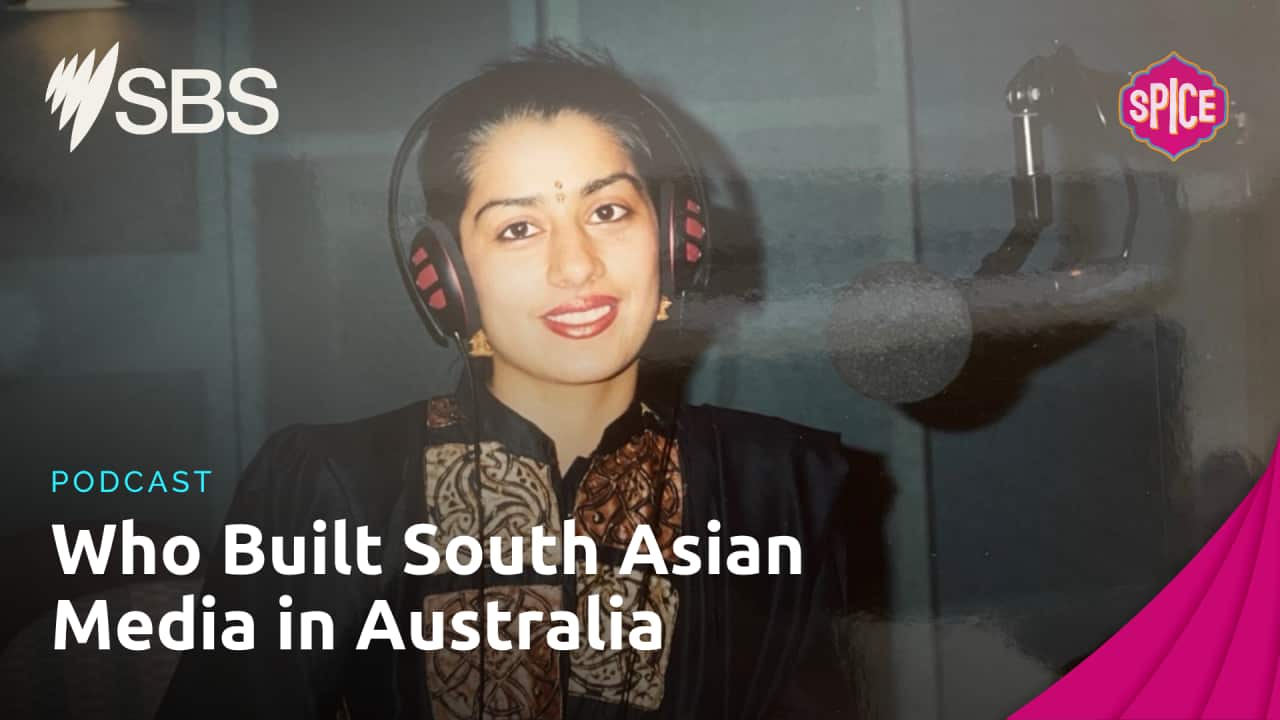
As SBS Spice turns two, we are reflecting on the legacy we stand on. And so, we had to speak to Manpreet Kaur Singh — a Walkley-nominated, multi-award winning journalist who has spent over three decades shaping South Asian media in Australia, from SBS Punjabi in 1993 to now leading SBS South Asian. She’s also our boss, so we’re on our best behaviour… for once. She might be the spiciest one in the room. Listen now.
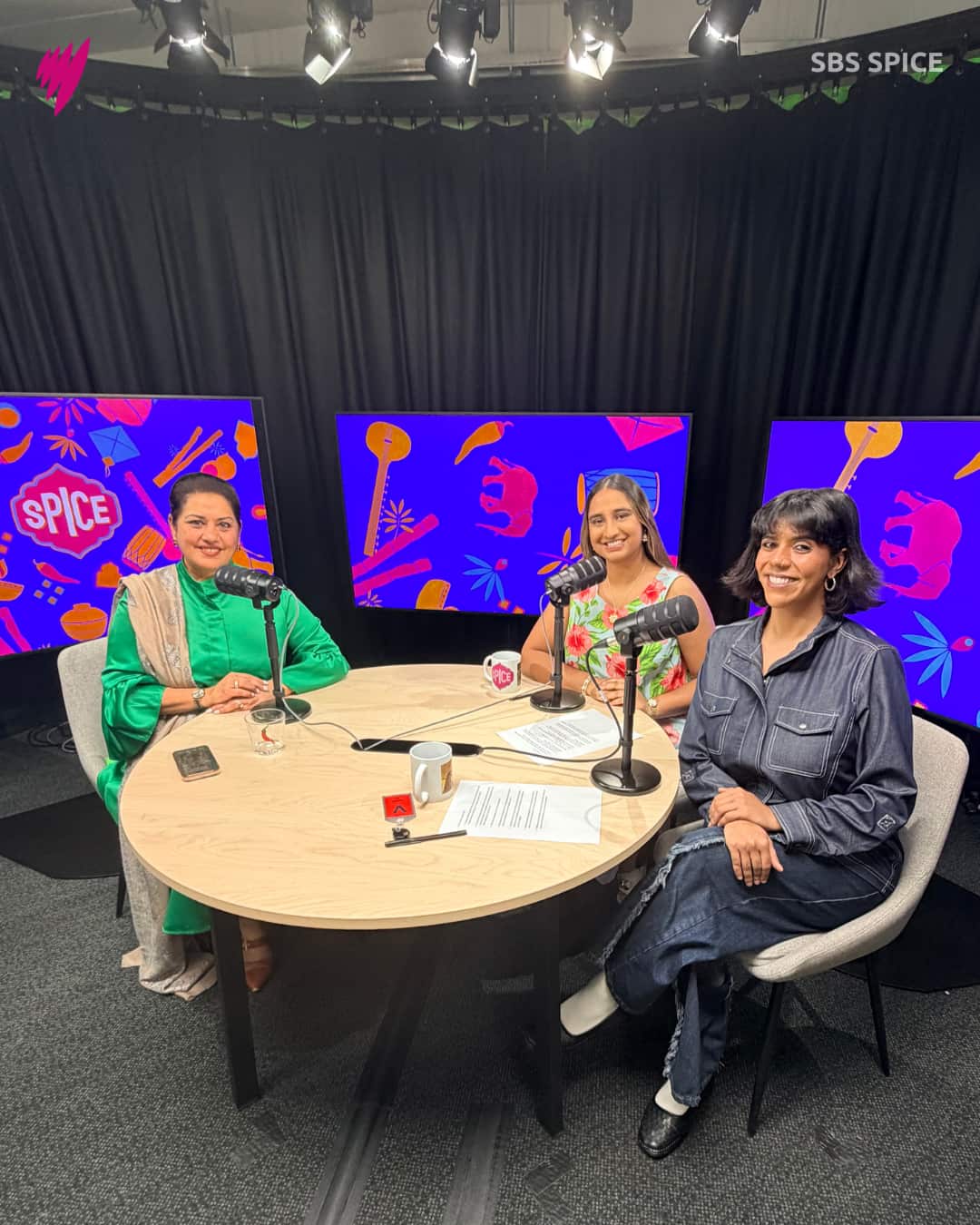
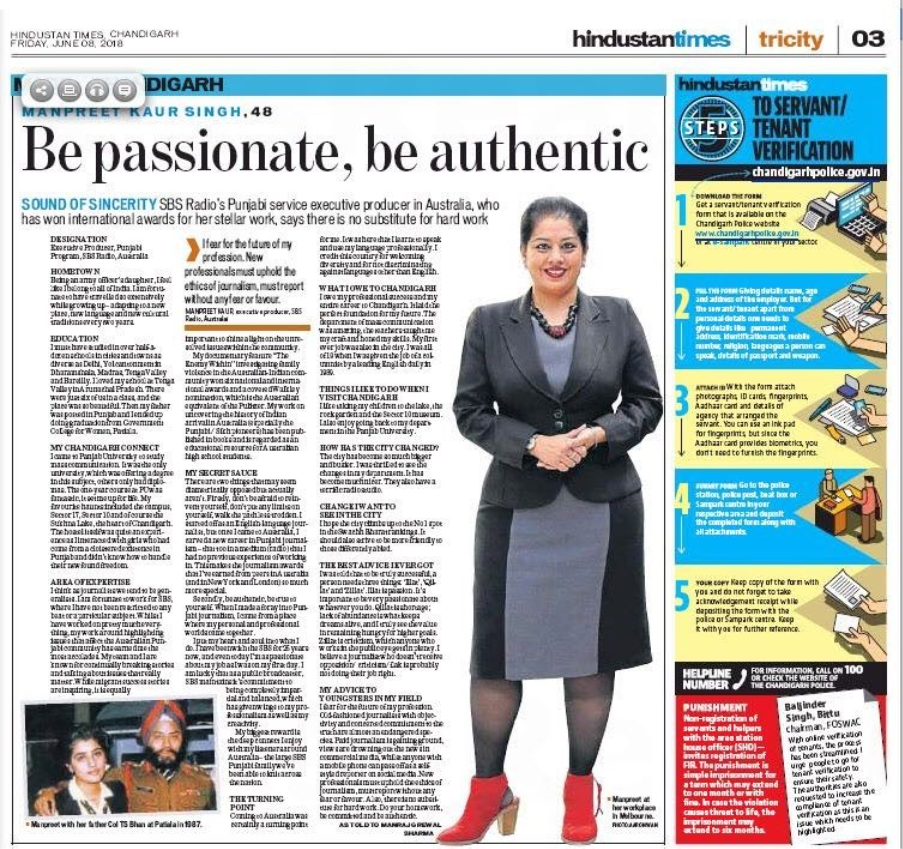
As Program Manager of SBS South Asian, Manpreet Kaur Singh sits at the helm of one of the country’s most significant multilingual media offerings. A Walkley-nominated, multi-award-winning journalist, she brings more than three decades of experience across radio, online and television, including SBS World News.
Over that time, she has delivered thousands of news bulletins and reported on stories that have shaped multicultural Australia — and, in many ways, how Australia sees itself — while leading multilingual teams at SBS Audio to build rigorous, community-led journalism across languages and platforms — work that continues to shape the national conversation.
We’re lucky to have her join us on SBS Spice.
SBS Spice is your go-to for South Asian Australian culture, exploring what makes us tick—or ick. Catch us on your favourite podcast platforms: Spotify, Apple Podcasts, YouTube and the SBS Audio app. Or tap the audio player to listen to the full episode. Follow SBS Spice on Instagram @SBSSpice and never miss an update.
If you liked this chat, cue these next:
New episodes drop every week. Find and follow SBS Spice on Instagram @SBSSpice and never miss an update.
spk_0
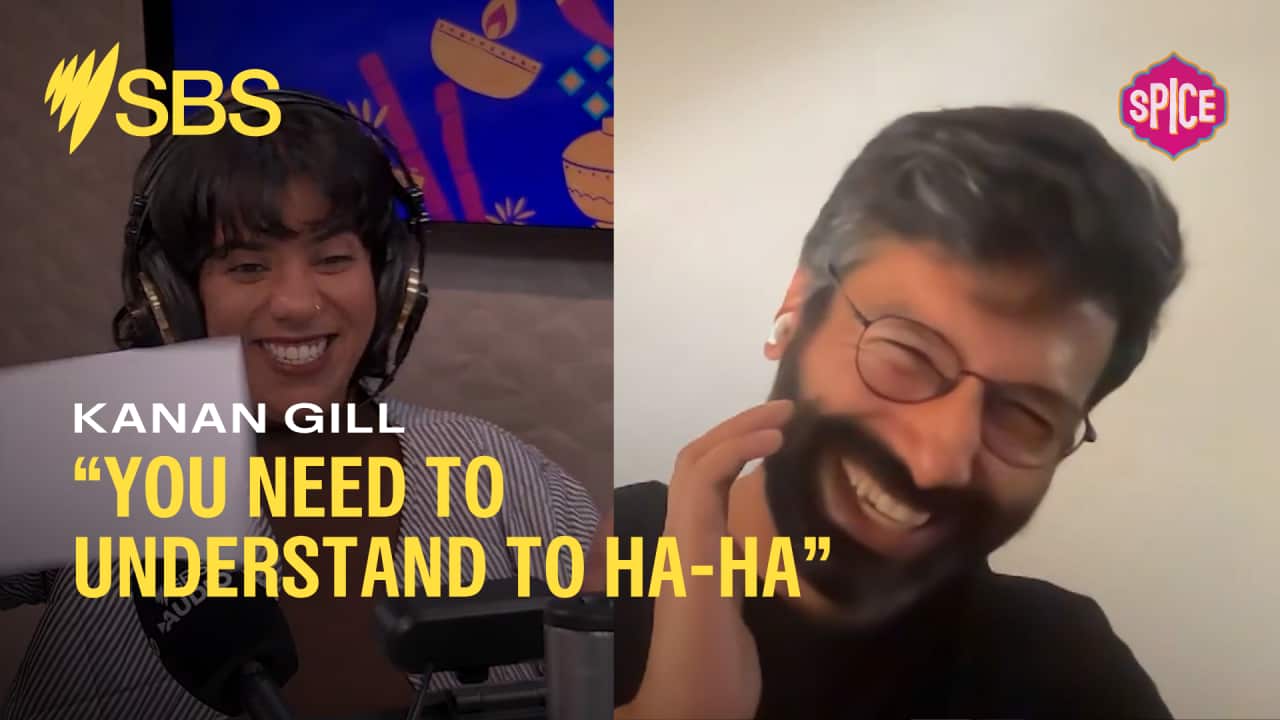
Welcome back listeners. SBS Spice is 2 years old today, and moments like this make you pause, not just on what you've built, but on what existed before you, because the truth is, none of this starts with us. We thought the best way to mark turning 2 was to sit down with someone who is really special to both Suhayla and I.
spk_0
And has been doing this work for decades. South Asian media in Australia didn't just appear, it was built slowly, deliberately by people working across languages, across communities, and that legacy is what we are standing on today. Manpreet Kaur Singh is our guest for this episode. She's a Walkley nominated multi-award winning journalist who has spent over 3 decades shaping South Asian media in Australia.
spk_0
She joined SBS Punjabi in 1993 and is now leading SBS South Asian. Her work spans everything from documenting early Indian migration stories to investigating complex issues within the community, including the enemy within, which is about domestic violence, and I highly recommend you listen to it, listeners, and that earned her that Walkley nomination. It is such a meaningful chat, and I can't wait to share it with you. Let's tune in.
spk_1
When I joined in 1993, um, I still distinctly remember how hard it was looking at the media landscape, not seeing anyone who looked like us, who sounded like us, who spoke our languages, or um in the sense that um had names like us, you know, skin colour and all of that was really, really important. And, and especially because I'd come as an established journalist from India, thinking that, oh, yes, I will get my job straight away.
spk_1
Really was a soul destroying experience for the first year and a half, but thank God SBS came along and connected with the, with my roots, you know, for me to be able to broadcast in Australia in language, uh, and connect with my roots and connect with my community. So to me that was fantastic. Um, so it was very humble beginnings, a half hour broadcast, uh, at 11:15 p.m. every fortnight.
spk_1
That's all I had. I don't know how many people listened to me back then, but in 1994, I got a better slot and it just continued to grow. It was a like a one woman army for the longest time because we'd just had one programme, and then it became a much bigger community, so we had more Punjabi programmes, and it's been my greatest pleasure that for the last 5 or 6 years, um, I've been looking after, uh, several language teams, all from the Indian subcontinent.
spk_1
So, the special thing about that is that a couple of years ago, we launched SBS South Asian.
spk_1
Uh, which has 10 different languages, uh, all for the subcontinent. And if someone had told me back in '93 that I'd be overseeing a 24/7 channel for the South Asian community in Australia, I would have said, you, you're totally dreaming, not possible. And then soon after with SB South Asian came, obviously Spice. So it's my greatest privilege I feel that we've been able to launch something also for the next gen.
spk_1
Not just for the nostalgia of of migrants and having voices of people heard who are not normally in the national conversation. What kind of
spk_0
stories were you doing and who was listening back in the 90s? Uh,
spk_1
back in the early 90, the stories I did were literally just a bit of news from home. Um, and maybe an interesting story, because it's just a half hour slot. And by the way, by the way, you are too young to know this. We used to work on reels.
spk_1
So it, now you've got everything is, you know, electronic. I actually had reels to work on, so any interview I recorded was on a reel to reel thing. You know, the ancient, yeah, that's why I said. So there you go. We would record that and then we would mark our interview with a bit of paper that oh my interview's here, and if that paper fell, mm mmm mm try queuing it live on air.
spk_1
And then you use a blade to cut a lot of hazards. I should probably not say. But that, that was the scenario. There was no electronic, there was no internet, no social media. It was a very different time. So the early beginnings were very small, just a little bit about homeland, and this piece was all about connecting with the homeland because people
spk_1
would have no other way. And even for me, almost my major source of news used to be a newspaper which would arrive two weeks after the event and then you're still picking up because, you know, news about South Asia generally did not make it to SBS World News back then that much because there's so much happening in Europe, so many other things happening. So it's a very different time and I think our um our whole emphasis was making people feel at home.
spk_1
Making people feel connected that even though you're in Australia, you'll hear your language and a little window to your homeland, and that's what we did.
spk_1
We made a remarkable shift, uh, later in the 2000s, um, about 2006 or 2007.
spk_1
To then say, OK, we're pivoting, because the internet was there, satellite television was there, people were getting so much homeland content through those. So who would want an Australian broadcaster to get, you know, second or thirdhand news um and present it here. So we pivoted to being more Australian content. In fact, very deliberately, uh, almost 3/4 of our content is Australian.
spk_1
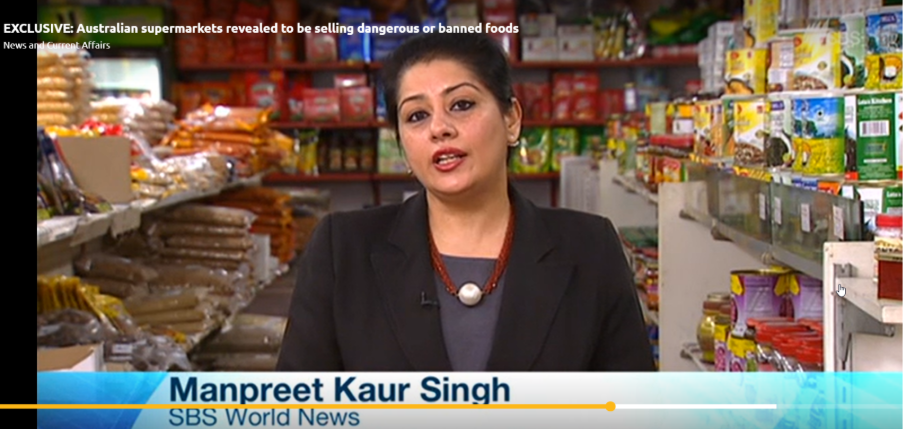
Um, and we talk about news in Australia, how it impacts our community over here. So whether it's the budget or, you know, the oil prices right now or anything like that, family domestic violence, you've mentioned the enemy within and, you know, maybe we can talk about that, or some investigative stories I've done about food, um, the grocery stores, the South Asian grocery stores, the food that you buy there, which comes, which is imported.
spk_1
Is it compliant with Australian standards? That was a year-long investigation, um, again, that was nominated for some good awards, um, and then this whole thing about migration to Australia, the South Asian community, the Indian community, Punjabi community, I did a lot of work on that, did some amazing, phenomenal stories, and if we have time,
spk_1
I'll rattle off a couple because some of them just, I still have goose pimples at how did I do that? Um, so it's just been wonderful to be able to document all of that and literally, like I said, put a spotlight on the community, which may not normally be.
spk_1
In the spotlight in the mainstream media.
spk_0
And then we have Suheilla, who is a child of the internet, right? Like when you were talking about cutting blades, like reels with blades, and then Sula was born with the internet and born and raised here. When you listen to um Manpreet Ma'am talk about what, what kind of feelings does it generate
spk_2
for you? I mean, it's extraordinary and also hearing about the process of having that newspaper come to you.
spk_2
And by then those stories might have been maybe 2 weeks old and then having to report that to your audience. I think that process of slow news is quite incredible, but must have been so important because many would have looked at you as the voice of the community at that time as well. And thinking about it as well, you would have been in your twenties when you first started at SVS Punjabi.
spk_1
Oh, I just came in a pram. I was in a trainer.
spk_2
Still a baby.
spk_2
But now, Dilri and I are in our 20s and 30s as well, so I'd love to know more about who you are and what your motivations and concerns might have been at that age for SBS Punjabi radio.
spk_1
Ah, very good question. So the interesting thing, and I'm maybe revealing something here, I'd never worked in the Punjabi language back home in India. We know the way things happen back home. So I was a television presenter, and that was either in English or in Hindi.
spk_1
Um, and I was a newspaper writer, which was only in English, right? And that's how things work in India. That's the main language that you work in. So I never actually broadcast or worked professionally in my mother language. So to me, it's the biggest gift that Australia has given me or SBS has given me.
spk_1
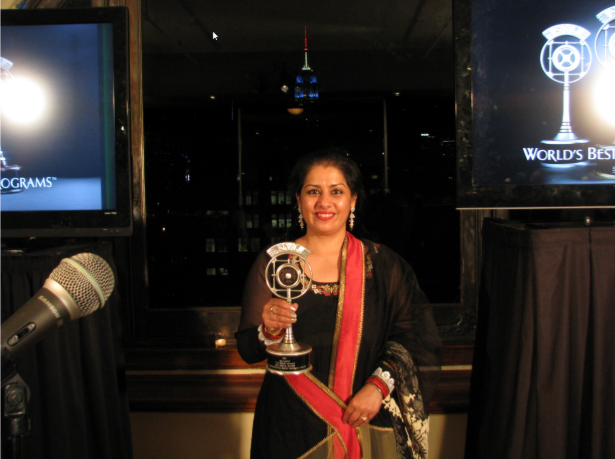
Um, for me to actually learn to use my mother language professionally, because I've never done that before. Um, and that was really my motivation that to bring good journalistic rigour to Punjabi language journalism in Australia and, and say that, hey, we do good quality journalism. And that's why those milestones are important. These are community stories, but if they are, you know, good enough to win the UN award, the New York Festival and,
spk_1
You know, the multicultural awards all around Australia and of course the Walkley nomination, which I really covered, um,
spk_1
To me, that's, that's great because our journalism's right up there.
spk_1
And it's impactful journalism because it makes a difference in people's lives. Yes, TV feels nice, you're looking at it, but TV you can look away and, you know, not have that connection with a television presenter. Somehow, the voice connects so deeply, and it's been amazing to see the response from the audience. They, they actually,
spk_1
Feel like we are members of their family. I mean, it, it was appointment radio at the end of the day, right? Once a week or once a fortnight. So people are tuning in 5 minutes, 10 minutes in advance, not wanting to miss a second of their language because they won't get it elsewhere. And they're inviting you to their homes, to the lounges, you know, to the dinner tables, and you, you are accompanying them. So to me, that is the real special connection.
spk_1
We at SBS um audio now, um, we were called SBS Radio. Back then we were SBS 3 EA in Melbourne, 2 EA in Sydney. Uh, and that's a special connection we've always enjoyed with our audiences. I used to get letters, you were asking about how people connected. I would get letters after every programme. I really love that. But this was really nice. I don't agree with this very respectfully.
spk_1
So, but I thought it was just lovely back then. snail mail worked really well.
spk_0
I'm curious about the respectfulness. Hey, when people were disagreeing with you, I think there was still a level of dignity and respect. Do you think that has changed like people's relationships with journalists because honestly, now we get trolled.
spk_0
There is no respect actually. You're kind of protecting yourself, guarding yourself because people are aggressive in their opinion. How has that changed and what have you observed with the kind of relationship we have now?
spk_1
I think that's changed dramatically with the advent of social media. Yes, because, everyone's become more opinionated.
spk_1
Um, I know it's a gross generalisation, but I think people are so clear about what they think that they're not even open to listening to the other side or to say that, OK, there can be another perspective. So I think people are really rooted in their perspectives and are willing to be keyboard warriors.
spk_1
Without a sense of respect or, or how is is this gonna impact on someone who may have worked for a year on that story, to pick up on one aspect and, you know, be really, really negative or really combative about it. Um, so that has gone. I think the sense of respect, as I say it back then was that people were just so grateful to hear something in their language. And if they didn't like something, they said, no, I actually didn't agree with it, but the rest of the programme was really good.
spk_1
You know, so there was that aspect of it. But now I think we, we're living in an increasingly polarised world. It's suddenly, um, it's, I think.
spk_1
The way the world is proceeding around the world, it's not about Australia, India, anywhere.
spk_1
A very us versus them kind of a mentality. We live in this echo chamber of our social media, uh whatever we subscribe to, and we're not open to the other, and you're right, trolling is big. Um, mind you, um,
spk_1
I had my series of issues as well, right? So, especially when you're reporting copiously on family and domestic violence, it becomes really hard when you are doing that, A, as a journalist because that's the vicarious trauma you go through. I'm not a social worker. So to hear those awful, awful stories and document them, record them, but empower the people.
spk_1
To, you know, just come out with those stories and then look at all aspects of it.
spk_1
And it's not just violence against women, there's also violence against men. We have to recognise, yes, the majority is against women, but there is a great deal against men as well, and to be able to document all of that. So, you know, you do that on the one side.
spk_1
And then the community gets really upset as well I portray a negative side of my community.
spk_0
We were just, just talking about this last week, listeners, I hope you remember because Soila and I really think that sometimes when we want to talk about issues within our community.
spk_0
It is looked down upon in a way that why are you maligning the community or why are you shaming, but it's like, well, we're thinking about the victims of the social issue who are also part of our community. So, what community are you talking about versus what community are we talking about?
spk_2
It's like when there's, when we start to delve more into the dark corners of our community, that's when we seem to get an uproar of people who
spk_2
Almost refuse to acknowledge that it's an issue and the fact that we're talking about it is power in itself, and so it seems like the kinds of backlash you were getting, we're still getting the same kinds of backlash, that hasn't changed in that time. Look,
spk_1
it, it can get really devious, but I guess the, the, the nature of it is such that if you feel like this large community is a family, then why are you talking about family business in the open? Why are you broadcasting it? I think that's where it comes from.
spk_1
But the way it manifests can be very devious, so, um, look, it's, it's not hidden that I've um,
spk_1
I had to go to the police 7 times. I've been stalked quite severely, I've received a lot of threats, um, doing the work that we're doing, and I don't think anyone should be in the receiving position of being threatened for just doing their job properly, right? Uh, but unfortunately, the people who are threatening, you don't see it like that. They feel personally threatened or attacked.
spk_1
Uh, or their community being attacked and that's why it comes out. So, look, it's not always a bed of roses. Uh, but I think what the biggest inspiration for me, and if I speak about, again, the family violence stories, um, would be to see,
spk_1
How the women have then been able to come out of it.
spk_1
And make a big life for themselves. So, specifically with the enemy within, the 6 people I talked, unfortunately, 1 was deceased, so we cannot.
spk_1
That that story ended there. But of the 5.
spk_1
Every now and then I've met them.
spk_1
And they're leading such amazing lives.
spk_1
And every time they'll tell me, thank you.
spk_1
Cause
spk_1
For the first time I was seen, for the first time I was able to articulate it.
spk_1
And then actually heal myself and move on.
spk_1
And that is the biggest reward. Let aside any other award or anything else. That is the biggest reward that you know.
spk_1
A little bit of your work has made some difference, you know.
spk_0
But were you aware of the impact you were going to create with this
spk_1
project? No, absolutely not. I just did it because there was this period around 2010, 202011, where in a period of about three months, less than three months, we lost 12 lives in Melbourne alone to family violence, including,
spk_1
Women, children, and a couple of men as well. Um, so the killings happened and then the men chose to end their lives too.
spk_1
And it was horrific.
spk_1
Uh, to read that and then to read the reportage in the.
spk_1
I'll call it commercial media, um, was very negative because it would blame Indian culture for it.
spk_1
And to me, you cannot blame any culture, let alone Indian culture, any culture for violence. Violence is a behaviour. It's a choice that people choose to behave in that way. You can't, you know, blame a culture, an entire community for it.
spk_1
And that, that just felt that, you know, that maligning is not right, that oh, it's because the Indian culture is this, or it's because the woman feeds the man when they get married at the time of getting married, but no, that's quite normal. The man would do that back too, but if you just take that one picture out of context and say, oh, that's what Indian culture is.
spk_1
It's not accurate. So to me, that was it, to have a cultural sensitivity, not to brush the issue under the carpet.
spk_1
Uh, to actually speak to, I would say survivors and never call them victims, to speak to them, how they survived through it, why did they not leave the situations and things like that. I speak to the police, uh, speak to the magistrate, uh, speak to social workers, and actually define what is family violence in Australia, because a lot of us don't realise that.
spk_1
So, yeah, that, that was the motivation for that, and I had no idea it would have that impact to go on and win 7 or 8 awards that it did. And I feel immensely grateful that it's been used as a tool for learning, even in
spk_1
Melbourne University and other places that, you know, that that's how you put a documentary together, but on happier notes, I, I really want to talk about happy things as well. It's not doom and gloom, and this is important work that we do, very happy to talk about other stories. Yes,
spk_2
I would actually like to ask on that note, I mean, as you mentioned the doom and gloom.
spk_2
It's going to be there and it's our responsibility as journalists to report in it, and I would love your wisdom on how do you pause when you're doing a story like that, and kind of let yourself heal as well, because it's very hard to report on very heavy stories as well. What kind of tactics have you used to make sure that you're also OK when you're reporting on these stories?
spk_1
You're so right. Soheila, the uh vicarious trauma that you get out of this is awful. I would sometimes find myself crying at night alone.
spk_1
Because you've heard just horrific stories of violence.
spk_1
You know, no person should ever have to go through that. So I guess I had to create some guardrails, and I kind of maybe stopped and started a little bit. Enemy within took a year for me to put together.
spk_1
So I had to do that, take a break, take a breather, um, I had no other support in the team as such, I was the one woman team in the Punjabi team. So, um, I had a great manager, I would debrief with them, um, and I would just take maybe,
spk_1
Now we call these mental health breaks, I didn't really term it like that back then, but yeah, it's really important to make sure that, OK, if you are being very emotional, you need to stop because at the end of the day, that's going to interfere with the way you report. So you've got to make sure that you're in the right headspace, and when you feel strong enough, that's when you actually deal with it. And I think it also changes,
spk_1
The perspective to keep bringing back to the present.
spk_1
Yes, we've talked about the past, let's talk about the present. How are you now? What have you changed? What's working? That's what brings hope.
spk_1
And then when you talk to social workers and talk about prevention, then you feel the hope that even if 1 or 2 people are going to escape family violence as a result of this.
spk_1
I really believe in the work that I'm doing. So I guess it's just important to be self-aware. And you're so right. The news cycle these days is so all pervading.
spk_1
Um, it's, there's so much terrible news out there.
spk_1
You have to give yourself a breather. You're
spk_3
with SBS Spice.
spk_2
It's been incredible listening to how much work you've done for our community and we'd love to now talk about how Spice came into the picture. Um, what kind of conversations prompted you, your team and you building SBS Spice, however many years ago, 2 years ago, 3 years ago?
spk_1
So look, Spice was, I can't, I can't claim the decision that, that came from, you know, our um in SBS Audio, the senior management decided that, you know what, we've got so many languages and we reach out to the first gen migrant migrants in their language, but there's such a strong cohort of young people who may not necessarily connect with,
spk_1
The spoken language or listen to the news and language or interviews, but they so connect with the culture.
spk_1
Uh, the shared experiences and things like that. They could be 1st gen, young people, they could be 2nd, 3rd gen. So, we just needed to understand how best to reach out. So this was a little bit of an experiment that we realised because the South Asian community is has such a high proficiency in English. It just kind of made sense and with the number of international students here, the number of um 2nd, 3rd gen young people.
spk_1
And the new arrivals that uh that were coming in, it seemed like the right thing to do, to reach out to a cohort that we were not reaching out through our language broadcasts. And also in this age of the internet and all of that and the social media and everything, um.
spk_1
Just a safe space for everyone.
spk_1
You know, to be proudly brown.
spk_1
To to even make fun of ourselves, but then really talk about identity issues or everything that we grapple with, um, because I find migrants try so hard to fit in, so hard to fit in somewhere they kind of lose their identity. Uh, so whether it's 1st gen, 2nd gen, 3rd, it, it continues. That is a process that continues. It's so hard to have a safe space where you can easily discuss everything.
spk_1
Relationships, skin colour, whatever.
spk_0
Yeah, I think that's kind of one of the first conversations Suheila and I had when we joined the Spice team earlier in the 80s and 90s, because identity or representation were not really keywords you would use even in a conversation or a sentence. And now, you know, now they are buzzwords. Now everyone is talking about them. But back in the day, perhaps, for the lack of a better phrase, assimilation was something that was really important.
spk_0
We did a story yesterday where um this older Punjabi woman told us that she gave white names to her Punjabi sons because, you know, she didn't want them to have the kind of experience that she did and that was what protection looked like back then. And now when we talk to 2nd or 3rd gen or myself, who's a 1st gen, but younger, came here to study, is a professional.
spk_0
There is more pride and more joy to be brown, and, um, you know, there's a certain rejection of assimilation, but there's more, uh, you know, we embrace integration or or community or union or we can be different and be in the same place. We don't have to look or sound like each other, and difference is, you know, in fact, beautiful. Um, and I think that's kind of one of the first things that Suheila and I connected on.
spk_2
Yes, and it, it's lovely that you talk about SBS Spice being a safe space, because in some ways it, it is a space for healing almost, because speaking as second gen, I did go through that phase in my life where I was rejecting identity in many ways, whether it was trying to anglicise my name or, you know, not bringing my lunch to school that might have been what's your
spk_0
anglicised name?
spk_2
Oh, people were just like,
spk_2
So Sahela was how people told me I should pronounce my name after a while because they Suhala is actually how you're meant to pronounce it, but for some reason, my,
spk_0
they can say Punjab. I know.
spk_1
Oh God, don't get me started. I've been the Punjabi pronunciation police for the
spk_0
longest time. 100%. You
spk_1
know, if you say, you can say, you can say sun, why can't you say pun.
spk_2
And it's 3 syllables for me, but then I remember having that clarity when I was like, I don't know why I'm doing this to begin with, and I don't know why I'm also hating the part of myself that rejected that. So, SVS Spice did become a safe space in a way, not only for me but for many people, we're seeing a lot of, um, people be more visible about identity because they can see it now, like,
spk_2
It's so accessible, we have the reach to make that happen, and I think it's just important work, so to hear that, you know, now we're out of space where that transition happened. You've made that
spk_1
dream come true. Yeah. So that was the idea, the two of you, I mean, considering all the viral videos that you've got and all the followers that you've got.
spk_1
Clearly, it's, it's tapping on that nerve in the audience out there. There this space wasn't there earlier. And I'm so glad we were able to go down this path and trial something absolutely new. So this is a trailblazing thing that you both have done. Uh, for me, it was in my mind when we first
spk_1
Thought about, OK, we are, we didn't have the name Spice. Yes, I was just told it was the English, South Asian English language thing that we have to start and it'll be digital and obviously, so the first thing was to connect with all of our South Asian teams to say, is there one word that we all agree on?
spk_1
That took quite a while. Yeah, it did take quite a while. That exercise was quite long to say, is there one in language word that all, you know,
spk_0
but look how much that speaks to the linguistic diversity of our subcontinent
spk_1
that actually said to us that, hey, all the more reason.
spk_1
We have so many similarities, but then there are so many unique aspects to our language, culture, all of that. Um, so yes, we got the name, uh, we, we, we, we got the name and always in my head, I thought ideally, I would love a first gen migrant and a second gen. And I really couldn't have dreamt of anything better.
spk_0
That's such a visionary.
spk_1
No, I, I, it really feels so wonderful and I can't believe you're 2 years old.
spk_0
I know, it kind of flew,
spk_2
fly, we do, we do think about how much has changed though in those two years as well, like it was such a short span of time in um making Spice happen, but since we launched, we've changed so much since where we started and it's been a good change and a very good place we're at right now as well, um, of course in that trial period, you would have had many questions about what spice is meant to be before we came on board. Can you talk to us about,
spk_2
Any points of hesitation you may have had about what Spice was meant to look like? Yeah,
spk_1
look, we've thought long and hard. Um, I think in my head, the way we decided was that it was going to be more representative of the younger community. So obviously, it has a very young, so kind of an outlook. So it didn't need to sound like our radio programmes, we're quite formal on, on in language programmes, right?
spk_1
And the other thing that differentiates spies from uh the language programmes is, it's quite news oriented, you know, we, we, we, it's that inform and educate, of course, we entertain as well, but the inform and educate aspect of the in language broadcasting is really, really important. Whereas the spies, it was more an informal kind of a coming together, a meeting ground for the young community. I didn't really want this to be very news heavy.
spk_1
Because there's enough fora out there to discuss day to day news, so I, we never expected spies to have a daily news bulletin, for example. But of course you would be on trend. So if there's something really important.
spk_1
Yes, what are the young people of the South Asian background thinking about
spk_0
this? That makes sense as well, because I think for a lot of younger people, it's the impact of the news or how the news settles. How do we navigate the headline of the day? So it's almost like the aftermath of the of the said, you know, news. Um, so yeah, I think that makes sense because even for Suhil, it's like, what's new Z?
spk_0
Or what's trendy trend? What are people talking about? How does it impact us?
spk_1
Yes. So of course, you will talk about the elections if the elections are going to happen, you will speak to the young people, but I would not expect you to do have an everyday podcast about oh this party and that party and, you know, break down their policies.
spk_0
Oh my god, you meant political party because I was like party.
spk_2
You can see where our heads are
spk_1
looking at the chilli in my glass and thinking party time.
spk_1
This is water, by the way, everybody, this is water.
spk_0
No, um, what has your favourite story to do on Spice? And I'm asking this question not personally, but I think only because Manfred Nam is here. Has there, has there been a story that you did and it suddenly took you back to some of the earlier conversations you had with her about what we wanted Spice to be?
spk_0
Like a direct relation, you know, like an aha moment, like, oh, that's what she said when we launched Spice and here I am doing the story.
spk_2
I will go back to a particular story for me, which was my Garmidday panel. That's what I was thinking about. It, it was so important to me and the fact that we made it happen, and I will tell our listeners, we did it on such short notice as well because Spice has had just launched at that point, but the fact that I was able to get 6,
spk_2
Incredible Indo-Fijian voices together on one episode where we just purely talked about identity and the fact that I had never seen that before, and the fact that I was making that happen made me so proud. I think
spk_0
that's, that's the kind of correlation that I was, you know, trying to get at because you obviously are a journalist but have an Indo-Fijian background and some of my earlier conversations with Manpreet Nambo,
spk_0
A lot of South Asian, um, storytelling or media can be very Indo-centric and Indo-focused. So it was really important for spies to be very pan-South Asian and pan-South Asian diaspora. Um, and I thought that story was really, really special. And every time I think of that story, I'm like, aha moment.
spk_0
It's a direct conversations that we had with her before we ever started recording that we wanted to sort of step out of that um saturation, I suppose, of of the subcontinent, yeah, and it's
spk_2
opened up a new world for me as well because I've been able to connect with these people and, you know, growing up in Australia, seeing the media that I did, I didn't see many Indo-Fijians, so I had to purely relate to what was being shown for mainly Indians and look what
spk_0
you've done.
spk_2
Change my
spk_1
happily take the credit, even though I shouldn't. So, no, no, it, it to me, it's very empowering. It's very empowering to hear these conversations take place and that's exactly what it was, right? Relationships, or even with parents and, you know, finding your partner and things like that. To me, that was a really important conversation to have.
spk_1
Yes, and that whole thing about fobs is, yes, yeah, I'm still a fob,
spk_0
very proud fob and.
spk_1
So I think those are really important because these are authentic. Yes, we have we're not, you know, engineering anything here, and to me, that's what makes spice tick. Oh, it's authentic.
spk_2
Bill Pitt, was there a story that kind of had the same impact for
spk_0
you, um.
spk_0
Uh well, I have, I didn't say this in my intro, but I'll take the opportunity now. I actually know about Manpreetnam before I ever even thought of flying to Australia. So I heard of you like, maybe like 67 years before, um, I even took the flight to Australia. So she was famous in Punjab. So my parents were always like, Madam Hamman Preet Kur Singh and.
spk_0
So I knew of her and her voice before I ever thought that my future would be in Australia, because, you know, I, I never thought of leaving India and, and it just so happened, um, but I, yeah, I think my first, um, not the story that I did, but I think the anime within actually had a quite a big impact on me as a journalist because I just,
spk_0
I just thought that that was a possibility, that if I had come to Australia to do journalism, that I could one day actually follow, investigate community stories, um, and that could one day be me, and I was in Melbourne listener, so every time I left the Flinders station, there was SPS right there staring back at me, and I was like, you're teasing me.
spk_0
you're teasing me. I know you better open the doors. Sometimes you just don't think, you know, things are possible unless you see them. They've happened and they've been celebrated.
spk_1
So, now let me tell you about something that this has nothing to do with spice, but a story that I've always gone back to because it was unbelievable in how it unfolded. So this relates to the history of Indian arrival in Australia.
spk_1
And someone mentioned to me that there was an Indian hawker who died in the 1940s, um.
spk_1
And his ashes are somehow still in country Victoria.
spk_1
Um, do you wanna check it out a little bit more?
spk_1
Now that, that's bizarre. Why, and what I was told was a funeral parlour owned by an Australian family for several generations, held on to his ashes.
spk_1
And I really wanted to check it out a little bit more, and then we found out that Puran Singh, the name of this hawker, arrived in Australia in 1899. He worked as a hawker in country Victoria, you know, hawking goods, and he was really loved by the people in Western Victoria. So Warrnambool, where the 12 apostles and, you know, and if you go to, so Warrnambool is where the cemetery was, and he had really good relationships with people over there, and when he after he passed away,
spk_1
He had mentioned to people that I want my ashes to go into the Ganges River in India.
spk_1
That was a traditional thing back then in India, amongst the, you know, the Indian community that,
spk_1
You want to be cremated, not buried, and after cremation, the ashes should be collected and, you know, put into the Holy River Ganges, so you get, you know, nirvana or whatever. So this family, the Gayat family of Warrnambool, held on from 1963.
spk_1
Until I found that in 2010, they still had the ashes.
spk_1
And they said, we're just waiting for someone from his family to come, because he said someone from his family would come. Oh, and I was shocked. I said, wow, you've kept this here for this long? And wait, this is going to unfold, so give me 2 or 3 minutes. This is just it just we're hooked, it becomes huge. So now, I go up with, there was a couple of historians in Melbourne who told me about this, and I drove up with one of them, met the family.
spk_1
And sure enough, in the niche in the wall in the cemetery, it said Puran Singh, Indian hawker died in Warrnambool, and it gave the date in June 1947.
spk_1
I was there.
spk_1
So I said to them, I said, I mean, you've held on, but you realise that a lot happened in 1947 in India. Maybe his family didn't survive, maybe they don't even know to come. They said, well, we just held on to it because he said someone would come.
spk_1
And now, Alice was the name of the lady I was speaking to. She said, I think if no one comes, I might go myself and put it. I said, that's so sweet.
spk_1
I wrote about this, and back then I used to write for newspapers in India too, because my job at SBS was part time.
spk_1
And I wrote about this in India.
spk_1
Within a day, we find his entire family in a village in Punjab. No, and it gets better. OK. So now we know that his family is in this little village called Upilpoga, not far from Jalandhar, and the family's there, but they are of not many means, and they cannot come to Australia.
spk_1
And now a completely other thing, 2010 is when the Commonwealth Games are also going to happen. Complete segue, but I'll connect it in a minute.
spk_1
I was calling a real big celebrity.
spk_1
The great Indian cricket cricketer called the cricketer of the century, Kapil Dev. I interview him quite often on the programme for his Punjabi skills.
spk_1
And he said to me, and I was interviewing about the Commonwealth, Commonwealth Games, right? So we've spoken about that. Then he just asked me a question and he said, why am I hearing these stories of violence against Indian students? Remember, back then there was a spate of violent incidents.
spk_1
Then I said to him, I said, look, there have been a few incidents and I know it's been hyped, but then this is what an Australian family, and I told him about this family holding on to Puran's ashes.
spk_1
And he got so hooked, so he asked me, OK, so what, what's happening? I said, well, I've found the family, but they can't come, so we're working out what to do.
spk_1
He didn't even take more than 1 2nd. He said, I'll come.
spk_1
So I said, what?
spk_1
He said, no, I'll come, because right now we need to build bridges between the communities.
spk_1
So on his own
spk_1
He flew from India. Goozies.
spk_2
Listeners, I have
spk_1
goosebumps. I get goosebumps every time I tell this story, and there's more to it.
spk_1
So he flew from India, the great cricketer Kaevev comes to Melbourne, bus loads of people from Melbourne go to Warrnambool for the Ashes handover ceremony.
spk_1
And we did find a grandnephew of Puran Singh, his brother's grandson in England. He was able to come. So he came, couple days was there. I was there, a couple of historians were there. We got the ashes and we flew to India.
spk_1
And I had the great honour of putting the ashes in the Ganges River. I went to Hariwar for the first time, but before we did that, we went to the village, right? Because they wanted to do the last rites.
spk_1
Soheilla and Dilpreet, we go to the village. I stood there stunned.
spk_1
The house that the family still lives in.
spk_1
Was made from the money.
spk_1
From Puran Singh's, what he had bequeathed his brothers after he died.
spk_1
And on top of the house was a large, it was written.
spk_1
Puran Singh Australian.
spk_1
There, in India, in Jalandhar.
spk_1
Doesn't that blow your mind? Oh my
spk_0
God.
spk_1
So to me, this is like a once in a lifetime kind of a thing that someone gets to do. So I had the great honour and privilege of doing this story and I've always wanted to look at other stories like this, you know, and I really want the young people today to know, we have a very rich history in Australia. People started to come from South Asia into Australia in the 1800s.
spk_1
Right, mid 1800s gold rush around then.
spk_1
Cemeteries around all countrysides may have marked or unmarked graves.
spk_1
Of South Asian hawkers or people who came back then. We had several, almost 2 dozen people of our origin, South Asian origin, uh, especially Sikh Punjabi men, who, who were part of the Australian Imperial Force, who fought as Australian soldiers, as ANZACs in the First World War. This is the very rich history. So I encourage everyone listening.
spk_1
Wherever you are, if you go to a country town, go to the cemetery.
spk_1
Have a conversation with the historical society. You'll find many stories. So look, Purin's story, you'll find it on SBS. I've done a lot of similar stories about history of Indian arrival.
spk_1
And this is that shared heritage that we must, you know, recover and celebrate.
spk_0
We have never been this quiet on the pod.
spk_2
I'm gobsmacked.
spk_0
That is amazing. Honestly, ma'am, big congratulations on the kind of stories you've done as well. You know, it's, it's Suheila and I often talk about the people who've come before us, and I think, you know, social media and the internet can make a certain aspect more visible.
spk_0
But I, I just don't think just because something is visible doesn't mean that it came first. You know, there are so many journalists and storytellers who've come before us and that's the kind of legacy that we are finding ourselves on. Thank you for making all of this possible for us. Thank you for being you. Um, we're honestly in awe of you, and I think you know that because every time she walks in, we were like, man.
spk_1
Stop. You are Spice Girl, my two amazing Spice
spk_0
Girls. We don't fangirl anyone except for except for you. Yes,
spk_1
and I'm so proud that SBS gave us this opportunity to have this wonderful new kind of element added to our armour and to reach out to so many wonderful young people. So guys, please keep connecting with Gilpreet and Saheilla.
spk_0
Well, the sign-off is being done for
spk_1
everyone.
spk_0
Woo, VIP treatment.
spk_1
And we'll celebrate the 2nd anniversary with something special. Absolutely, yeah.
spk_3
For more hot takes from South Asians in Australia, find and follow SBS Spice on Instagram at SBS Spice or on YouTube by searching for SBS South Asian. Don't forget to hit that subscribe button.