
Renske Dijkhuis is a nutritionist at Leading Nutrition, an aged care dietician company.
She says research shows that a vegetarian diet can improve your overall wellbeing especially once you hit 50.
VEGET04 Renske Dijkhuis 13”
“What we have found is that it does give you some protection against overweight, obesity, hypertension - so that's high blood pressure, diabetes, cardio-vascular disease, and some cancers, as well, and, overall total mortality.”
The number of vegetarians in Australia has been steadily rising in recent years with 2.1 million choosing a mostly meat-free diet.
It has proved to better for the waistline with only 45.4 per cent of vegetarians obese or overweight, compared with 60.7 per cent of the general adult population.
Whilst more people are becoming vegetarian, Renske Dijkhuis cautions it’s not as simple as removing the meat out of the diet.
VEGET05 Renske Dijkhuis 17”
“Especially, older people do require increased amount of protein, and so, not incorporating the protein into our meals is really really dangerous, because we are dealing with more muscle wastage and losing of muscle mass in older people.”
She recommends proper meal planning - bearing in mind that whatever you leave out, you replace with other things to ensure you’re getting enough nutrients.
VEGET06 Renske Dijkhuis 20”
“What you want to make sure is if it has that adequate amount of protein in it. For example, if you have tofu - 170g, which is a serve, has about half the amount of protein, a similar serve of chicken or meat would provide. However, if you’re having really firm tofu, then that would give you much more proteins.”
If you’re not going out in the sun as much these days, you can use eggs, margarine, or a punnet of mushrooms that’s been placed under the sun on your windowsill to boost your vitamin D intake.
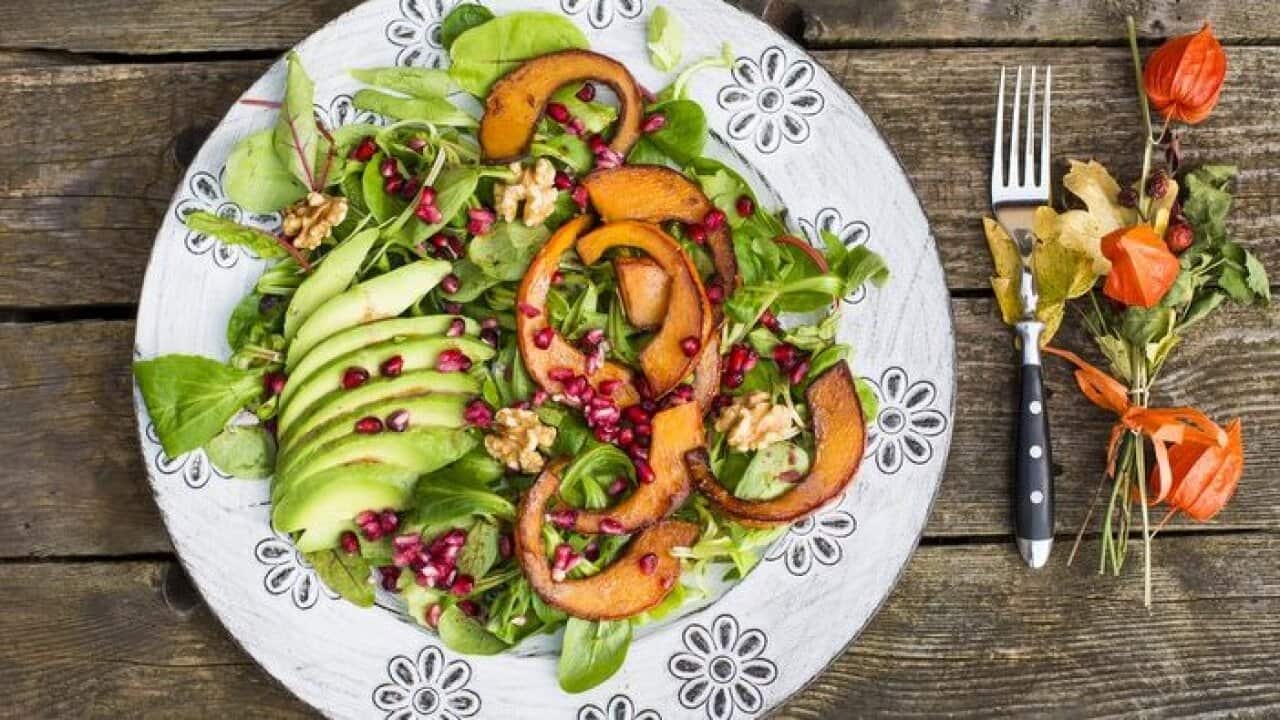
You also need to eat iron-rich foods such as legumes, green leafy vegetables, iron-fortified foods, tofu, tempeh, nuts and seeds.
You can make your meals interesting by trying recipes from other cuisines like Indian, Vietnamese, Thai or Chinese.
VEGET07 Renske Dijkhuis 16”
“There’s also a lot of protein meat alternative products out there. So, there are foods obviously based on protein and tofu, soy and tofu and those sorts of things, but also things like vegetarian burgers and vegetarian sausages.
Older adults need to make sure they consume enough vitamin B12, vitamin D, calcium, omega 3, iodine, iron, zinc and protein in their vegetarian diet.
VEGET08 Renske Dijkhuis 20”
“If someone is still having dairy food, then that is helpful, because, obviously, dairy does have a lot of calcium in it, but not everyone has dairy. They can have calcium fortified foods from soy and rice milks, and those sorts of things; lots of nuts and seeds have lots of calcium in it as well, and also Asian greens like kale, and some broccoli.”
If you think you may be low on vitamin B12, it’s worth checking with your doctor to see if you might need supplements. Even though there are no plant-based food sources containing vitamin B12, you can still bypass meat with a bit of planning.
VEGET09 Renske Dijkhuis 6”
“Pick some B12 fortified foods so some soy milk products, vege burgers, marmite.”
Brisbane-based GP Jacqui Kelly says vegetarianism is suitable for anyone provided that they’re eating the right kinds of food.
VEGET10 Jacqui Kelly 31”
“It depends on the lifestyle of the patient. But, everyone regardless of the lifestyle would need to make sure that they’re consuming enough non-heme iron - so the green leafy vegetables is a ‘non-heme iron’, whereas, red meat is considered ‘heme iron’. The iron of red meat is absorbed better than non-heme iron, so vegetarians just need to make sure they’re really conscientious with getting enough green leafy vegetables, lentils, anything they enjoy eating that does have iron, that's vegetarian, and making sure they have that with vitamin C. So, vitamin C will promote the uptake of iron.”
Dr Kelly says those considering or already adopting a vegetarian diet should be wary of iron blockers such as dairy or caffeine.
VEGET11 Jacqui Kelly 30”
“If people are eating their iron rich meal at night, that’s normally the best, cos in the morning, if the only bit of iron they’re having in the day is like, consuming a couple of eggs, but having coffee with it, the caffeine in the coffee will minimise iron absorption, and also, I guess the dairy part of the coffee - any dairy will also minimise iron absorption. So, if we have a very active 50-year-old, who’s doing a lot of running, in particular, that's where we might see a bit of low iron, and then that comes across as fatigued. And if it's a concern, we can always do some blood tests.”