New South Wales' Illawarra region is one of them.
The area has already been grappling with high unemployment, and the refugees are among those struggling to find a job
But one organisation has set out to tackle the issue
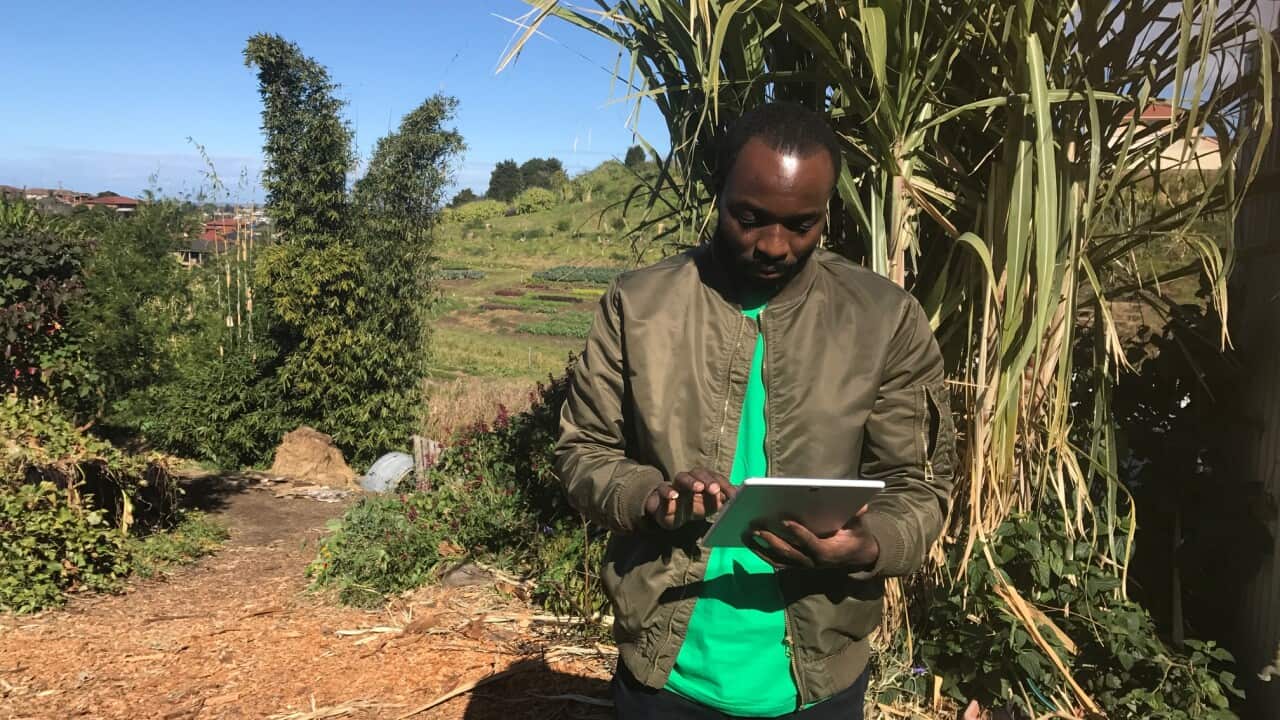
Originally from the Democratic Republic of Congo, he had spent seven years in a Ugandan refugee camp before resettling in the Illawarra, a coastal region south of Sydney.
Mr Bakenga has a degree in social work, but he says he was prepared to settle for any type of employment.
But in an area where jobs are scarce, it was not easy.
The jobless rate in the Illawarra, at 6.1 per cent, exceeds the national average, and, in some areas, youth unemployment is as high as 24 per cent.
Illawarra Business Chamber chief executive Chris Lamont says it is partly due to cutbacks in the steelworks, an industry that has long been the economic lifeblood of the region.
Mr Bakenga says, for refugees, the struggle is particularly acute.
Statistics from the Department of Social Services have shown just two in five refugees in Australia have a job four years after resettling.
To try to help counter that, the organisation Green Connect was set up to provide jobs to refugees, as well as young people, in the Illawarra.
The organisation, which recovers waste and grows organic food, is part of a shift away from manufacturing towards sustainable industries.
But his degree in social work was eventually recognised, and he was promoted to the role of community-support manager in 2015.
He now mentors other employees.
Green Connect began as a pathway program that would eventually transition refugees and young people into other work.
But Ms Moore says, with few other jobs available, the aim now is to also create more permanent jobs.
While there are targeted programs for first-time job seekers, some at the other end of the age scale feel they are missing out.
A men's shed in the suburb of Port Kembla, where the steel factories are based, is largely made up of European migrants who resettled in Wollongong after World War two.



