Intergenerational Trauma: Voices of Armenian, Greek, and Assyrian Descendants

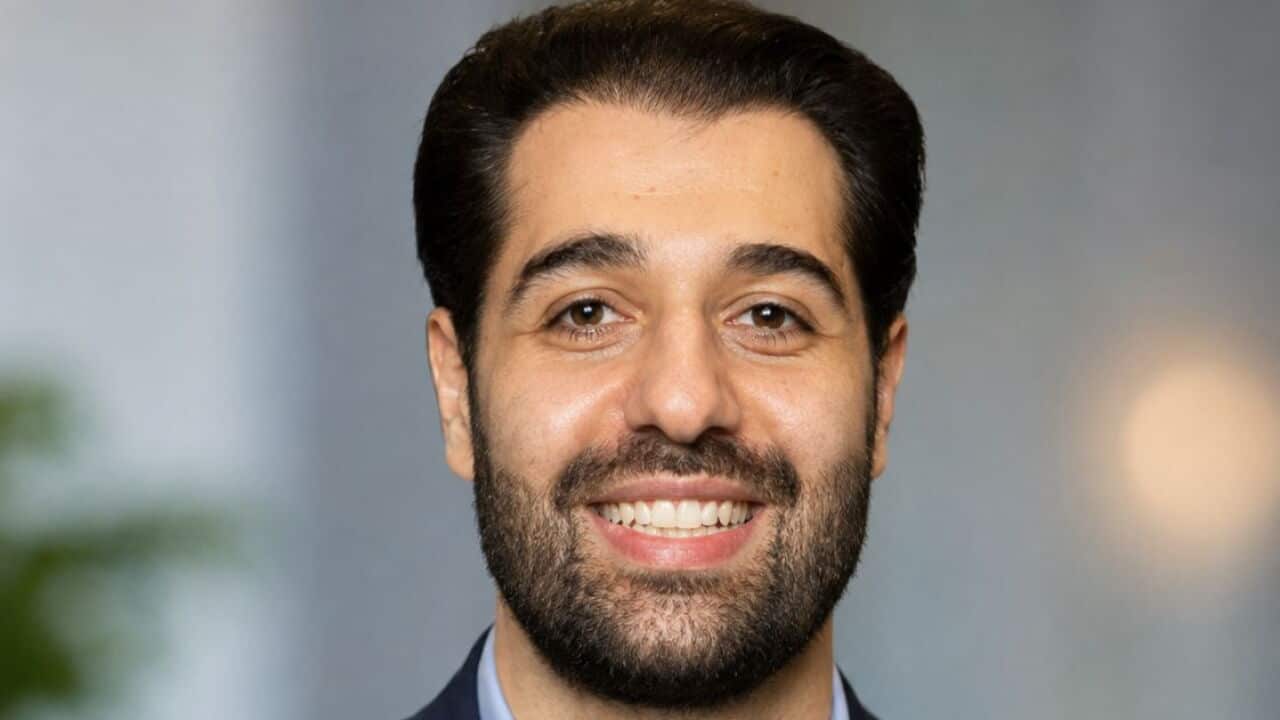
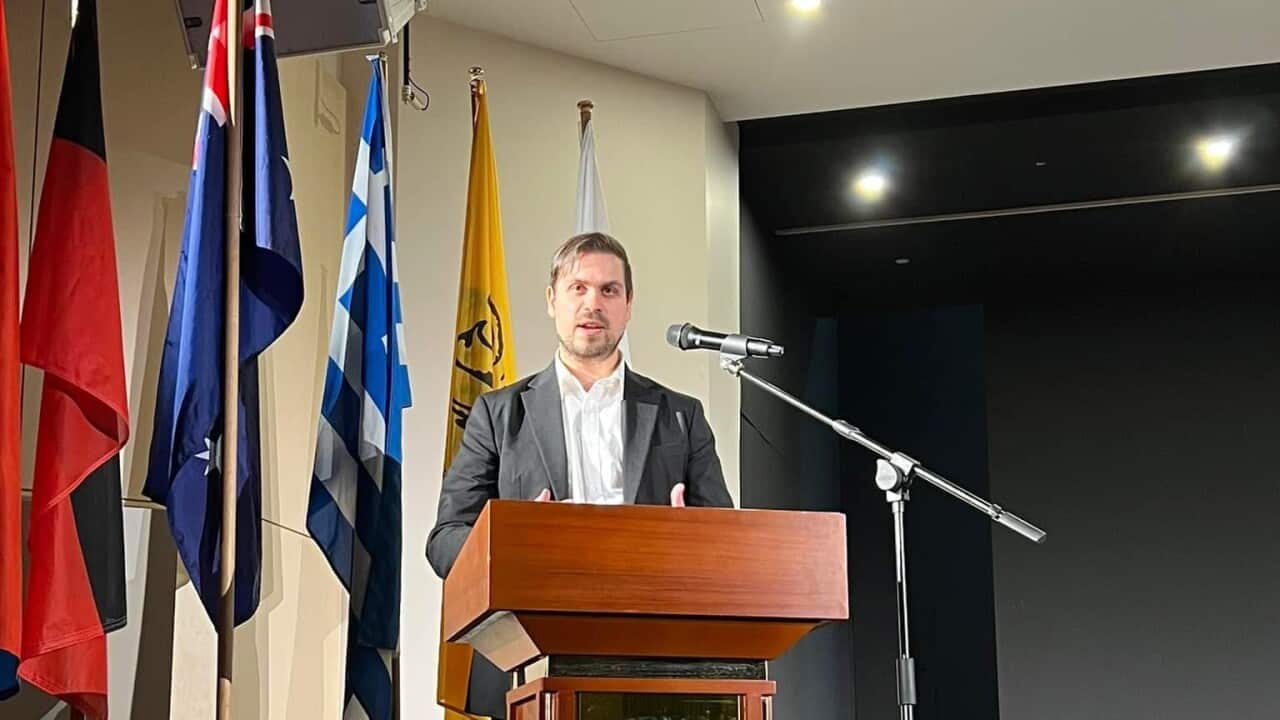
Dr Themistocles Kritikakos

Dr. Themistocles Kritikakos is a Greek-Australian historian. He graduated with a PhD in history from the University of Melbourne in 2021. Dr. Kritikakos has taught at the University of Melbourne and worked as a Research Assistant at the Australian Catholic University. His PhD thesis focused on intergenerational memory and the genocide recognition efforts of Armenians, Greeks, and Assyrians in Australia.

In this episode, we engage with Dr. Themistocles Kritikakos, a Greek Australian historian and author, to discuss his groundbreaking research on intergenerational memory and genocide recognition among Armenians, Greeks, and Assyrians in Australia. Dr. Kritikakos shares insights from his recently published book (Armenian, Greek, and Assyrian Genocide Recognition in Twenty-First-Century Australia: Memory, Identity, and Cooperation (Palgrave Macmillan), highlighting the significance of shared histories and inherited trauma for these communities.


Սերունդէ Սերունդ Փոխանցուած Վէրք։ Հայ, Յոյն եւ Ասորի Սերունդներու Ձայները

Այս թողարկման մեջ մենք կը զրուցենք յոյն աւստրալիացի պատմաբան և հեղինակ Տոկթոր Թեմիստոկլես Քրիթիկակոսի հետ՝ քննարկելու անոր նորարարական հետազօտութիւնը Աւստրալիոյ հայ, յոյն և ասորի համայնքներուն մէջ միջսերնդային յիշողութեան և ցեղասպանութեան ճանաչման վերաբերեալ:

Տոկթոր Քրիթիկակոս կը խօսի իր նոր հրատարակուած գիրքի մասին՝ Armenian, Greek, and Assyrian Genocide Recognition in Twenty-First-Century Australia: Memory, Identity, and Cooperation (Palgrave Macmillan:

Previous interview with Dr Themistocles Kritikakos https://www.sbs.com.au/language/armenian/en/podcast-episode/australia-is-missing-an-important-part-of-its-history/ld05xyur0

Read more about SBS's use of AI

SBS Armenian: In 2023, I, interviewed Dr. Themistocles

Kritikakos, a Greek Australian historian and

author, regarding his research on

intergenerational memory and genocide recognition

among Armenians, Greeks and Assyrians, in

Australia, a topic central to his doctoral thesis.

With the publication of his book, Dr. Kritikakos

now offers further insights into its principal

themes, which hold particular significance for

descendants of Armenians, Greeks, Assyrians in

Australia, who confront shared histories and

inherited trauma. Dr. Kritikakos, welcome to SBS

Armenian.

Dr. Themistocles Kritikakos: Good morning, Mr. Vahe Kateb. Thank you for having

me on your program. I appreciate the opportunity

to discuss this, important topic with you and your

listeners.

SBS Armenian: What inspired you to focus on the recognition

efforts of Greek and Assyrian genocides alongside

the Armenian Genocide in Australia?

Dr. Themistocles Kritikakos: Well, my interest began both personally and

academically. growing up. Storytelling within my

family was part of my everyday life. my mother

would speak about Asia Minor and the experiences

of her parents and relatives. my maternal

grandparents were survivors. Those conversations

were not always detailed historical narratives,

but they sparked my interest in the topic due to

my personal connection, that I had to the events

and led me to ask further questions, later on. But

at the same time, I grew up learning about the

Armenian Genocide and the Holocaust. Over many

years, I, became aware of the advocacy of Armenian

communities for recognition, not only in

Australia, but internationally. And the

commemoration, the research and attempt to

overcome denialism left an impression on me.

Assyrians are also facing persecution and

displacement, within Iraq. And this made me

question, what happens when genocidal violence is

left unaddressed? As I progressed through my

university studies, I began asking questions, why

were the Greek and Assyrian Genocides less known?

And also why were they less prominent in the

public discourse? and despite occurring within the

same late ottoman context between 1914 and 1923,

the central question for me became what were the

consequences of the late Ottoman violence, for

Greek and Assyrian communities who began

advocating for recognition alongside the Armenians

in the early 2000s. So these were the factors that

sparked my interest in the topic.

SBS Armenian: Could you elaborate on the challenges faced by

these communities in gaining public and political

acknowledgement for their histories?

Dr. Themistocles Kritikakos: So there are geopolitical and diplomatic, reasons,

behind, the issue of recognition or the events not

being recognised as genocide. So these are a

challenge within Australia, though at a national

level, achieving recognition remains a major

challenge because the recognition efforts clash

with the narratives shared between Australia and

Turkey, around Gallipoli and reconciliation

between the two nations. However, the genocidal

campaign of the Young Turks against the Armenians

Greeks and Assyrians, or the Christians of the

Ottoman Empire, took place at the same time. From

1915 onward, Australians participated in

humanitarian relief efforts supporting Armenian,

Greek and Assyrian survivors and refugees until

1930. The, Australian humanitarian response forms

part of this shared story, yet it is constantly

overlooked, due to the narrative shared with

Turkey around Gallipoli. And we see Anzacs such

as, Sir Stanley Savage, who was part of British

Operation Dunster Force, who helped rescue the

Syrian and Armenian refugees from northwest

Persia. and George Divine Trelor, an Australian

League of Nations Commissioner for Refugees in,

Greece. He helped settle over 100,000 Christian

refugees, mainly Greek, in northern Greece through

his humanitarian work. The humanitarianism and the

figures behind these events have often been

commemorated by the three communities and the

stories have been shared within the public domain,

often through research. and although this is a big

part of the Australian multicultural story, it is

overlooked. So the three communities are trying to

find their place, in the public domain in

Australian national memory. But they also have to

overcome these conflicting narratives deeply

ingrained in Australian national memory. For the

descendants of victims and survivors in Australia,

recognition strengthens belonging and it brings

justice to their ancestors who are no longer here

to see it. he affirms their histories which

intersect with Australia's humanitarian tradition,

which is another significant story of modern

Australia.

SBS Armenian: How have Australian narratives around Gallipoli

and reconciliation with Turkey influenced or

conflicted with genocide recognition campaigns?

Dr. Themistocles Kritikakos: So Gallipoli occupies a foundational narrative and

place within the Australian national identity and

memory. the figure of Mustafa Kemal Ataturk, the

founding father of Turkey and the commander

Gallipoli, and the alleged words of reconciliation

addressed to Anzac mothers have shaped a narrative

of mutual respect between the two nations. And

these narratives are tied to the idea of the birth

of the nation. So the Turkish triumph at Gallipoli

is then tied to the Greco Turkish War, when he led

the Turkish nationalist movement. So it is

connected to a Turkish, story of, of overcoming

internal enemies and external powers at the same

time this looks, overlooks the, the persecution of

the Armenian, Greek and Syrian communities within

the Ottoman Empire. So the ongoing facilitation of

ANZAC commemorations in Gallipoli reinforces the

diplomatic symbolism. So there are two narratives

around the birth of the nation, within Australia

and Turkey. And these narratives reinforce each

other. And while the reconciliation framework has

been meaningful in Australian, commemorative

culture, it omits the late Ottoman genocidal

campaign that led to around 2.5 to 3 million

Armenian, Greek and Assyrian victims, across

Eastern Thrace, Anatolia and surrounding regions

such as northwest Persia, Lebanon and Syria from

around 1914 until 1923. In addition, it also

overlooks the history of Australian

humanitarianism. Australians saw the suffering of

Armenians, Greeks and Assyrians, whether soldiers

or humanitarians. they knew about it and

responded. It was live and in real time. And the

issue is very relevant to Australia. The federal

government is yet to recognize these events as

genocide, in part due to the dual narrative of

reconciliation shared with Turkey. Access stands

at graves and annual Gallipoli commemorations in

Turkey. Yet multiple historical narratives can be

held. at the same time, acknowledging genocide

broadens historical understanding of not only the

suffering of innocent civilians, but also the role

of Australians. There's of course a persistent

tension between these historical narratives and

they often compete within the public sphere.

SBS Armenian: What role did oral interviews with descendants of

survivors play in shaping your understanding of

intergenerational trauma and memory?

Dr. Themistocles Kritikakos: So the interviews revealed that trauma is not only

transmitted through stories, but also through

silence, or what is best described as a lack of

narrative or incoherent stories, fragmentation and

hints about traumatic pasts. Many survivors

maintain silence because the trauma was

overwhelming. Their children often respected that

silence and it created what scholars describe as a

double wall of silence. The second generation

sensed rupture without clarity. The third

generation felt a responsibility to discover, find

out and reconstruct what had not been spoken or

fully shared. So silence itself shaped identity

and had a major impact, on descendants who, felt a

responsibility to make sense of the past. It was

often the case that these memories were shared

within the interviews. to me it was as if they

were directly experienced by the descendants, was

as if they were their very own. And this shows how

after more than 100 years, the consequences of

genocide, of violence and displacement and

dispossession are very real. The trauma lives on

descendants in disrupted family trees, in

expressions of grief, in avoidance of topics that

were horrific. commemoration and recognition

allows trauma to move from private silence and

suppression into public articulation.

SBS Armenian: How have Greek, Assyrian and Armenian communities

collaborated to build shared narratives and

advance recognition in Australia?

Dr. Themistocles Kritikakos: Well, the intercommunal cooperation in Australia,

I think has been one of the most significant

developments in the recognition efforts of the

three communities. the Armenian have of course,

Armenian advocates and activists have led the

campaigns for recognition. They've been leading

partners in the advocacy. They developed the

model, the advocacy strategy, the commemorative

structure that shaped how these traumatic

experiences could be expressed and how recognition

could be pursued. their long term advocacy created

a template for the other communities to engage

with, with this history fully. Greek and Assyrian

communities learned from that example. They saw

inclusion while also developing their own

frameworks for commemoration and advocacy,

adapting them to their particular experiences. And

importantly the achievement of state level

recognition in South Australia, New South Wales

and Tasmania demonstrated that recognition efforts

are strengthened through collective advocacy

rather than isolated lobbying. These outcomes are

not the result of fragmented campaigns but of

intercommunal cooperation and collective ways of

remembering that took place through dialogue and

negotiation of memories and representations of the

past. And through initiatives such as the Joint

Justice Initiative and growing grassroots

activism. Communities are not only commemorating

the past within their own communities, they are

remembering ah together and producing new ways of

remembering. New narratives are formed as a

result. In that process this does not erase

distinct identities or traumatic experiences or

individual memories but but what it does is

acknowledges the interconnected genocidal process

that affected the Armenians, Greeks and Assyrians.

And importantly this cooperation continues to

evolve. it is growing, adapting and has become

stronger from observation through dialogue over

the years and with the aim of achieving national

recognition.

SBS Armenian: What are the main differences you observed in how

these communities remember and commemorate their

traumatic past?

Dr. Themistocles Kritikakos: The Greeks and Assyrians, while devastated by

genocidal violence within the late Ottoman Empire,

they also experienced additional major historical

ruptures that shaped their identities quite

differently. the way it sort of has developed I

would say for the the Greeks is that the Asia

Minor catastrophe of 1922, the collapse of the

Meghali, there was the, the vision of a Greater

Greece, wartime violence and military defeat

during the Greco Turkish War and the subsequent

population exchange these were followed by

criticism within Greece and I believe this is

still the case today. There's self blame and

criticism for the past and the need for diplomatic

relations with Turkey. World War II also the

occupation, famine and violence experienced during

the Nazi German occupation created further

traumas. The Greek Civil War as well, also created

additional traumas. So that is a period of from

between 1940 to 1949. You see these two events had

a severe impact on Greek society. Greece was not

only traumatized but deeply polarized. And

lobbying within Greece was initially led primarily

by Pontian Greek organizations. in the 1980s and

90s for a period it was widely viewed as a Pontian

issue rather than a broadly collective Greek one.

This was due to the revival of the Pontian Greek

identity including other experiences such as the

Pontian communities that were great communities

that were uprooted from the Soviet Union. These

facts played a major role in advancing

recognition. but over time refugee groups from

Asia Minor increasingly articulated a shared

experience of genocide. And that led to their

narratives being being shared as well. So it's

very much tied to different identities as well

within, within the Greek context, in the Diaspora,

particularly in Australia, ah we have seen how

this has evolved into a more collective

articulation referred to as the Greek Genocide,

acknowledging all Greeks affected regardless of

region across 1914 and 1923. And this extends

beyond the Greco Turkish War which which started

in 1919. due to the politicized nature of the

topic in Greece my observation has been that the

Diaspora carries the burden and this has led to

the advocacy and research on the topic. In the

Assyrian case, after surviving the late Ottoman

genocidal campaign, communities face continued

persecution such as the Simele massacre in Iraq in

1933 and more recent instances of violence by IS

from 2014 to 2017. So there are the genocides that

Assyrians experience. And statelessness also left

Assyrians vulnerable affecting political

representation and international visibility with

identities often fragmented between sectarian

affiliations. For Armenians the memory of the

genocide became foundational to their modern

identity. it is the main trauma that Armenians

carry. the annihilation of a large part of the

portion of their population, the destruction of

ancestral homelands and the dispersal of survivors

meant that memory of genocide became a central

part of their communal life internationally. In

the Armenian case, advocacy confronted organised

state denial. In response, Armenian were able to

build transnational networks grounded in

international law, commemorations, a unified

approach to the issue and research which was very

important. Cooperation between the three

communities, in fact took place through continual

dialogue and negotiation. Given that Greeks and

Assyrians were previously less active on the

matter for the reasons I stated before and though

each group experienced trauma, whether it was

shared through memories within their families or

within their communities, these differences shaped

how the three communities remembered the past and

advocated for recognition.

SBS Armenian: How do you see the politics of memory evolving in

Australia especially in relation to integrating

these histories into the national narrative?

Dr. Themistocles Kritikakos: I think Australia is moving into a more mature

phase of memory politics. What we are seeing is

that more politicians are publicly acknowledging

these histories. The more parliamentary

discussions, at least at a state level, and

increasingly scholarly engagement is also taking

place within Australian universities. There is

more research that has been circulated. The

conversation is becoming more informed I believe.

And what began as a separate campaign for

recognition, we see that the three communities

have become, stronger in their coordinated efforts

to also bring the Australian connection to public

attention and also to the attention of

politicians. So for many members of these

communities, it is viewed as an Australian issue

and it is in fact an Australian story. It's part

of Australia's story. The humanitarian response to

genocide survivors and refugees is part of the

Australian story. And this is something that

researchers have often, stated as well as

activists. And what we are also seeing is an

important internal shift, within the, the

communities. So a unified approach within the

Assyrian and Greek communities as well. So this

unity and organizational approach of Armenian

communities has been a source, major source of

influence in this development. And Australia's

multicultural, setting provides space for the,

this history and these narratives, these memories

to evolve further. And of course, distance from

the immediate geopolitics of the regions. affected

sometimes allow diaspora communities to articulate

their shared histories more openly. In that sense,

the developments in terms of intercommunal

cooperation in Australia can contribute to

conversation in many other contexts. In Greece,

Europe and the United States, where recognition,

and ways of remembering continue to evolve. if

this cooperation continues, Australia may

increasingly be seen as a model for how difficult

history or difficult historical questions can be

addressed as well. And this is through dialogue,

scholarship and coordinated advocacy.

SBS Armenian: Were there any surprising findings during your

research, particularly regarding intercommunal

cooperation or memory transmission?

Dr. Themistocles Kritikakos: Well, what surprised me most was how dialogue

itself between the three communities can generate

new ways of remembering and advocating for

recognition. And many would assume each group

would remember the past within their own

communities separately and advocate on their own

for recognition. through dialogue and discussion,

the communities, started to reinterpret the

histories in relation to one another, which meant

new representations emerged and the framework

which the past was understood expanded. So even if

there were challenges in negotiating through

different approaches to the matter, there's been a

shift over time and that's led to a unified

approach between the three communities. So

cooperation allows, memory to move from isolation

toward a relational understanding. And it produces

a more laid and interconnected historical

consciousness. at the same time, I was really

struck by how trauma was carried quietly. many

families battled privately with memories of

violence in the late Ottoman, period. For some,

those memories remained within the household and

never entered the public sphere. They were not

always expressed outside the home, not in the

community, not through political lobbying. They

existed in fragments, in silences, in emotional

patterns that were never fully explained. So a

significant portion of lived trauma never became

part of official narratives or commemorations.

everyone deals with trauma differently regardless

of how visible it may be, that reality

demonstrates why oral history and memory studies

are so important. Archival documents, of course,

can record policy, but what they can not capture,

ah, I think, is the emotional inheritance, the

silences, and the intergenerational burden carried

decades later by the descendants of survivors. So

history is not only about the past, it is much

about the present. And the legacies of violence

and displacement, shape political attitudes,

community structures, and identity formation. They

influence how communities engage with the state

that they live in or with other states, and how

they understand justice and how they relate to one

another. memory changes when individuals decide to

share their private memories, their family

stories, with the wider community.

SBS Armenian: What do you hope readers and policymakers take

away from your book in terms of recognizing and

commemorating these histories?

Dr. Themistocles Kritikakos: Well, the consequences of mass violence and

displacement do not end when the violence ends.

They are enduring effects of violence and

displacement across generations and across nations

as well. So when people migrate, whether the

survivors that migrate or the descendants to other

countries, the rupture remains part of their

identity. The traumatic memories still linger

within their families. and natural memory is never

neutral. Some histories are included. Others are

marginalized or omitted completely. So for many

descendants, there is an ongoing burden, not only

of remembering, but of continually defending the

historical reality of what happened to their

ancestors. And for them, that is a major burden to

carry. When violence is followed by prolonged

denial or absence from public memory, communities

can experience that as a continuation of erasure.

some scholars describe denial as the final stage

of the genocidal process because it seeks to

eliminate the historical presence or reality.

Recognition interrupts that process, and it

affirms that what occurred cannot simply disappear

from public consciousness. and genocide is still a

real global issue, and it can only be meaningfully

addressed through recognition. Without it,

communities remain vulnerable to further

persecution. in the Assyrian case, one must also

recognize that violence within the late Ottoman

Empire was not the final episode of vulnerability.

As a stateless people, Assyrians face further

atrocities through the Simele massacre of 1933 in

Iraq and Syria, in 2014 and, onward. Stateliness

amplifies insecurity because there's no state

advocating at the international level. And in the

Assyrian case, the ethnic cleansing of indigenous

Armenians from Artsak has led many scholars to

reflect on how historical patterns of hostility to

dehumanization genocidal processes can resurface

in new forms. And while historical context differ,

these contemporary events reinforce why memory and

recognition remain significant for the descendants

of survivors.

SBS Armenian: When your book was published and how listeners can

get it.

Dr. Themistocles Kritikakos: So my book was published at the end of January

this year, so it was only recently published and

it can be purchased through, Palgrave McMillan's,

website online, as a hardback or ebook. Otherwise

it can also be purchased through Amazon, as a

hardback, or ebook.

SBS Armenian: Are you launching your book in Australia?

Dr. Themistocles Kritikakos: Yes, I will be launching my book, in Melbourne on

Tuesday night on the 10th of March at 7pm the

launch will be held at the Greek center, on 168

Lonsdale street at the mezzanine level and will

include a discussion with Professor Joy Damousi

SBS Armenian: Dr. Kritikakos, thank you for sharing your

thoughts. what you've said shows how important it

is to remember, speak up and work together to

recognize the history and achievements of Greek,

Assyrian and Armenian communities in Australia.

Dr. Themistocles Kritikakos: Thank you, Mr. Vahe Kateb, for having me on your

program.

SBS Armenian: My guest was Dr. Themistocles Kritikakos, author

of Armenian, Greek and Assyrian genocide

recognition in 21st century Australia. Memory,

Identity and Cooperation.

END OF TRANSCRIPT

Share

Follow SBS Armenian

Download our apps

Watch on SBS

SBS Armenian News

Watch it onDemand

Watch now