
Australians are proud of their country's flag, which is the symbol of this country. Likewise, those who chose this country as a refuge are proud of their acceptance and living under the protection of this flag in safety and peace.
The story of the Australian flag in its current form, as described by our colleague Ninos Kako, began with the formation of the Confederation in 1901. A competition was held in which 32,000 contestants from all over the world participated, and five models or designs were chosen and were somewhat similar.
The elected flag was displayed at the Exhibition Building in Melbourne which was the building of the Federal Council.
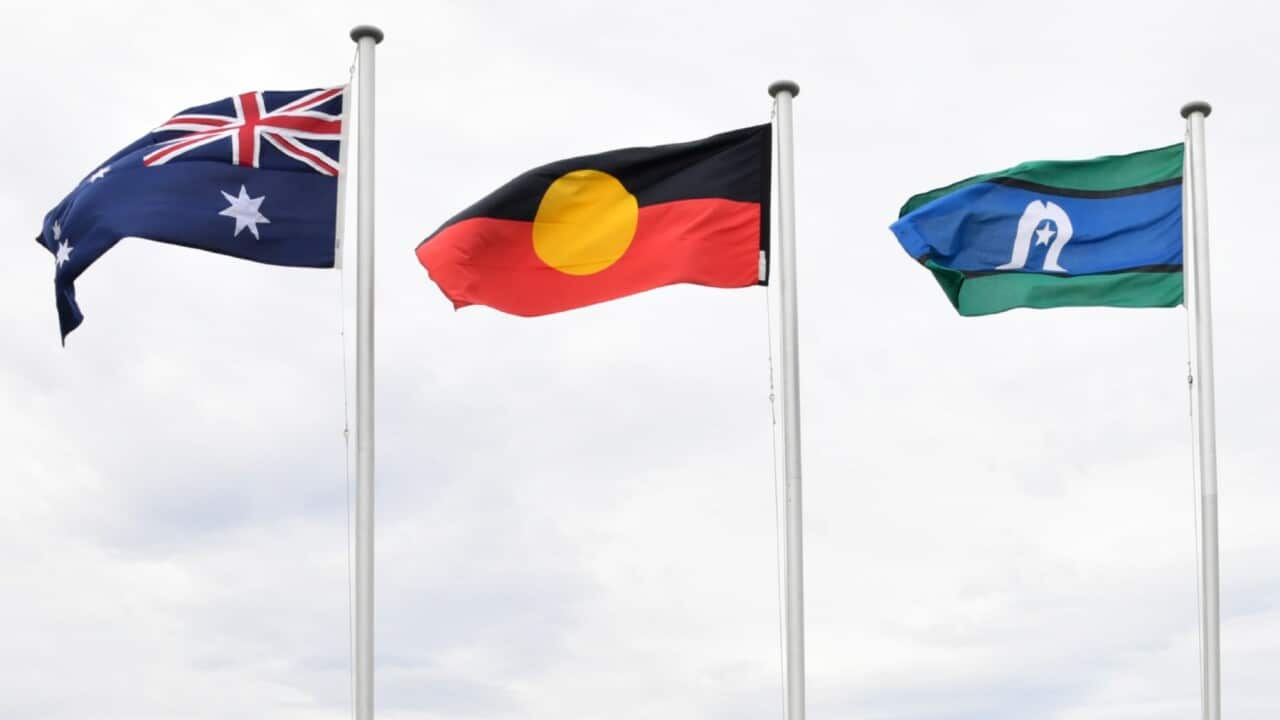
Mr Ninos said the flag is represented by a blue background and it has three symbolic shapes, Union Jack in the upper left corner, which is the British flag, a symbol of the bond linking Australia with Britain. The southern star is seen in the southern hemisphere. And the Commonwealth star that has seven points as a symbol of the states and territories of Australia.
He added, The Flags Act 1953 informally declared the Australian Blue Flag as the Australian National Flag and the Australian Red Flag as the flag for commercial ships registered in Australia.
An amendment to the Flags Act 1953 was passed in 1998 to ensure that the Australian national flag can only be changed with the consent of the Australian people.
Mr Ninos concluded there are other official Australian flags include the Australian Aboriginal Flag, the Torres Strait Islands flag, and Australian Defense Force emblems.
- People in Australia must stay at least 1.5 metres away from others. Check your state’s restrictions on gathering limits.
- If you are experiencing cold or flu symptoms, stay home and arrange a test by calling your doctor or contact the Coronavirus Health Information Hotline on 1800 020 080.
- News and information is available in 63 languages at sbs.com.au/coronavirus
- Please check the relevant guidelines for your state or territory: NSW, Victoria, Queensland, Western Australia, South Australia, Northern Territory, ACT, Tasmania.