
Oddities and curiosities with Dr. Maria Staykova
In the passing year of 2022, extraordinary discoveries were made in the field of physics.
When a new product is announced, it is always said that its price is one-and-a-half times lower than that of products on the market. But it doesn't say what the value is of the energy put into making the new product. If this energy is a lot, i.e. a lot of money has been spent to obtain the energy, in reality the product is more expensive.
So far, at best, the energy output is equal to the input. But on December 5 at 1 a.m., from the National Institute in California reported that they were able to make the dream come true more energy than input! The scientists aimed a laser beam of 2.05 megajoules at a miniature capsule with fuel and caused an explosion in which 3.15 megajoules were released energy. 50% more energy is received than used! However, this reaction requires very high temperatures – millions degrees Celsius - and this discovery will find application in the distant future, but, as Riccardo Betti of the Laser Energy Laboratory in University of Rochester, “We did it. Now I can retire.”
Let's also please those who are interested in electric cars. An article was published in the journal Nature Materials by Neeraj Sharma, PhD, from the University of NSW, Sydney, and Takuhiro Miyuki, PhD, from the University of Yokohama, Japan. They have developed a new type of electric battery. This new battery contains lithium, vanadium, titanium and oxygen and its capacity of 300 milliamps per hour per gram did not decrease even after 400 charge and discharge cycles. Prof. Yabuuchi said, this battery, which is solid lithium, not liquid lithium, as before, will allow charging a car battery in 5 minutes.
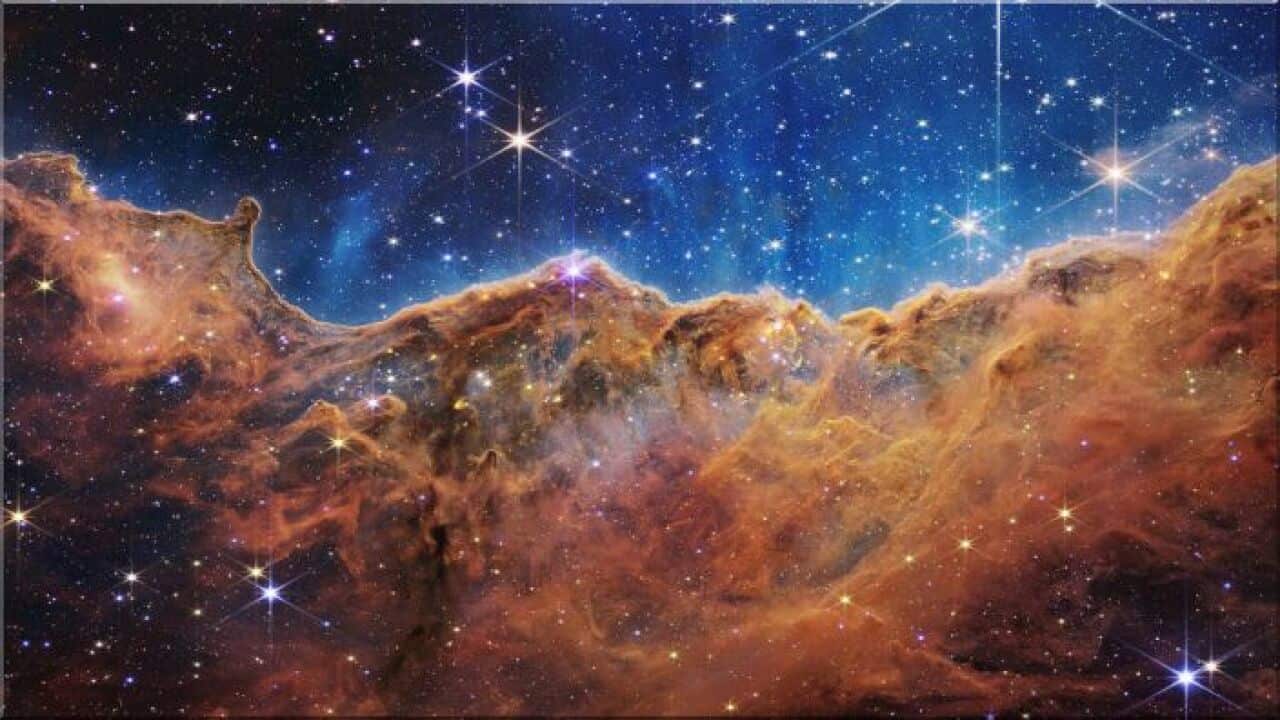
The other outstanding achievement in the field of technology was the most complex scientific space mission to date – the JWST telescope. They call it the wunderkind of astronomy. It was built here on Earth by NASA with the participation of space agencies of Europe and Canada. For 20 years. On December 25, 2021, Europe's Ariana rocket launched the telescope into orbit. The telescope travelled 1.5 million kilometres into space before the giant protective umbrella unfolded and its golden mirror shone.
On July 11 of this year, the first pictures of galaxies - as they are – came were 13 billion years ago! (because this is the time their infrared light to reach the telescope and we see the image) an image without the distortions caused by the Earth's atmosphere. Since the launch of the Hubble telescope into orbit - in 1990 - the received results were analysed in 22,000 publications. The Hubble mirror is 2 meters in diameter. The mirror of the new JWST telescope is 3 times larger - with a diameter of 6.5 meters.
The umbrella is made of the metal beryl and is to keep the telescope cool minus 233 degrees Celsius. Otherwise, the telescope's thermal radiation will interfere with infrared observations. Scientists are convinced that our ideas about the Cosmos will be immensely enriched.
NASA's new telescope is named after James Webb, an influential figure who was appointed by President John F. Kennedy to lead the space agency in the 1960s. But some astronomers say that because of discrimination against gay and lesbian government officials during his tenure, there should not be a telescope named in his honour.
Let's go back to Earth...
In February, a giant bacterium was reported. Bacteria do not have systems for transporting nutrients and gases (oxygen, sulphur) and for disposing of the unnecessary. These functions are by diffusion. Diffusion is a process in which molecules do not go far, and therefore bacteria are tiny - one to two thousandths of a millimetre (0.002 mm). But in the marshes of the French Antilles (French Antilles) in February, bacteria were found that are about 1 centimetre, which is 5,000 times larger than those known until now. They looked like a thread. The bacterium also ate sulphur; the popular cocktail of The Caribbean islands are "margarita" and therefore they called it Thio-margarita magnifica.
Gardening Australia has teamed up with ABC Classic to write new words to an old Christmas song in Bundjalung language. Host Clarence Slockee joins hundreds of Australians performing in 12 First Nations languages a uniquely Australian rendition of “O Christmas Tree”, with the Tasmanian Symphony Orchestra and a nationwide virtual choir.
Let's wish each other a MERRY CHRISTMAS!