

Wine packaging could become more important than its quality
Australia’s wine industry is exploring alternatives to glass packaging, with more than half a billion bottles discarded each year consumers are calling for change.
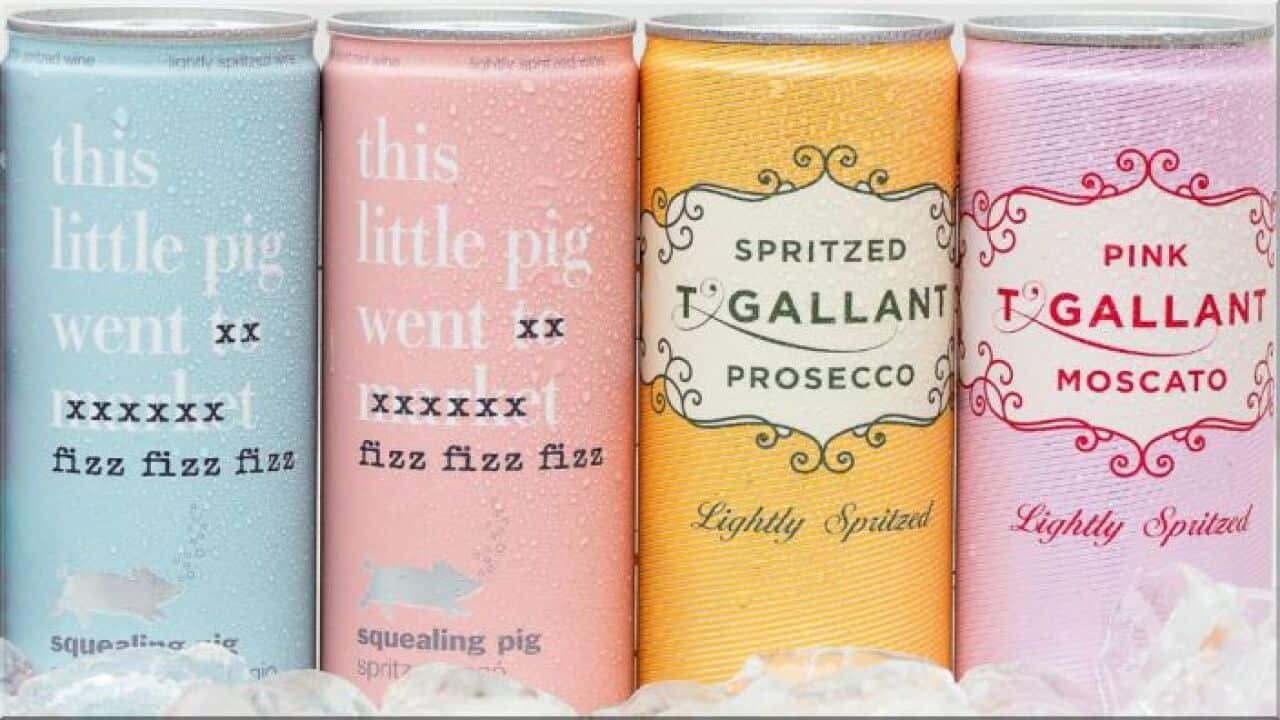
Packaging wine in small disposable cans is a way some of Australia’s 1,200 wine makers are helping to reduce the industry’s carbon footprint, as boutique bottle shop owner and wine expert Mike Bennie explains:
"Wine in a can is actually a really great way of packaging it up. Very portable, very recyclable, lightweight. And of course, for those who are seeking a single serve, limiting their alcohol, not opening a bottle and having to come back to it, it feels like a very good way of drinking for the single person, let's say, if not those seeking to drink less in their life."
Mike Bennie is also a wine writer and is leading a discussion of sustainable wine production.
He hopes to see Australian consumers embrace the growing international trend towards canned wine.
"The United States have taken it on very well, the United Kingdom seeing an increase in interest. And so therefore I'd suggest that Australia will follow suit (on) cans,for their lightweight nature, the recyclable nature of the product itself, and also for the ability to actually stack well on pallets. All seems to be something that will move forward for wine producers in terms of their interest in seeking out these alternative packagings."
Several Australian wine companies, including Fourth Wave, are already producing wine in cans.
It’s ideal for wine consumed soon after purchase, which is most of the wine sold in Australia, according to Chairman Nicholas Crampton
The younger consumer who is the most active in this area actually walks the walk as well. And I believe this packaging will allow a younger generation of Australian consumer to engage in wine and will lead this trend."
Australia produces around 1.5 billion litres of wine each year, one third goes into casks and the rest fills glass bottles – more than one billion of them.
Many glass bottles are imported to Australia, filled with wine and then sent back - all of which consumes and then wastes a vast amount of fossil fuel - as Mike Bennie explains:
"If wine was invented today, I don't think we'd be having 750ml glass bottles that are typically imported into Australia from overseas with huge, both environmental and freight costs. Perhaps one of the most difficult things about wine bottles is justifying the heat and energy it takes to produce them and then subsequently the weight and the energy it takes to transport them around the world."
Australians were early adopters of new wine technology over the years; first wine casks then screw caps.
But will wine buyers embrace another environmentally friendly option – a slimline recycled PET bottle?
Rowena Curlewis is the co-founder of wine design company Denomination, and says it has advantages:
"The recycled P E T bottle. It's very light and it, um, it comes in different colors. And what is really interesting is the side profile. Being narrow means that you can pack more of these into a case and therefore get efficiencies when you're transporting, a lighter carbon footprint."
An Australian Packaging Covenant Organisation report has estimated that of the 1.3 million tonnes of glass used in Australia each year, less than half – 46 per cent – is recovered.
Refillable bottles are another way winemakers are helping to reduce the environmental impact, as Nicholas Crampton explains:
"We are working towards is a refilling concept where you return the bottle, for a fee and that bottle is taken away and refilled with wine. The truck going to a bottle shop every day full and then it goes home empty. So there's no reason in, there's no challenge here at all. It's just getting people used to taking their glass back to their bottle shop."
Australia’s 40-billion dollar wine industry is increasingly adapting to changing tastes.
Despite recent packaging advances, experts say for those intending to cellar wine long term, glass is best.
Nicholas Crampton says glass doesn’t taint the wine, allowing it to mature in the bottle, which means change may be slow.
"I don't think consumers yet see glass as anything but natural. I think more education will be needed in our country to get consumers to change. I would say at the moment, the negatives significantly outweigh the benefits of moving outside of glass."