
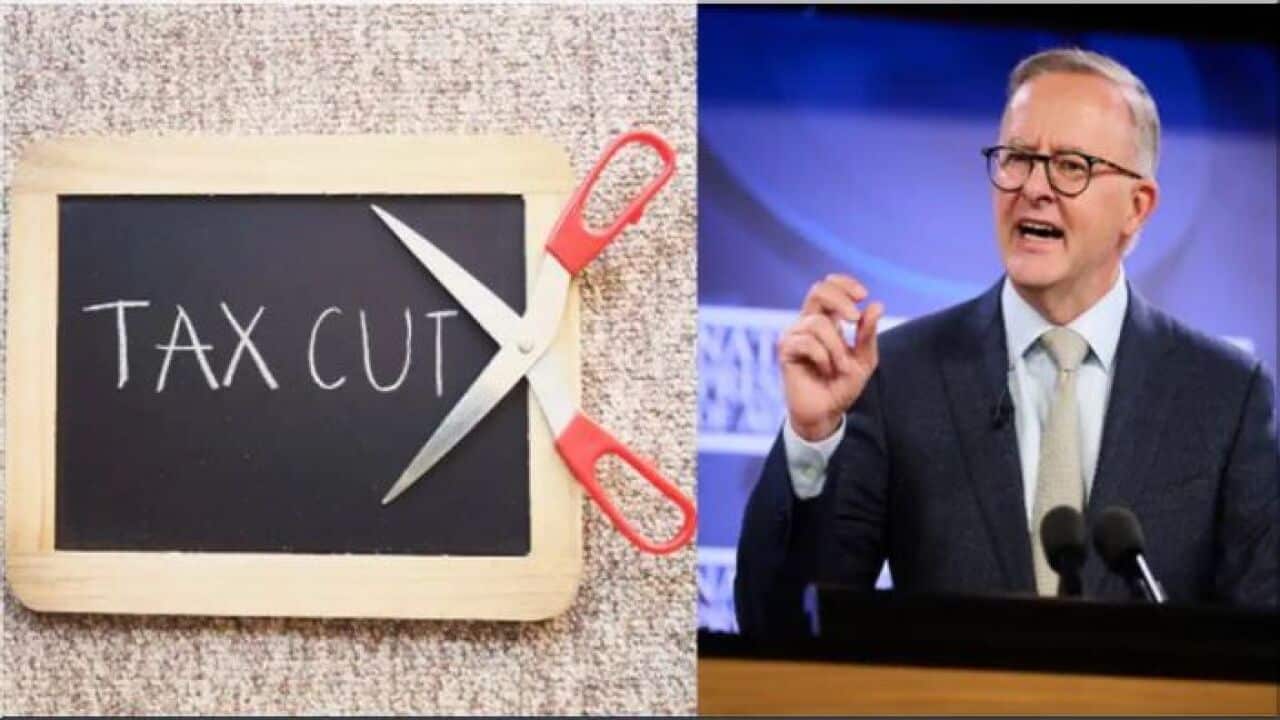

To be or not to be the third stage of the tax cuts? That is the question.
All eyes will be on the Labour Government's first budget on October, 25th - with the fate of the Coalition's Stage Three Tax Cuts dominating debate in the lead-up.
The legislation passed in 2019 with the then labour Opposition's support, despite that party's reservations over the tax cuts, due to begin in 2024- 25.
Having promised ‘no change' to the policy during the election campaign - the Albanese government faces a backlash if the cuts are delayed or amended.
In May 2018 - the Prime Minister was Malcolm Turnbull and his Treasurer was Scott Morrison.
If those at the top were different - so was Australia's budgetary situation at the time.
The Coalition government announced what would be around 300 billion dollars in tax cuts over 10 years, aimed at economic stimulus and returning at least a little so-called 'bracket creep' - that is rising wages pushing people into higher tax brackets.
All that was announced against a backdrop of fiscal health.
But Danielle Wood from the Grattan Institute says that has since evaporated.
"This package was calibrated in a period where we expected to see budget surpluses for the whole of this decade. Instead, we've come out of the COVID recession with substantial levels of government debt, and structural budget deficits well into the future."
The Stage One and Stage Two cuts saw benefits across the spectrum.
Stage three would benefit anyone earning over 45,000 dollars- but especially, according to Associate Professor Ben Phillips from the Australian National University, those at the top end of the salary scale.
"If you're on, say, 200 thousand a year, you get a tax cut of around 9,000 a year, whereas someone on a middle income of, sort of, 60 to 70 thousand would get three or four hundred dollars a year."
People earning up to 45,000 dollars a year wouldn't see any change in their income tax rates.
But after July 2024, the current 32.5 and 37 per cent brackets roll into a single, 30 per cent bracket.
That would cover everyone earning between 45,000 and 200,000 dollars a year - the new threshold for the top 45 per cent tax bracket.
Business groups are among those pushing for the Coalition's cuts to go ahead, while among those urging the package be scrapped are the Greens, who argue they would 'turbo-charge inequality' and widen the gender pay gap.
Many economists - like Australian National University's Ben Phillips - say the changed economic circumstances make a compelling case.
"I don't think they should proceed. I think 18 billion dollars is a large share of the projected deficit going forward. We know we've got other costs - the NDIS, aged care. Other areas where they've been call for expense. Jobseeker is very low and many think it should be higher."
And this is the scale of the potential impact:
Stage three would cost the government 17.7 billion dollars in its first full year, according to the Parliamentary Budget office.
The revenue lost would lift to 36.9 billion dollars by 2033.
The total loss of revenue would amount to 243.5 billion dollars.
Many senior economists have voiced frustration over Australia's reliance on income tax for government revenues - at one of the highest rates in the OECD.
Professor Robert Breunig of the Crawford School of Public Policy at A-N-U says there are constant calls for a broadening and deepening of the tax base.
"We could think about raising GST to 12.5 or 15 percent - perhaps in combination with stage three tax cuts. I actually think a switch from stamp duty to land tax is politically do-able"
As Britain's embattled Prime Minister Liz Truss has found to her cost in recent days - tax reform always has the potential to be politically problematic.