
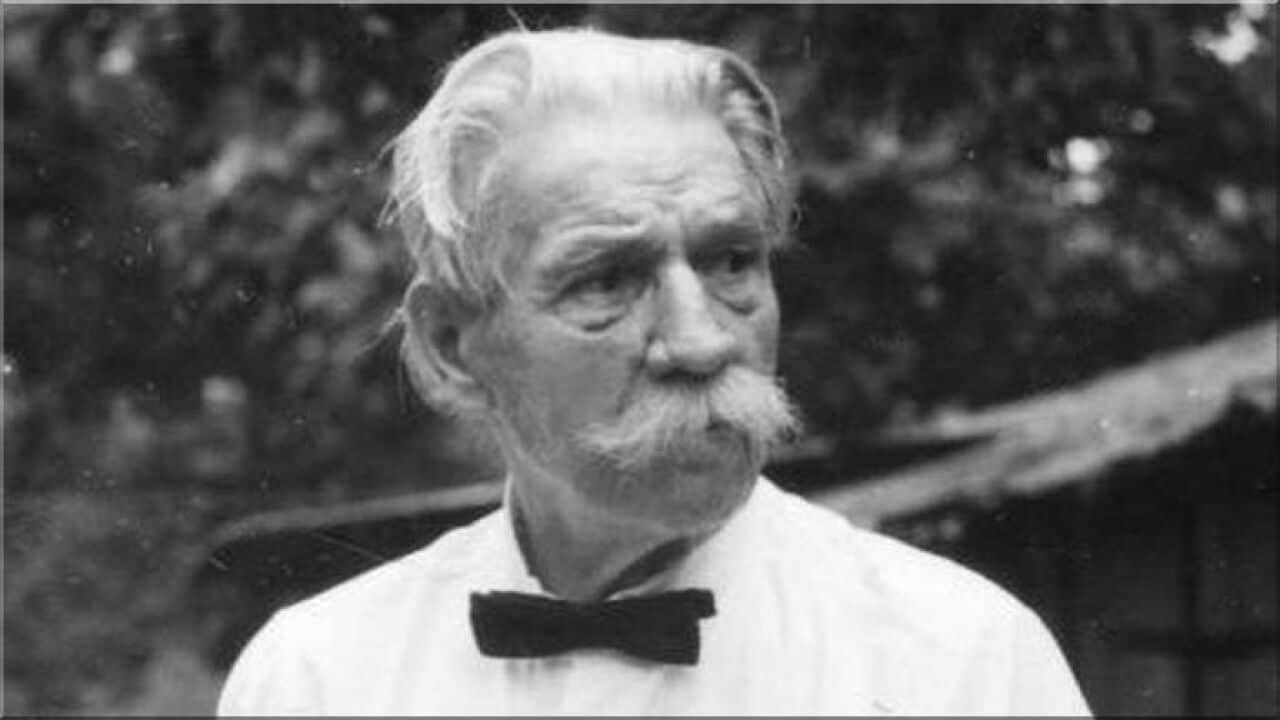

Albert Schweitzer (1875 – 1965) was born in Alsace in the then German Empire. He studied theology and became a priest, but that was not enough. He wanted to alleviate suffering, and accordingly studied medicine. Together with his wife, who was a nurse, he built and ran a hospital at the mission station Lambarene in Gabon, a French colony at the time. This effort became an example to others.
A Lutheran, Schweitzer challenged both the secular view of Jesus as depicted by the historical-critical method current at this time, as well as the traditional Christian view. His contributions to the interpretation of Pauline Christianity concern the role of Paul's mysticism of "being in Christ" as primary and the doctrine of Justification by Faith as secondary.
He received the 1952 Nobel Peace Prize for his philosophy of "Reverence for Life", becoming the eighth Frenchman to be awarded that prize.
In 1957, Schweitzer spoke on the radio to people all over the world. The respect of the Nobel Prize Laureate for all life, made him issue his warning against nuclear tests and the dangers from radioactive fall-out.
The expression "reverence for life" is the key to Albert Schweitzer's personal philosophy. No person must ever harm or destroy life unless absolutely necessary. This attitude permeated everything he did.
Albert Schweitzer was also a gifted musician and interpreter of Bach. He gave numerous organ concerts in Europe to finance the hospital in Africa.