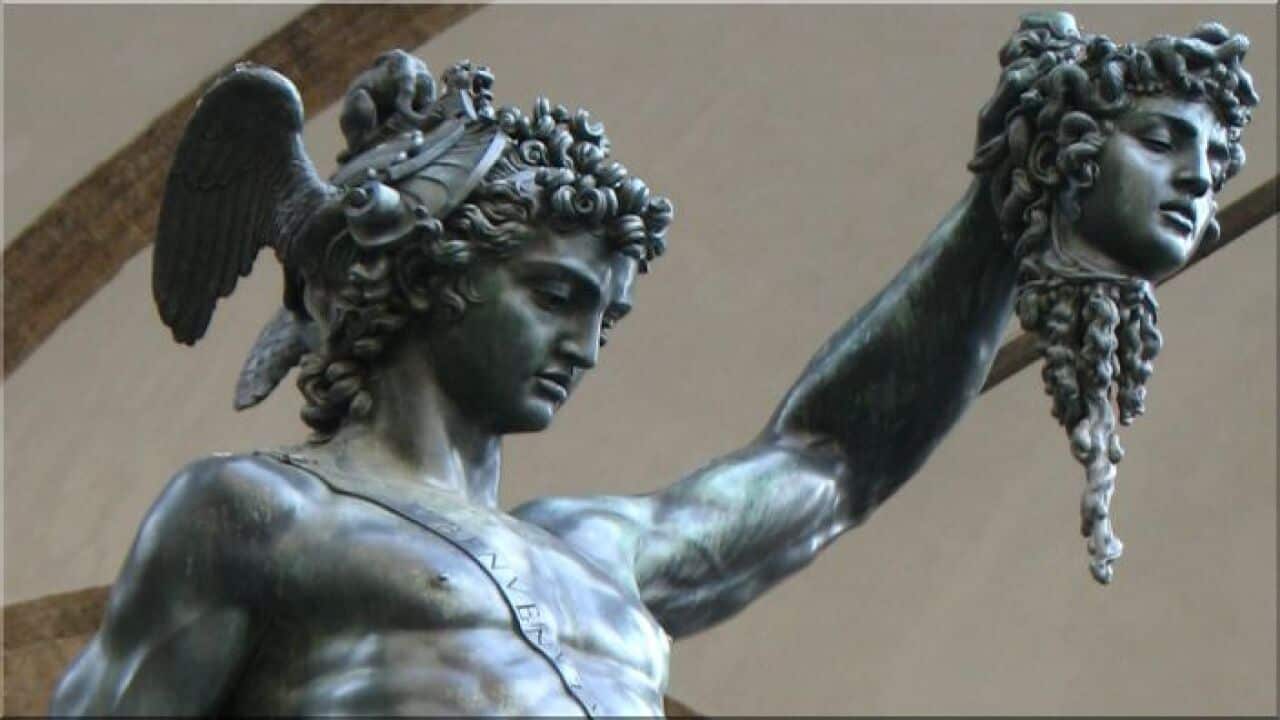

The Italian goldsmith and sculptor Benvenuto Cellini (1500-1571) is considered the greatest goldsmith of the Italian Renaissance.
Benvenuto Cellini took immense pride in his talents, but a very few certain examples of his art as a sculptor exist today, but he is best known as the author of his celebrated “Autobiography”.
It is an extraordinary record of absorbing interest on many levels.
- a spirited and candid revelation of a complex character
- a narrative of historical importance for its account of the working life of a 16th-century artist in his relations with his family, friends, enemies, and patrons
- a document of great interest for a description of the techniques of sculpture which has still not been fully investigated
It’s ironic that Cellini’s lasting fame is due more to his record of his own life than it is to his work as an artist.
First printed in Italy in 1728, Cellini’s “Autobiography” was translated into English, German and French.
Launched on the tide of the Romantic Movement it gained immediate popularity. Dictated to a workshop assistant, it is composed in colloquial language with no literary artifice and gives a firsthand account of the writer’s experience in Rome during pope Clement VII (1523-1534), in France of Francis I, and Florence of Cosimo de’ Medici.
Despite its manifest exaggerations and its often boastful tone, it is a human document of surprising frankness and incomparable authenticity, and thanks to it Cellini’s character is more intimately known than that of any other figure of his time.