


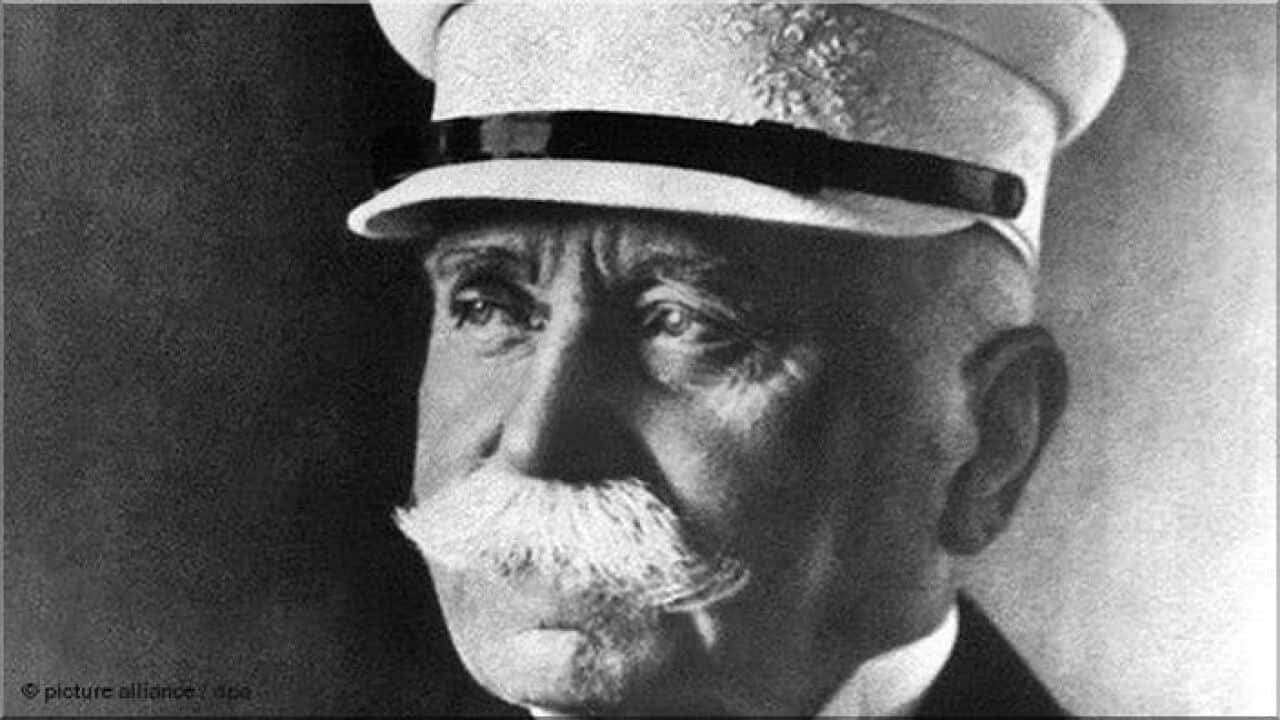

The zeppelin - a brilliant idea with a tragic ending
Ferdinand Adolf Heinrich August Graf von Zeppelin (8 July 1838 – 8 March 1917) was a German general and later inventor of the Zeppelin rigid airships; he founded the company Luftschiffbau Zeppelin.
After his resignation from the army in 1891 at age 52, Zeppelin devoted his full attention to airships.
Zeppelin's idea was to create a rigid aluminium framework covered in a fabric envelope; separate multiple internal gas cells, each free to expand and contract thus obviating the need for ballonets; modular frame allowing addition of sections and gas cells; controls, engines and gondola rigidly attached. After publishing the idea in March 1892 he hired the engineer Theodor Kober who started work testing and further refining the design.
In May 1906, work as started on a third airship, LZ 3. Finished by the end of the year, it made two successful flights at a speed of 48 km/h and in 1907 attained a speed of 58 km/h. The success of LZ 3 produced a change in the official attitude to his work, and the Reichstag voted that he should be awarded 500,000 marks to continue his work.
Following the destruction of LZ 4, LZ 3, which had been damaged when the floating hangar broke free of its mooring during a storm, was repaired: at the same time it was lengthened by 8 m. It was re-inflated on 21 October 1908 and after a series of short test flights a flight lasting 5 hours 55 minutes took place on 27 October with the Kaiser's brother, Admiral Prince Heinrich, on board. On 7 November, with Crown Prince William as a passenger, it flew 80 km to Donaueschingen, where the Kaiser was then staying.
Although a replacement for LZ 4, the LZ 5 was built and accepted into Army service as L II, Zeppelin's relationship with the military authorities continued to be poor, and deteriorated considerably due to his criticism of the Army following the loss of L II, which was carried away from its moorings and wrecked on 25 April 1910. However, the business director of Luftschiffbau-Zeppelin, Alfred Colsman, came up with a scheme to capitalise on the public enthusiasm for Zeppelin's airships by establishing a passenger-carrying business.
Up until 1914 the German Aviation Association (Deutsche Luftschiffahrtsgesellschaft or DELAG) transported 37,250 people on over 1,600 flights without an incident. Within a few years the zeppelin revolution began creating the age of air transportation.