
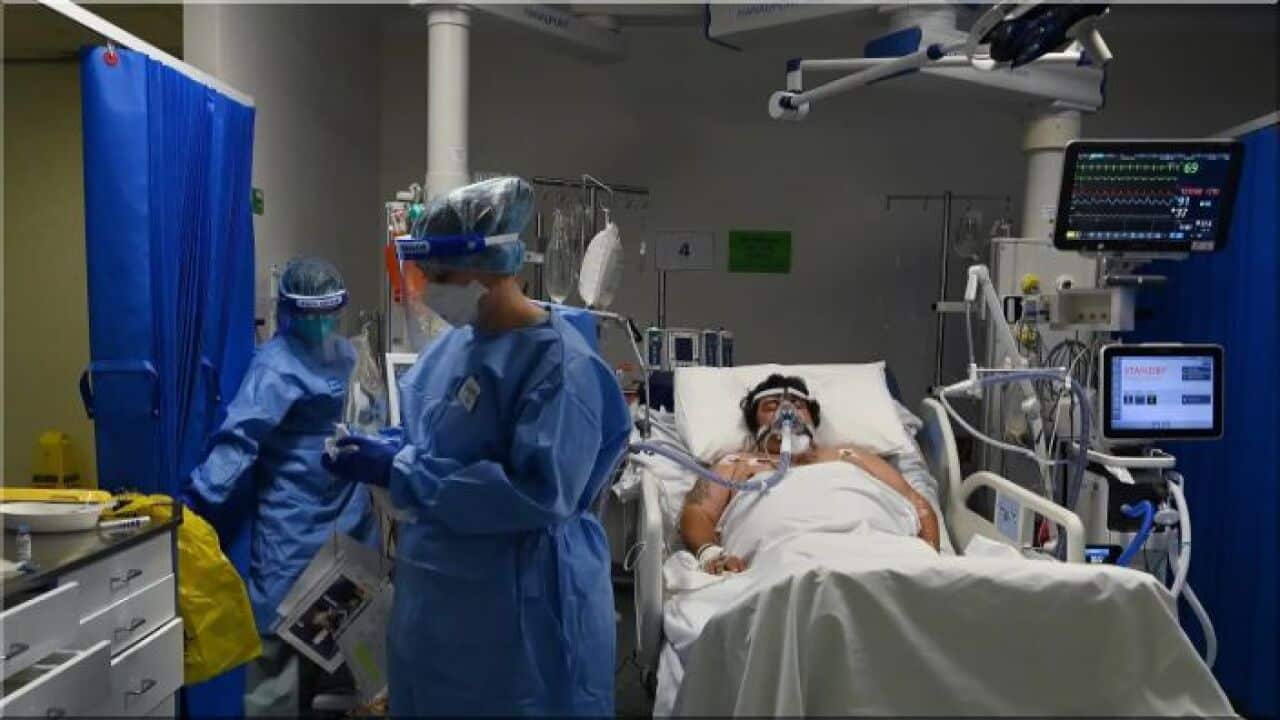

Thousands of elective surgery patients are waiting for their procedures for much longer than is actually reported
Australia’s peak medical body says thousands of elective surgery patients are waiting for their procedures for much longer than is actually reported.
They are calling it the hidden waiting list, and want to see a plan to tackle a backlog of patients.
Brisbane man Mal Gregory was on the waitlist for his hip surgery for just five weeks.
But in reality, the wait for his elective surgery became a lot longer.
"I don't know when they're looking at their statistics whether that's segregated, but from the time I presented with my concern to when I was operated on it was about 2 years and 9 months all up."
That's because after his first meeting with his doctor, it took him two years to get an appointment with a hip specialist.
He says it caused his mental health to deteriorate.
"Ahh well yeah, I can't describe, basically it was a personal hell. I feel like my entire life was just put in neutral for two years. I had trouble performing my best at work. I'm a very empathetic and understanding person, I realise I'm not the only one in that predicament and there's probably more people in just as much pain and despair that have been waiting as long or if not longer, so."
And this assessment is correct.
The Australian Medical Association says it's an experience felt by thousands of people in the public health system.
Here's the AMA president Stephen Robson.
"But the delay between seeing your GP, being referred and actually getting an appointment is blowing out to years for many conditions. You may think it's not so important, but if you're waiting to see an eye specialist and you can't see if often means you can't work or drive."
A patient requiring surgery will first book in to see their GP.
They will then be referred to a specialist.
And once seen, they are added to the official elective surgery waitlist.
The time in between a patient visiting their GP and seeing a specialist, is what the AMA says is a hidden waitlist.
There's no consistent nationally reported data on how long patients are waiting for.
Dr Sarah Whitelaw is an emergency medicine specialist.
"We don't know how many hundreds of thousands of patients are on these hidden waiting lists but what we do know is that while they're waiting, some of them, thousands of them in fact are becoming so unwell or developing complications that they're having to seek emergency care and needing hospital admissions. We are seeing it in emergency departments every day"
Urgent patients are those who should be seen within 30 days.
Real wait times vary widely but some specialist areas are in a logjam.
The AMA says data shows most Victorian patients will wait more than 900 days for an urgent neurosurgery appointment.
A patient in Queensland will wait more than 150 days for an urgent Gastroenterology appointment.
While in Tasmania, urgent patients are waiting more than 100 days.
Victoria's health minister Mary-Anne Thomas blames the pandemic for pushing out wait times.
"That's why our government has a 12 billion dollar pandemic repair plan, a plan we are implementing right now, a plan that includes a 1.5 billion dollar COVID surgery catch up plan"
But Dr Sarah Whitelaw says this is an issue that needed to be addressed years ago.
"These numbers were incredibly large before covid, to say that this is just a COVID problem or caused only by the pandemic is simply not true, the waiting lists have been a problem for many years and the AMA has been calling for many years for these hidden waiting lists to be reported on and released"
The funding model for public hospitals will be a key focus for the federal government's October budget.
Here's Prime Minister Anthony Albanese speaking after Friday's meeting of National Cabinet.
"We will continue to work on ways we can get better health outcomes. From my perspective it's never been about the dollars but about making sure that we get good health outcomes in the interest of the population"
But for patients like Mal Gregory, time has already been lost.
"And I realy wouldn't wish it on anyone else and certainly empathise for anyone in the same situation. Family, friends and work colleagues helped me through, and now I'm certainly in a much better frame of mind and looking forward to the future."