Key Points
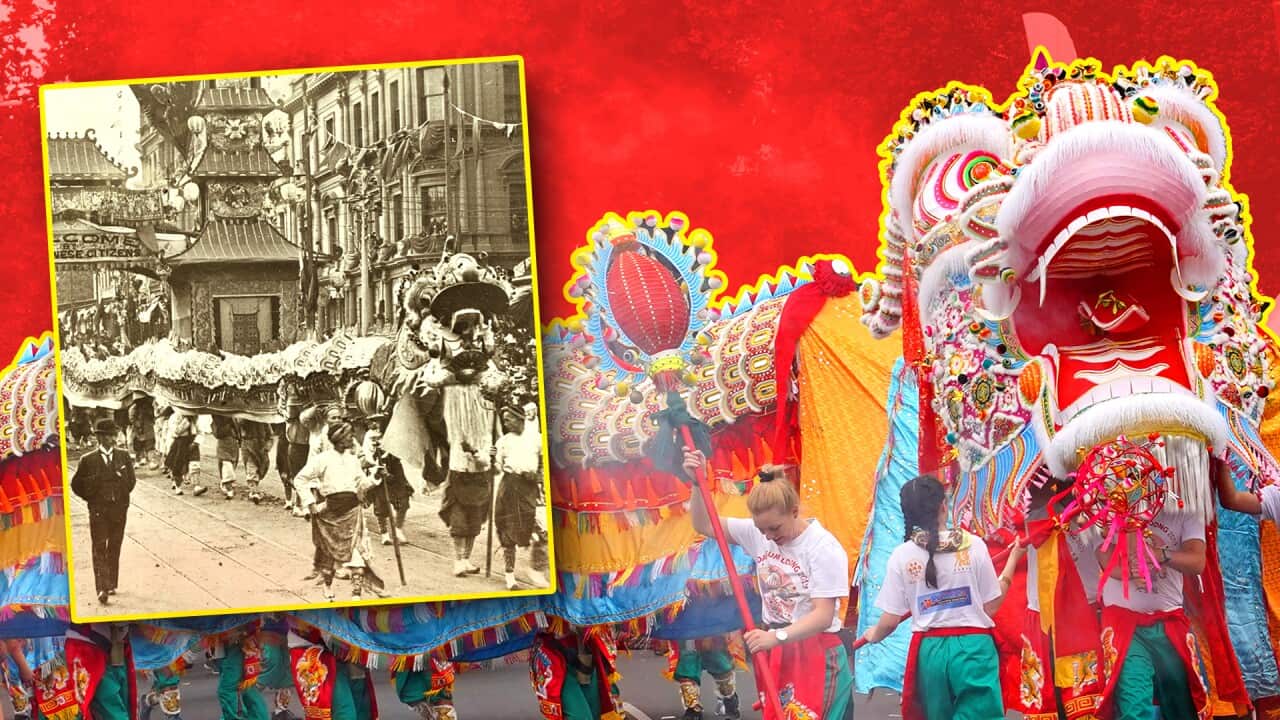
- For over a century, Loong, Sun Loong, and Dai Gum Loong have collectively played a vital role in Bendigo's annual Easter Festival.
- Initially attracted by the gold rush of the mid 19th century, the Chinese community has been taking part in the parades and fundraising since 1879.
- Handmade in Guangdong and Hong Kong, the three dragons are displayed in Bendigo's Golden Dragon Museum.
As the Lunar New Year approaches, Sun Loong is set to be "blessed" and “awakened” in a traditional ceremony to celebrate the Year of the Dragon, considered by many to be the most auspicious animal of the Chinese zodiac.
The appearance of Sun Loong, one of Bendigo's favourite dragons, is anticipated to attract a crowd well over previous Lunar New Year celebrations, according to Doug Lougoon, President of the Bendigo Chinese Association.
On 10 February, the first day of the Year of the Dragon, Sun Loong will hit the streets of Bendigo amid a hail of exploding firecrackers.
As Bendigo’s parade dragon from 1970 to 2019, Sun Loong was restored before it was put on permanent display in the town's Golden Dragon Museum in 2019.
A century of dragons in Bendigo
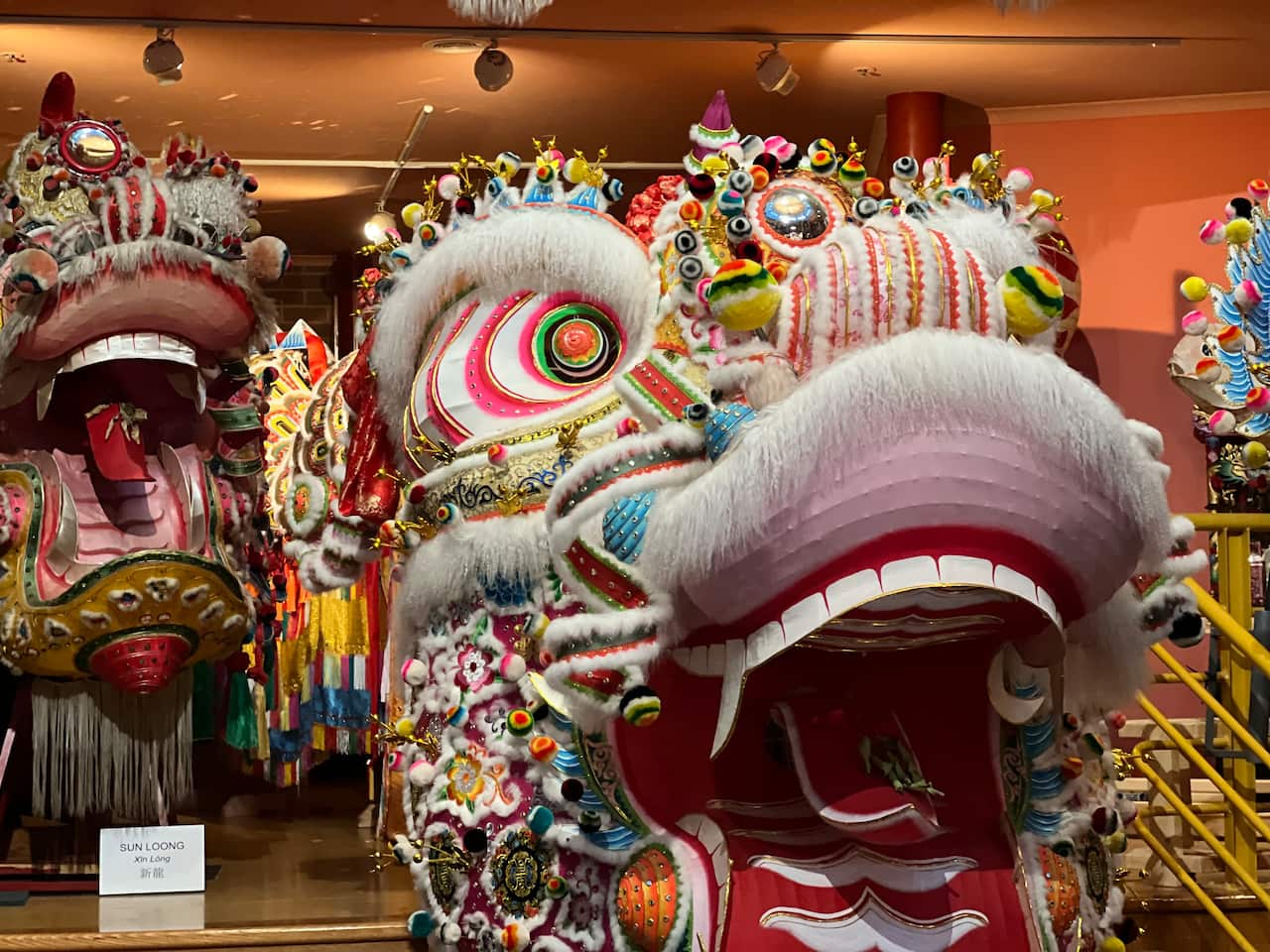
Sun Loong was the second of Bendigo's three main processional dragons and was brought from Hong Kong to replace the first dragon, Loong, in 1970.
According to the museum, Sun Loong requires 57 carriers and measures approximately 100 metres in length. It features 40,000 beads and 90,000 mirrors and its head weighs 20.5kg.

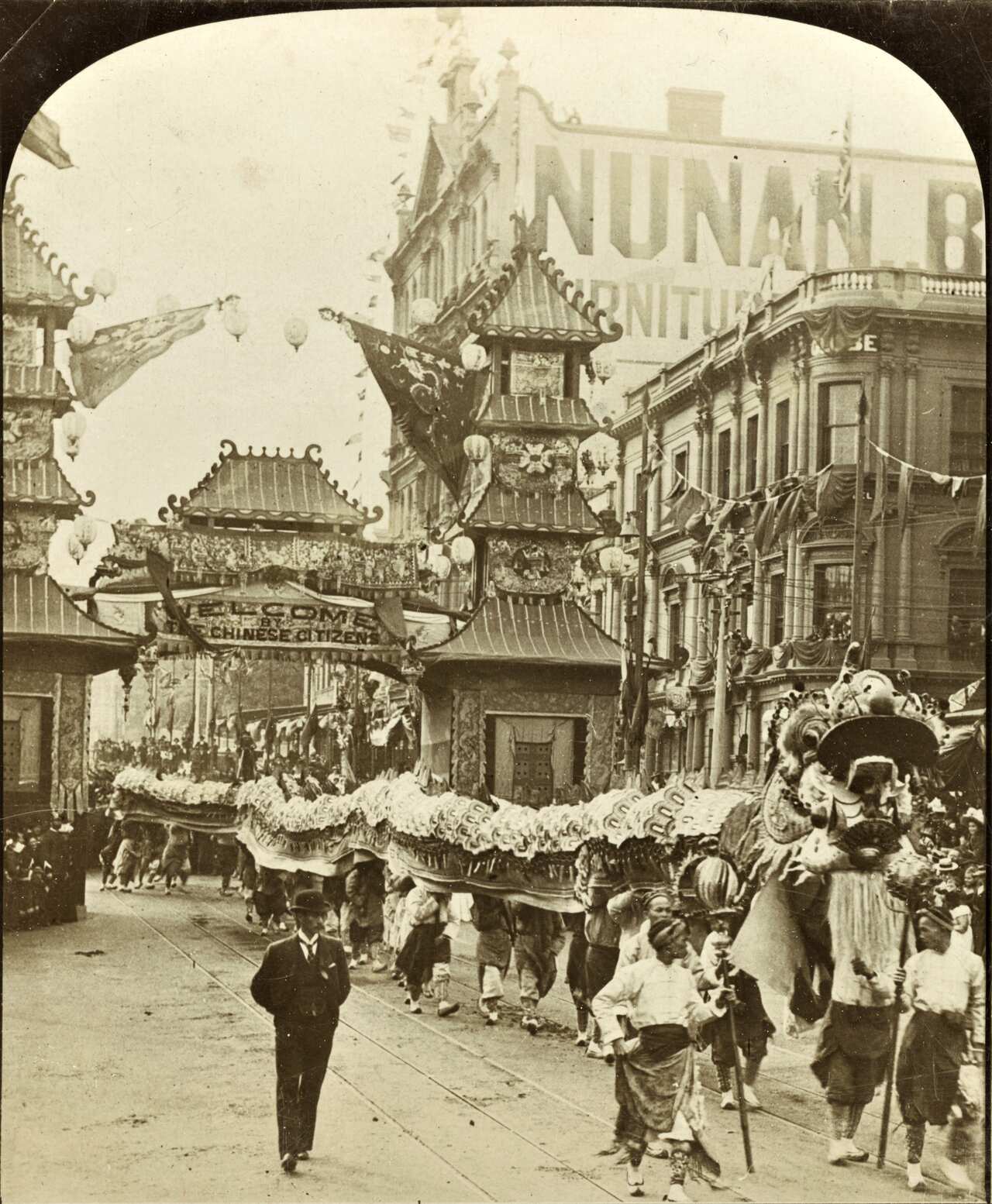
The predecessor, Loong, also on display in the museum, was paraded from 1901 to 1970 and holds the distinction of being the world's oldest intact processional dragon.
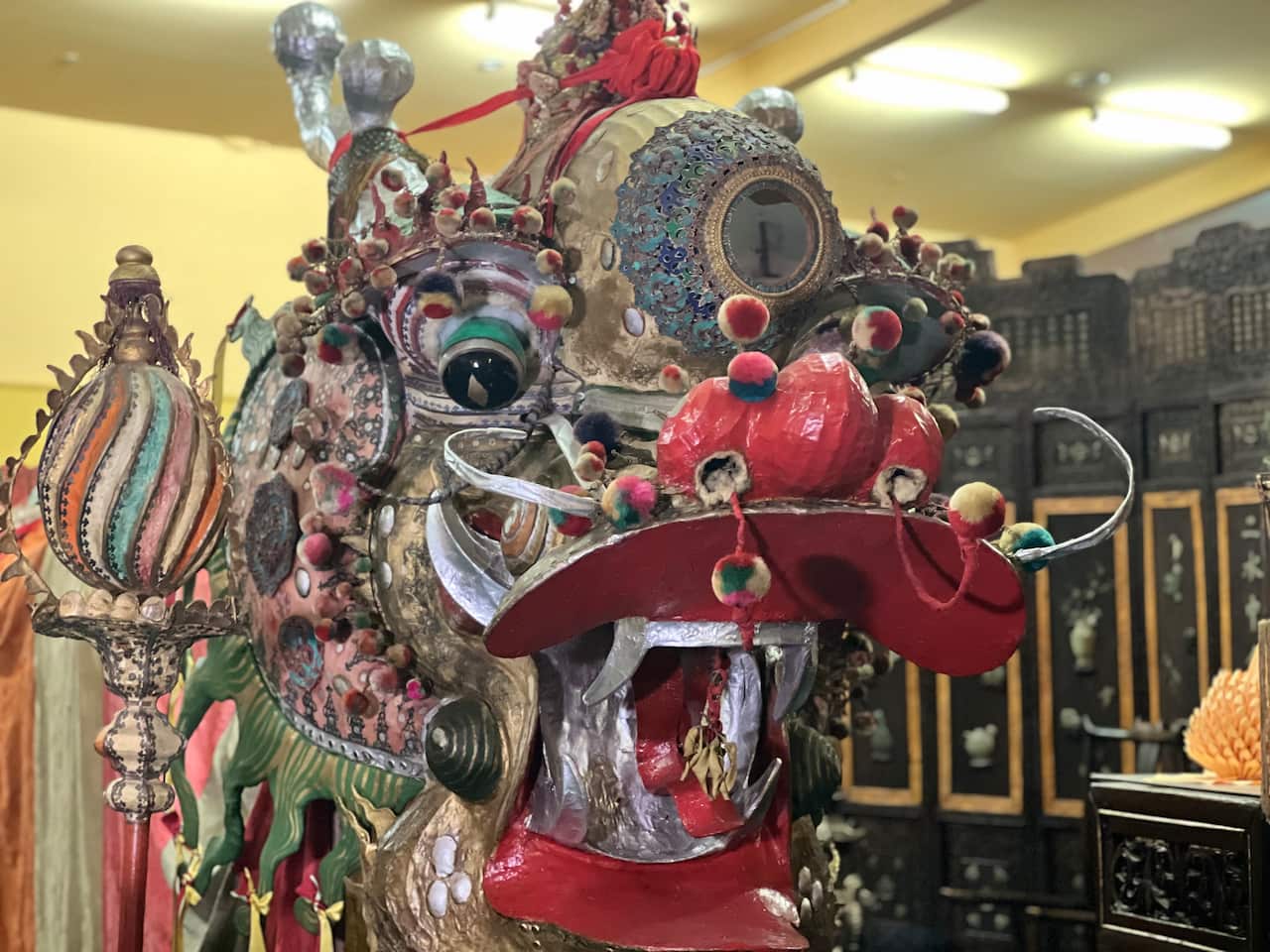
Throughout his parading career, Loong made several significant appearances outside of Bendigo, most notably at the May 1901 procession in Melbourne to welcome the Duke and Duchess of York, who was in the country to open the first Australian parliament.
Loong requires 22 carriers and is about 29 metres long.
Following Sun Loong's retirement, the primary processional dragon is now Dai Gum Loong, recognised as the world's longest imperial dragon, measuring an impressive 125 metres long.
For over a century, these dragons have been integral to Bendigo's annual Easter Fair which also raises money for charity.
The Chinese community has been engaged in these efforts since 1879.

Museum research officer, Leigh McKinnon, said that more than 5000 Chinese people, largely from the Guangdong Sze Yup region, had lived in Bendigo during the 19th century, mostly attracted by the discovery of gold in the area in 1851.
However, due to the "discriminatory" White Australian Policy, some Chinese had only resided in Bendigo for a few years before moving on, he said.
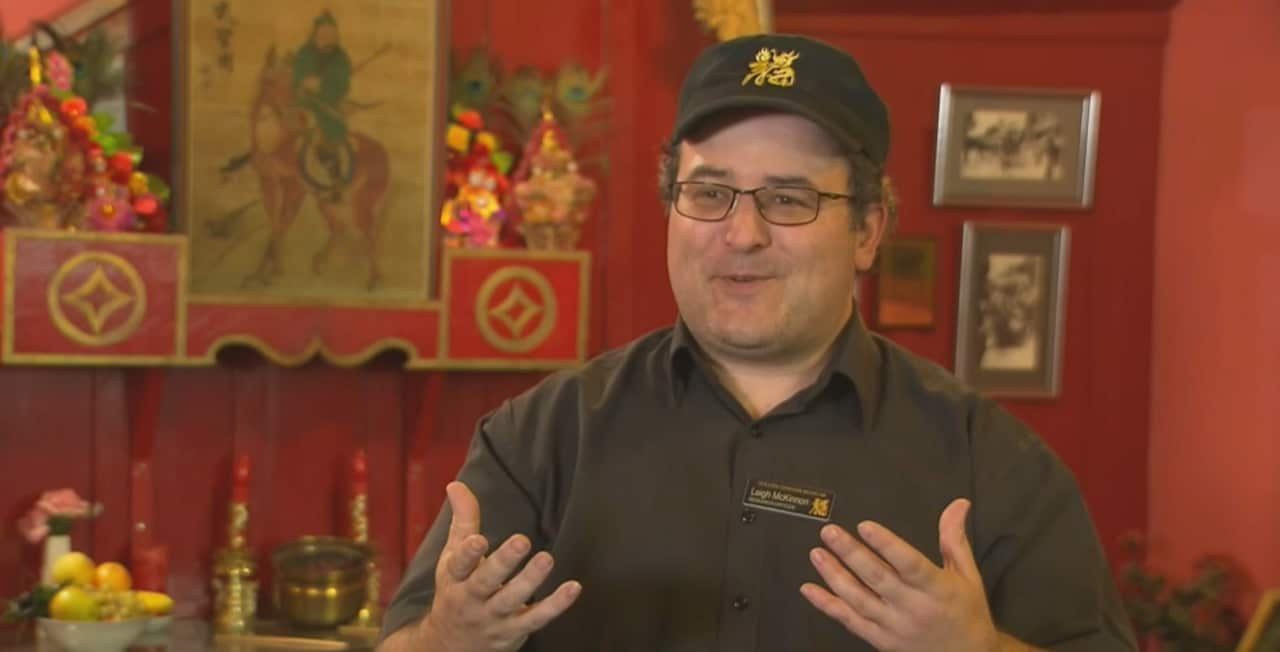
“It (the population) gradually decreased to perhaps 1000 or so by the end of the 19th century. And then it (was) perhaps only a few hundred by the middle of the 20th century,” he said.
Lougoon, a third-generation Chinese Australian, traces his roots to his grandfather, Samuel Louey Goon, believed to have come from Taishan in the Guangdong province of China, arriving in Australia in the late 19th century.
"I'm third generation while there are also fourth, fifth, and sixth generation members … and in the last Census, there were about 1500 or 1600 people claiming to have Chinese ancestry (in the town). (However) We believe there's probably twice that number," he said.

He said donating to charities remained "a vital part of the ethos" of the Bendigo Chinese Association, founded in 1915.
Former Association President, Russell Jack AM, 89, is a second-generation Chinese Australian.
He said his father, Louey Jack, also hailing from Taishan, instilled the value of helping the Chinese community in him from a young age.
"As I was growing up, my father told me, 'Yeung Man (Jack’s Chinese name in Taishan dialect), when you grow up, I want you to look after the Chinese people in Bendigo,'” Jack said.
“I got involved with the Bendigo Chinese Association, which was probably the best day's work I've ever done in my life."
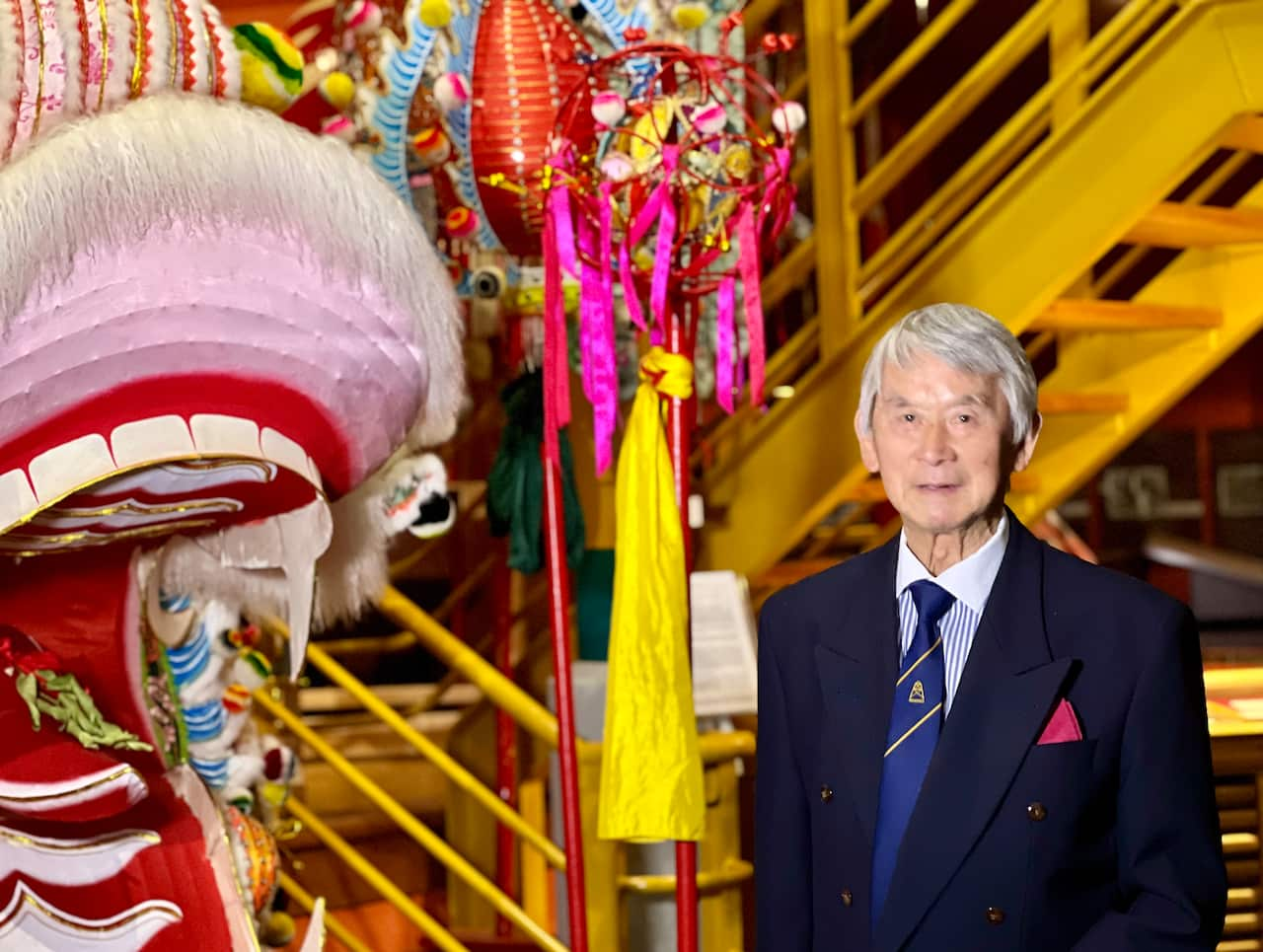
He actively participated in the Easter parade and at times, carried the head of Loong in relay throughout the procession.
Over the years, he has taken on various responsibilities, serving as Treasurer before assuming the position of President in 1980.
Jack’s service extends beyond serving as President for 32 years until 2012; he also played a pivotal role in founding the Golden Dragon Museum and is nicknamed the “Golden Dragon Warrior”.
He said all of his achievements were only possible because of the support of his late wife, Margaret (Joan), who once sold off fabric samples to raise money for the building of the museum.
While Joan had not herself been of Chinese descent, Mr Jack said in his eyes, his wife had been "more Chinese than most Chinese".
Echoing Mr Lougoon’s recollections of the Chinese population dwindling by the middle of the 20th century, Jack said he believed many left in pursuit of better education opportunities.
“At one stage of the game, there were only two people (at functions) - my wife and myself,” Jack said.
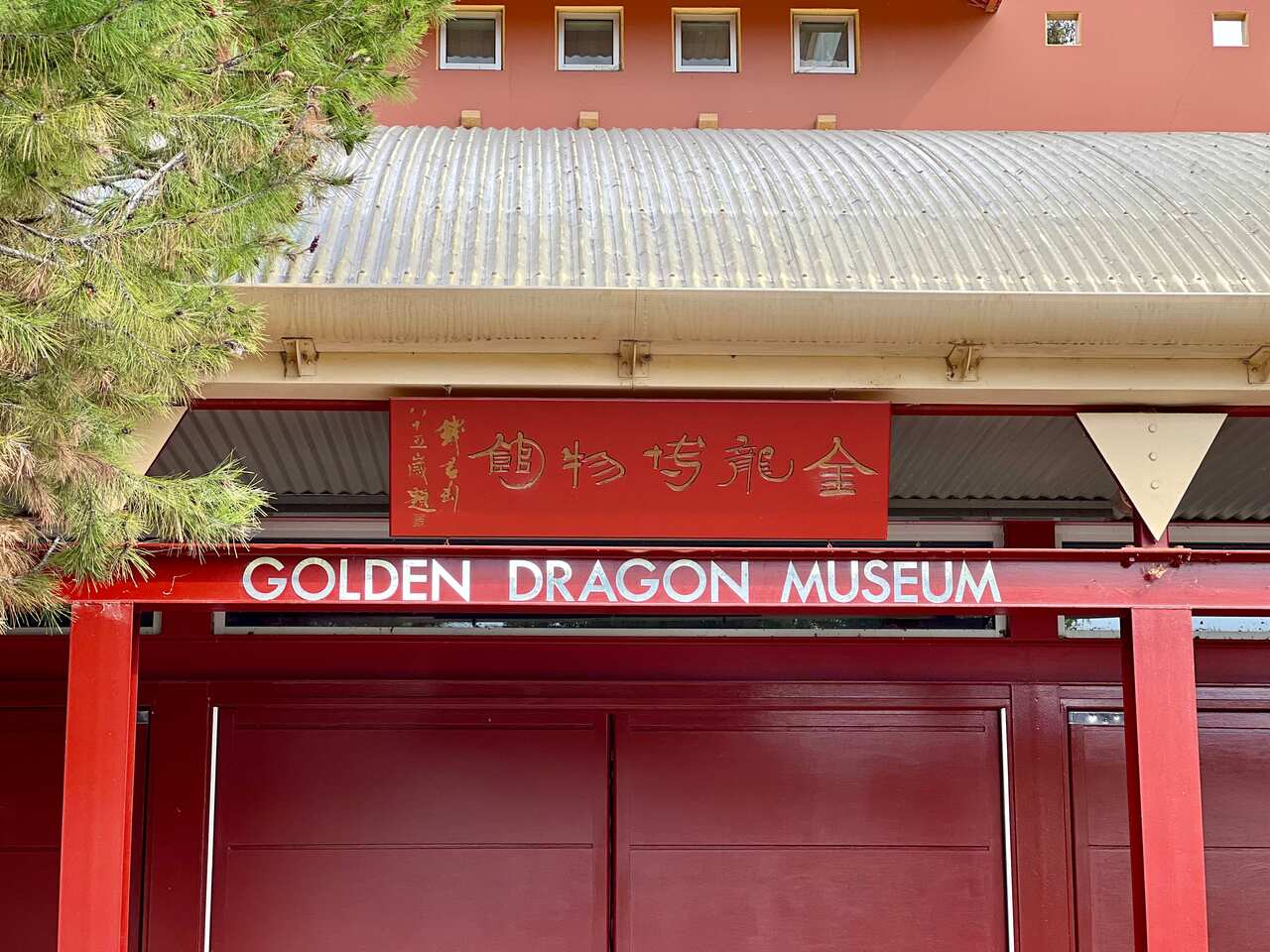
The Golden Dragon Museum, which officially opened in 1991, stands as a testament to the couple’s fundraising and dedication, pursuing the goal of preserving and showcasing a collection of dragons and the history of the local Chinese community.
Chinese culture is woven into the heart of Bendigo
Dr Liu Luxin, a scholar researching the history of Chinese immigration to Australia, said he believed that the way that the Chinese culture had woven itself into the everyday fabric of Bendigo was "truly unique".
"I think it's unique even on a global scale. Bendigo's dragons not only boast a long history but, more importantly, they make an appearance every Easter," Luxin said.
"Even during the strict enforcement of the White Australia Policy era, when there were no new Chinese immigrants for two or three consecutive years, the parade still took place.
“I believe Bendigo showcases one of the best examples of Chinese culture seamlessly blending into the local community.”
A recent immigrant, Jess Hu, from Beijing, resonates with this sentiment.
"I feel that Chinese culture has integrated with Bendigo culture," she said.
When we promote Chinese culture, it's not to highlight our differences with others. What we are promoting is the integration and harmony of everyone.Jess Hu
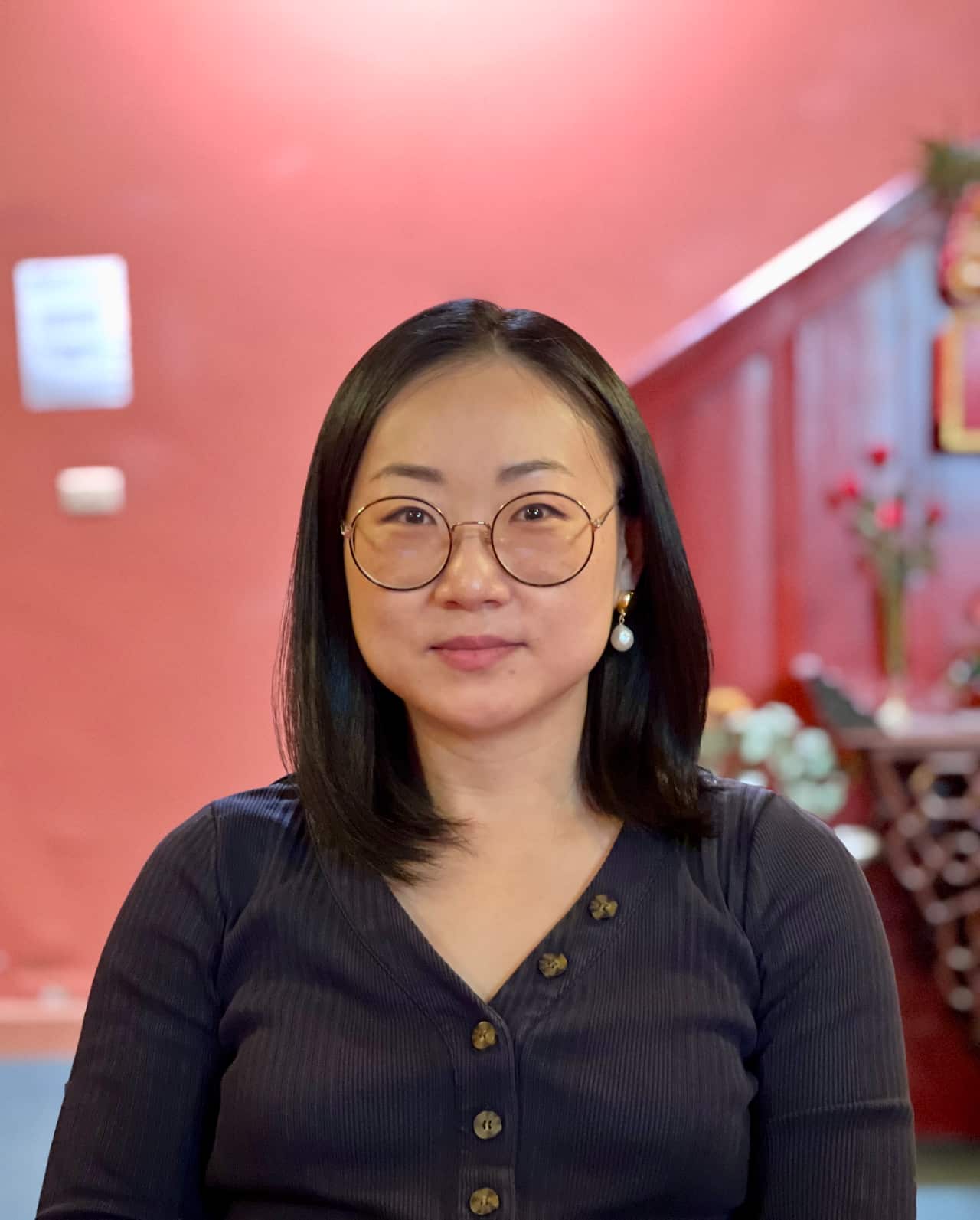
Tan See Tuang, who came from Malaysia to study in Bendigo over half a century ago, expressed his deep connection to the community.
"Our Bendigo Chinese community has a history of fundraising for charity for more than 150 years. Around the world, there is nowhere else like Bendigo. Bendigo is my home," Tan said.

Celebrate the magic of Lunar New Year with SBS. Visit sbs.com.au/LNY24 for more news, celebration guides, recipes, movies, and entertainment.



