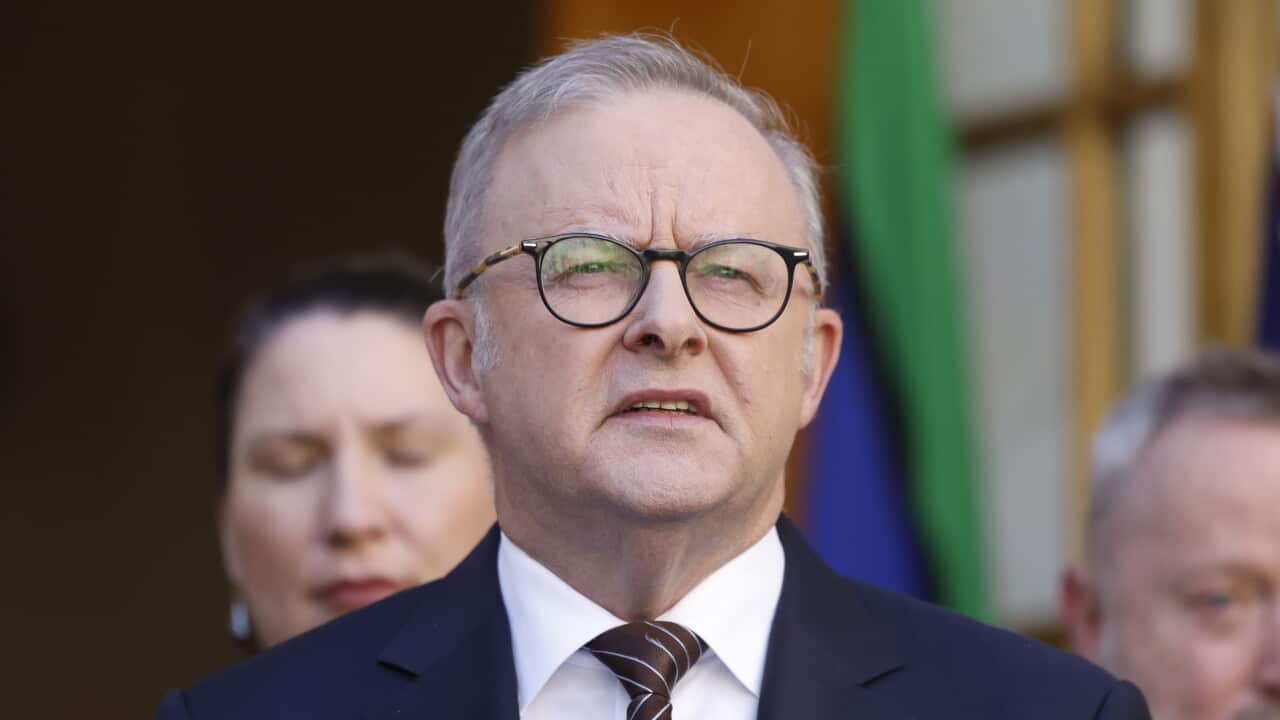
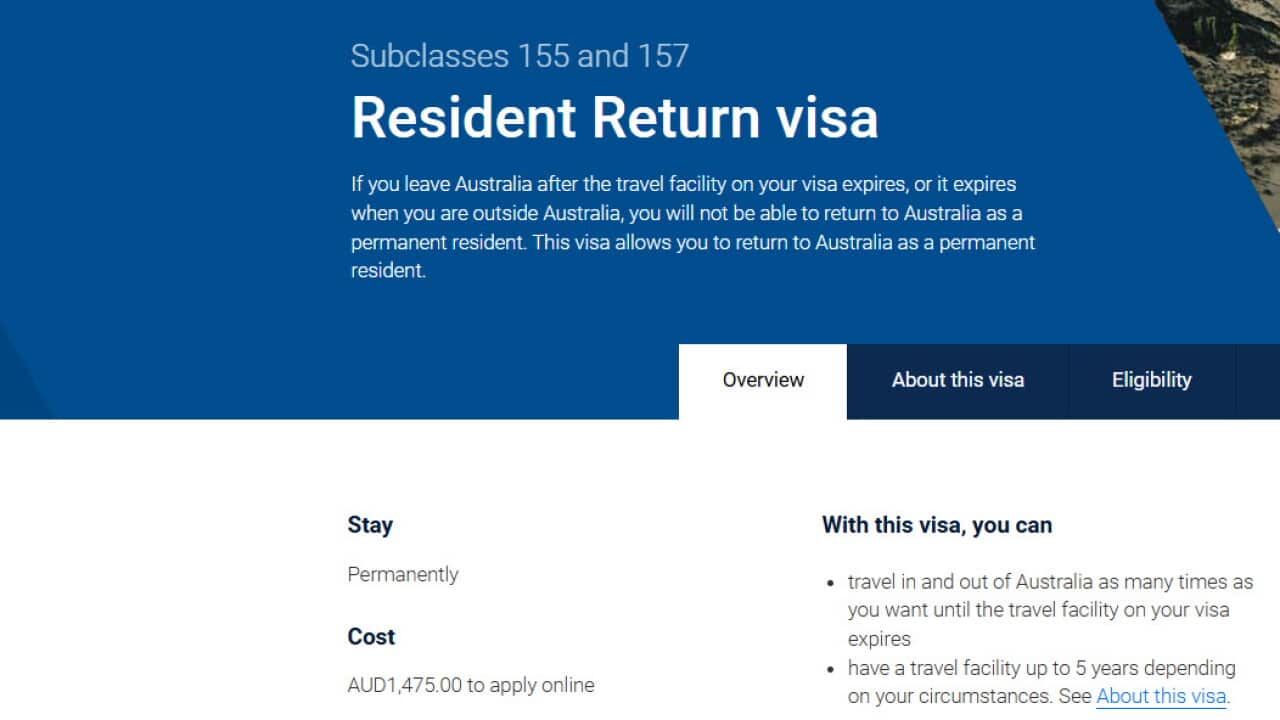

Vorige week, op 1 juli, zijn de prijzen van Australische visa fors gestegen. Eén van de grootste prijsstijgingen is die van de Resident Return Visa (RRV): van $490 naar $1.475 per persoon - een stijging van zo'n 200%. Henriette Draaijer is sinds 2006 permanent resident en kon haar ogen niet geloven toen ze over de prijsstijging las. Ze besloot in actie te komen en heeft een protestbrief opgesteld.
Mis niets van SBS Dutch! Abonneer je op onze feed in Spotify of Apple Podcast.
Reactie ministerie
Een woordvoerder van het ministerie van Binnenlandse Zaken vertelde SBS News dat de hervormingen van het migratiesysteem bedoeld zijn om "ervoor te zorgen dat het in het nationale belang functioneert".
"De inkomsten uit de verhoging van de visumaanvraagkosten (VAC) zullen deze hervorming en andere prioriteiten van de overheid ondersteunen", aldus de woordvoerder.
"De kosten van visa vormen nog steeds een klein deel van de totale kosten van een bezoek aan of immigratie naar Australië."
De woordvoerder merkte op dat het niet gebruikelijk is voor het ministerie om "VAC-wijzigingen aan te kondigen vóór de implementatie" en dat de verhoogde aanvraagkosten "het belang weerspiegelen van het behoud van het recht voor permanent residents om naar Australië te reizen en terug te keren".
Wat is een RRV?
Een Resident Return Visa (RRV) is een visum bedoeld voor personen die al de status van Permanent Resident in Australië hebben en naar het buitenland willen reizen. Met een PR mag ja voor onbepaalde tijd in Australië wonen, maar om naar het buitenland te kunnen reizen (en terugkeren) heb je een RRV nodig, die meestal vijf jaar geldig is. Lees meer hierover op de website van de overheid.
Protestbrief
Henriette Draaijer heeft een protestbrief opgesteld die ze naar de minister van Immigratie, Tony Burke, en haar lokale politieke vertegenwoordigers heeft gestuurd.
Subject: Concern regarding the disproportionate increase in the Resident Return Visa application charge
Dear Minister,
I am writing as an Australian Permanent Resident with a longstanding and genuine connection to Australia.
On 1 July 2026, I was shocked to learn that the application charge for a Resident Return Visa subclass 155/157 increased from AUD 490 to AUD 1,475. This represents an increase of more than 200% in one single step.
I fully understand that governments need to review fees and recover costs. However, this increase appears excessive and disproportionate, particularly because the Resident Return Visa is not a new migration pathway. It is a travel facility for people who have already been assessed, accepted and granted permanent residency.
Permanent Residents have already paid substantial visa fees, gone through extensive checks, and built lives, relationships and commitments in Australia. Many of us have contributed to the country over many years through work, taxes, community involvement and personal ties.
If the Government has concerns about integration, loyalty, long-term commitment or contribution, I respectfully suggest that this is not the right mechanism to address those concerns. A sudden and substantial fee increase does not distinguish between people who are disengaged from Australia and people who remain deeply connected but temporarily live overseas for work, family, health or caring responsibilities, or simply because life, work and family increasingly span international borders.
It risks punishing precisely the wrong group of people - the people who have demonstrated their long-term commitment to Australia.
Furthermore, this measure appears to impose a significant financial burden on a group that has no democratic representation at the federal level. Permanent Residents are expected to comply with Australian law, contribute economically and socially, and maintain genuine ties with Australia, yet they have no opportunity to influence decisions of this nature through the electoral process. That makes it all the more important that such decisions are demonstrably fair, proportionate and evidence-based.
This raises a serious question of fairness.
Is this truly the approach Australia wishes to take in addressing complex questions around migration, belonging and long-term contribution? By imposing a sudden and very large charge on people who have limited ability to object through the democratic process?
If the Government believes there is a policy problem that requires intervention, I would welcome a clear explanation of what that problem is. Is there evidence that the previous RRV fee undermined migration outcomes, integration, national security or program integrity? If not, it is difficult to understand how an increase of over 200% can be justified other than as a revenue-raising measure that disproportionately affects an already limited and politically voiceless group.
I respectfully ask the Government to reconsider this increase and to review whether a more proportionate and fair fee structure could be introduced. For example, the Government could consider a lower fee for established Permanent Residents with a demonstrated ongoing connection to Australia, or a more gradual increase that better reflects the administrative nature of the RRV.
Australia has long been respected as a country that values fairness, pragmatism and giving people a fair go. This decision does not appear to reflect those values, particularly for people who have already demonstrated their commitment to Australia over many years.
The Resident Return Visa is unique in that it applies only to people who have already met Australia’s requirements for permanent residence. It is therefore difficult to understand why this particular group has been singled out for such an exceptional increase.
For Dutch nationals, this issue is even more acute. Many of us cannot simply solve this by becoming Australian citizens, because many Dutch nationals cannot acquire Australian citizenship without losing their Dutch nationality. As a result, the Resident Return Visa is not merely a convenience; it is often the only practical mechanism available to maintain the ability to travel to and from Australia as a Permanent Resident.
Good public policy addresses the underlying problem. It should not impose disproportionate costs on a group simply because they are administratively easy to charge and have limited opportunity to influence the political process.
I would welcome an explanation of the policy rationale behind this increase, including how the new fee was determined, what consultation took place, and whether the impact on long-term Permanent Residents without voting rights was considered.
Yours sincerely,