

Queensland police have arrested a 50-year-old woman over the needle contamination of Australia’s AUD 500 million strawberry crop.
The woman, My Ut Trinh, known as Judy, was arrested and charged with seven counts of contamination of goods under Section 238 Criminal Code, which has a ten-year maximum penalty.
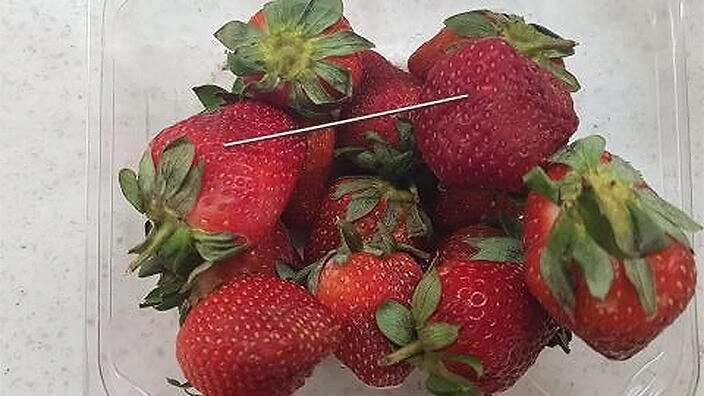
In an official statement released on Sunday night, the Queensland Strawberry Growers Association commended the Queensland Police for the arrest. The extensive investigation involved a task force of over 100 police officers. However, the Association’s representative expressed concern over some of the details relating to the charges.
“Queensland Strawberry Growers Association are pleased to be advised that police have arrested someone and charged them with the original act of product sabotage in the needles in strawberries incident.
However, it is disconcerting that the charges relate to only six or seven punnets of strawberries, proving that the majority of the 200+ incidents were copycats or false reports,” its representative said.
“Controlling bad public behaviour, including product tampering, is a challenge beyond the control of farmers. There was never an issue with the quality, integrity and freshness of local grown strawberries.”
Queensland Strawberries stressed that that “there was never an issue with the quality, integrity and freshness of local grown strawberries.” The representative body suggested that people who made tampering claims on social media “should be brought to account” and face criminal charges if the claims are proven to be false.
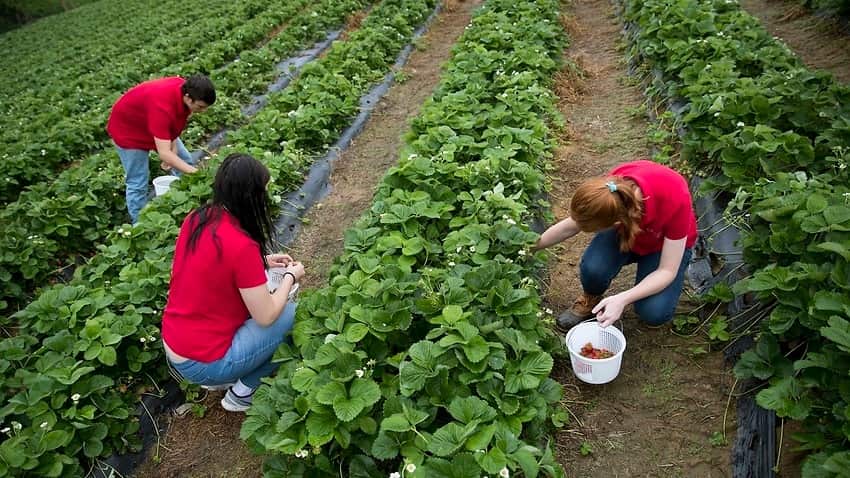
The Queensland Strawberry Growers Association had initially suggested that it may be a “disgruntled employee”. Until only a week ago, the police said there was no substantial information on the identity of the real culprit.
The local strawberry industry has been dealing with the effects what Anastasia Palaszczuk, the Premier of the Australian state of Queensland, called “a sabotage at its worst.” On 18th September, just days after the first case was reported, Queensland Health confirmed that three (3) Queensland strawberry brands were among the seven (7) brands affected by the contamination.
Following this announcement, two of Australia’s largest supermarkets Coles and Aldi pulled all strawberries from their shelves and online shops. Since the initial report, the Queensland and Western Australian state governments have each committed a $100,000 reward to help find and prosecute the individuals responsible for the contamination.
The Queensland government has also established a $1 million fund - matched by the federal government – to be used to help “investigate gaps in the supply chain”. It’s also to help QLD strawberry farmers recover from the needle-scare crisis. Within days after the announcement, Queensland Agriculture Minister Mark Furner revealed that over 60% of the pledge will be invested in an ad campaign to promote the industry.
Although news of the needle-scare has reached overseas, agricultural economics and agribusiness expert Professor Bob Farquharson of the University of Melbourne is convinced that the contamination crisis would have little effect on Australian fruit exports.

According to Professor Farquharson, nearly all the strawberry production in Australia is consumed domestically and therefore the contamination crisis posed no threat to the Australian export trade of fresh produce.
“Eighty- two percent of our [strawberry] production is consumed fresh, so it would have a major effect on that component of domestic consumption,” he said.
He also does not believe that the recent scare will have any effect on other Australian crops that are being exported in high volumes.”
We export wheat, wool, beef, and other crops as well. I think the people who buy those in the international market are not going to be worried about the strawberry issue in Australia.”
“I do not think this is as big as [potentially] any biosecurity threats that, hopefully, we will never have to deal with.”
Strawberries are grown in most states in Australia. Year-round availability is made possible through the different regions.
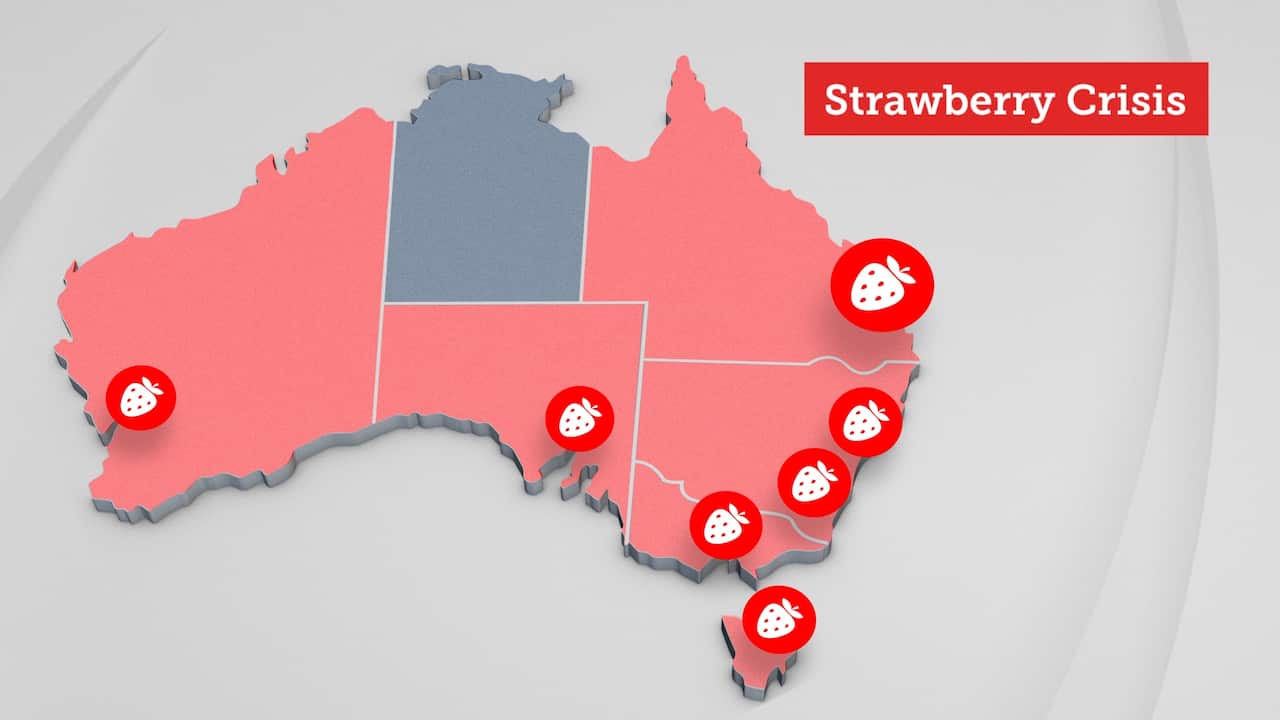
According to the Australian Horticulture Statistics, 91,083 tonnes of strawberries were produced for the year ending June 2017 with 13% sent to be processed, predominantly in preserves. The value of production was $506.5 m.
In its report, it said that “Australia has traditionally been a net exporter of fresh strawberries, with exports having increased in recent years. For the year ending June 2017, Australia exported 3,881 tonnes. For the year ending June 2017, 24% of exported fresh strawberries were sent to Singapore.”
Last year, Japan submitted a formal request for access to the Australian market to sell its strawberries. According to the Department of Agriculture and Water Resources, “Australia currently permits imports of fresh strawberries from New Zealand, the United States of America (California) and the Republic of Korea, provided they meet Australia’s biosecurity requirements.”
On 26th September, Prime Minister Scott Morrison announced that $350,000 of the Federal government’s $1M pledge will be invested in helping farmers develop tamper-proof packaging and implementing additional quality assurance processes.
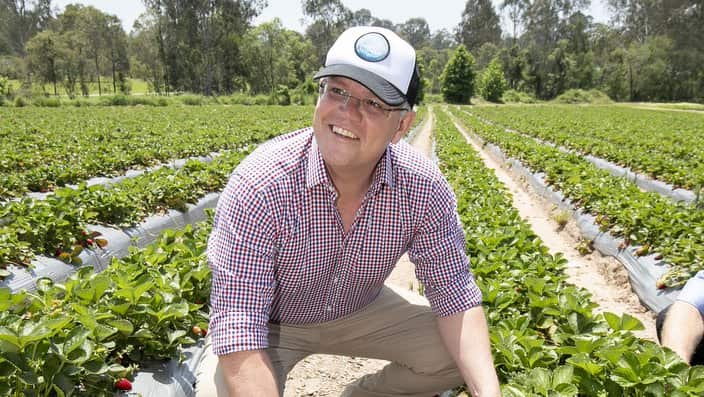
Responding to the announcement, David Thomson the CEO of Growcom the peak representative body for Queensland horticulture said that it welcomed the pledge from the government and its “commitment to help safeguard supply chain integrity, restore consumer confidence, and assist growers with ongoing recovery.”
In an official statement made last month, he explained that while “all growers are committed to consumer safety, there is a lot of handling of fruit along the whole supply chain, and it’s important to work out the most effective approach to provide ongoing certainty.”
The Australian Department of Agriculture and Water Resources has enforced interim control measures on Australian strawberry exporters which include an assurance that the fruit will go through an effective, on-farm metal screening process using metal detectors and X-ray) prior to export. Exporters are advised to follow the measures until the risks of metal contamination are fully addressed. A department representative said on 18th October that more than 200 consignments have been approved for export with these additional requirements a month after the first incident was reported.
A representative from the Queensland Strawberry Growers Association has confirmed that some of its growers have purchased metal detectors at their own expense. It has been reported that a farm in NZ has invested at least $20,000 on a metal detector as a safety control measure.



