Community group in Victoria highlights the need for better data on Filipino-Australian seniors to strengthen aged care

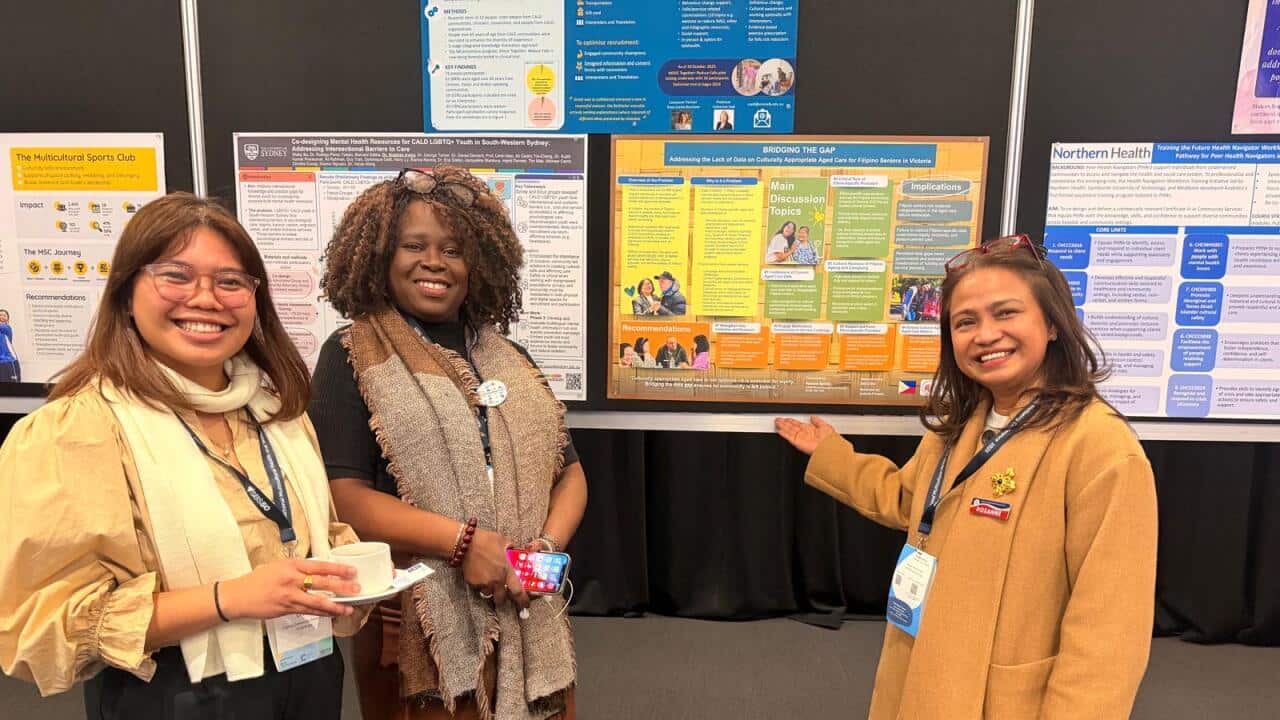
Filipino Community Council of Victoria Inc. (FCCVI) CEO Roxanne Sarthou emphasised the need for data-driven solutions to improve health services, particularly for elderly Australians.

Filipino Community Council of Victoria Inc. (FCCVI) CEO Roxanne Sarthou emphasised the need for data-driven solutions to improve health services, particularly for elderly Australians. Credit: Filipino Community Council of Victoria Incorporated

In an interview with SBS Filipino, the Filipino Community Council of Victoria Inc. (FCCVI) CEO, Roxanne Sarthou, emphasised the need for data-driven solutions to improve health services, particularly for elderly Australians.


Key Points
  • The Filipino Community Council of Victoria Inc. attended the 2025 FECCA National Multicultural Health and Wellbeing Conference in Melbourne, which focused on culturally safe health services, mental health, and community-led solutions.
  • FCCVI participated as a poster presenter, highlighting Filipino-Australian representation in national health discussions.
  • FCCVI stressed the importance of data-driven and co-designed solutions, especially in aged care, to better serve multicultural communities.
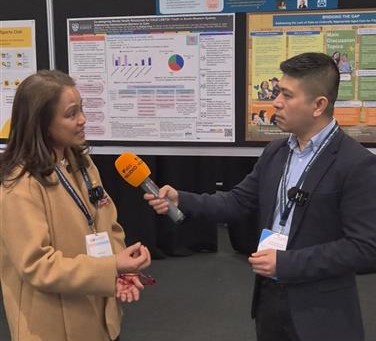
In an interview with SBS Filipino, Filipino Community Council of Victoria Inc. (FCCVI) CEO Roxanne Sarthou emphasised the need for data-driven solutions to improve health services, particularly for elderly Australians.
In an interview with SBS Filipino, Filipino Community Council of Victoria Inc. (FCCVI) CEO Roxanne Sarthou emphasised the need for data-driven solutions to improve health services, particularly for elderly Australians. Credit: SBS Filipino
📢 Where to Catch SBS Filipino

🔊 On Air – Tune in to SBS Filipino on radio stations across Australia and website live stream, and TV Channel 302 from 10 AM to 11 AM AEST daily.

📲 Catch up episodes and stories – Visit sbs.com.au/filipino or stream on Spotify, Apple Podcasts, Youtube Podcasts, and SBS Audio app.

📣 Follow Us on Social Media – Stay updated by following us on Facebook and Instagram.

Narito tayo ngayon sa FECCA Conference 2025

kasama natin si Ms Roxanne Sarthou

ang CEO ng FCCVI o Filipino Communities Council of Victoria

at President ng FILCAA Magandang araw sa iyo, Ms.

Roxanne. Magandang araw. Good to see you here. Oo.

Malaking bagay po nakikita ko yung mga kapwa-Pinoy

sa mga ganitong conference. Iyon yung first

question ko siguro, Ms. Roxanne. Number one, ano

yung kahalagahan ng mga representasyon ng mga

Filipino communities sa mga ganitong klase ng

health conferences? Ay naku, importante yan, TJ We

have to get our voice heard. We have to

participate. If we want to be part of this broader

community, we have to be here. And we have to

contribute. Tsaka marami rin tayong natututunan.

Okay? We are focusing on multiculturalism,

learning from other cultures, learning from other

practices. So dapat, we're part of this

conversation and discussion. Mm, mm.

Kayo po ay bahagi ng ibat ibang klase ng issues

hinid lang sa Filipino community

pero focus tayo sa Filipino community Ano ang mga

issue nais ninyong matalakay sa bahagi ng FCCVI?

Ang focus natin dito ngayon is about aged care.

Ang paper na sinabnit namin, we're so lucky and

we're so grateful na napili ng FECA to present our

paper. We're talking about our elderly and the

lack of data regarding our elderly. So we're

talking about culturally appropriate care for our

elders. November 1, na-roll out ang support at

home. Yan ang biggest reform in aged care. So for

our community, that has a lot of significance. So

it's important kasi our community, not just our

community, the whole of Australia is an aging

population. So we have to be on top of these

things. And there is a gap with data. Especially

in our own specific communities, the Filipino

community. Kailangan natin ang data to support how

we can deliver culturally appropriate aged care.

And we need co-design and co-creation with our

community to deliver that. And then from that, we

can bring that to our stakeholders and show them

how to look after us well. Puntahan ko yung data

muna. Gawin nating layman's term kasi ito yung

datos na specific sa isang bagay. Ano po yung mga

datos na kailangan para mas maintindihan yung mga

aging population, lalo na yung Filipino community?

Ang datos natin yung mga lenguahe natin. Ilang

languages ba? Ano ba ang kailangan natin pagdating

sa mga translation? That is one of the key things

that the multicultural is now considering about

languages. Kasi yan, communication yan. So we need

to bridge the gap around that. Kasi yan ang

umpisa. When I cannot talk to you and you cannot

understand me, Everything is tossed. Ang data pa

na kailangan natin, ilan ba? Gender wise, babae,

lalaki, sa ages, ilan ba ang dementia sufferers?

So there's a lot of data we really need to

collect. Yung preferences din ang ating matatanda

in their particular care. So yun ang malawak ang

data na kailangan natin. yung masusing pag-alam at

pagkilates ng data, ang magbibigay sa atin ang

kaalaman paano natin i-deliver yung appropriate

care na hinihingi ng ating mga matatanda. Maganda

po yung nabanggit nyo yung preference. Kasi meron

dito nababanggit yung age care, may respite care,

may home care. At yung mga unang, yung mga wala pa

man doon sa edad na yun, parang yung iba po, may

mga nakakapanayam tayo na ayaw mag-retire na sa

Australia, natatakot dahil baka abandonhin na

lamang ng kanilang pamilya. Yung mga ganito pong

fears, paano naman maipaparating din ng mga

kababayan natin na ito yung gusto namin mangyari

para sa aged care. Halimbawa, ako ordinaryong

mamamayan at may grantes sa Australia na para

maipadala namin sa inyo yung mga ganitong klase ng

concern din. Well, sa FCCVI, we have a Kapihan sa

Hub. And every Monday yan, after our food bank or

our food relief program, inibidahan namin yung mga

matatandaan sa community natin. So sa Kapihan sa

Hub doon, meron kaming mga case managers,

pinag-uusapan namin yung mga pangakailangan nila,

kamusta sila sa bahay. So we tailor it to their

needs. Tita, ano bang importante sa'yo? Gusto mong

gawin during the week. Ano bang what makes you

happy. And also tita or tito, kasi ang matatanda

natin as they grow older, they feel isolated. So

it's important to us to connect. So yung data na

yun, although it's not official data, but it's

data that we get from the voices of our people,

our community that we have. Oo, nabanggit niyo

yung isolation sa mga laking baki. So kahit na

nabanggit natin yung data, yung datos, ngayon

naman yung co-design na binanggit niyo. Ano'ng

mangyayari ito? Ano yung co-design? Paanong

gagamitin yung datos na ito? Para magkaroon ba ito

ng pulisiya? I-recommend ba ito saan? Ano pong

mangyayari? Ang importante kasi sa datos, kasi

minsan ang naririnig lang na boses yung

pinakamalakas. Sometimes, sampung tao, isa lang

magsalita, akala mo yun na. That's the voice of

truth. So, importante talaga na mayroon tayong

datos at malaman natin out of the 10 or out of the

100 or out of the 200, ilang ba yung nagsasabi ng

pare-pareho na boses? Ilang ba nagsasabi na gusto

nila tumira sa kanilang sariling bahay? Gusto nila

umuwi sa Pilipinas? Gusto nila na Pumunta na sa

aged care. And then pag nalaman natin kung ilan,

quantifiable. And then we design pathways to give

them the life that they choose. So, yung iba na

gusto talaga sa residential, how do we actually

address that? Yung gusto na mag-stay pa sa bahay

nila nang mas matagal, marami actually sa atin mas

gusto mag-stay sa bahay. Yung home care na

tinatawag. Yun ang specialization ng FCCVI, yung

home care. We try to help our community live at

home longer. Kasi they feel safe there. They feel

familiar there. Tsaka, andun yung pinagpundaran

nila. Habang bata pa sila hanggang tumanda. Doon

sila babalikan ng pamilya nila. Opo, isa yan sa

mga parang common sa atin, sa ating kultura.

Parang panguli na lang sa iyo, Ms. Roxanne, ngayon

na lang sa isang conference, ano naman yung

ine-expect mo na takeaway dito? O ano yung pwedeng

mangyari lalo na pag naka-attend kayo ng mga

ganitong conference o maging naging bahagi kayo

para makatulong pa sa mga issues ng community,

especially sa health? Well, dito kasi nakikita mo

at naririnig mo yung boses ng hindi lang ng

Filipino community. Nakikita natin yung boses at

saka mga pinagdadaanan ng other communities. So,

first and foremost, nakikita natin na hindi lang

sa atin nangyayari yun. Nangyayari yun din sa

ibang communities. And then, what we can do from

there is to collaborate with these communities. so

that we can actually come together and go to our

stakeholders and ask for help. Hindi lang kami to,

hindi lang kami nag-iisa. Actually, itong

nararanasan ng karamihan sa atin. So, mas

makikinig sila kasi mas nakararami tayo. And on

our part as well, yung mga natututunan natin dito,

pwede natin ibalik sa communities natin yung best

practices ng other communities. Paano nila alagaan

ang mga matatanda, paano sila makapag-interact sa

community. So, marami tayong matututunan na pwede

natin ibalik sa ating community. And marami rin

tayong pwede ibigay sa kanila. Kasi syempre, dun

sa mga karanasan natin, natututo rin sila. It's

the exchange of ideas. We're richer together. And

our knowledge has expanded together. And when we

collaborate, we can make waves and make a huge

difference in our community. Ako, ang napakaganda

ng kolaborasyon sa iba't ibang wave. Maraming

maraming salamat, Ms. Roxanne Sarthou ng FCCVI.

Thank you. Thank you sa pagkakataon, TJ

END OF TRANSCRIPT

Share
Follow SBS Filipino

Download our apps
SBS Audio
SBS On Demand

Listen to our podcasts
Independent news and stories connecting you to life in Australia and Filipino-speaking Australians.
Understand the quirky habits of Aussie life.
Get the latest with our exclusive in-language podcasts on your favourite podcast apps.

Watch on SBS
SBS News in Filipino

SBS News in Filipino

Watch it onDemand