
Often that the students’ achievements are celebrated; their intelligence, skills and potentials are magnified more than the important figures behind them who contributed to their success.
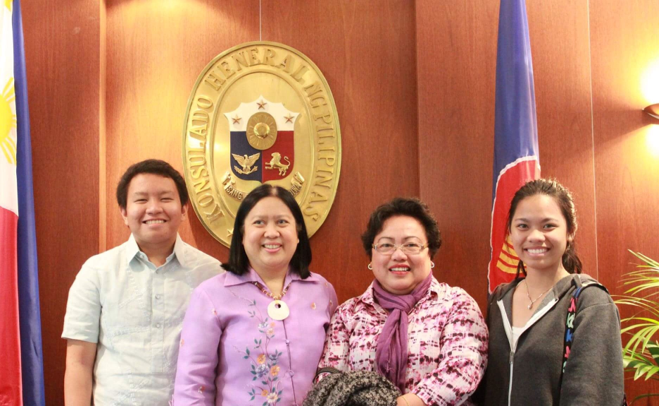
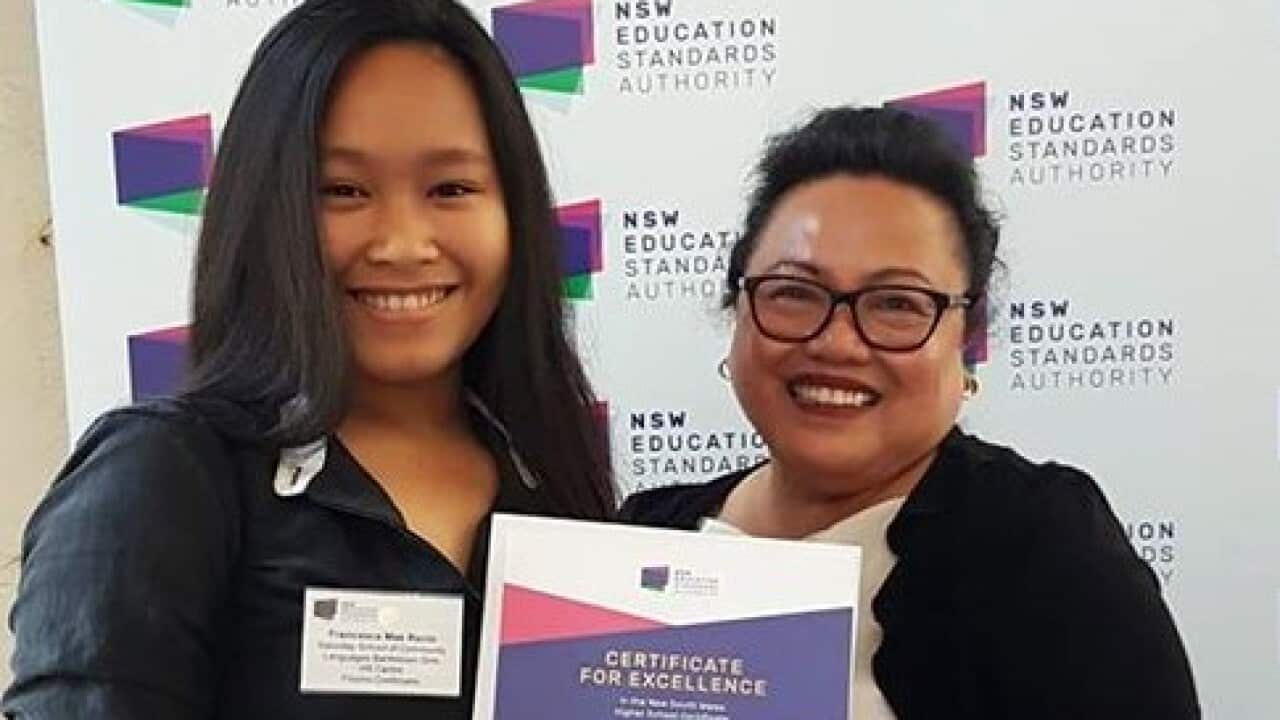
Jared Hermogenes, Angelika Malabag and Francesca Recto all received a well-deserved recognition from their institution and different media organizations as each of them topped the Filipino Higher Secondary Certificate (HSC) in New South Wales (NSW) from 2015 to 2017 respectively.
While we give them a handshake or a pat in the shoulder for their two thumbs up performance in the exam and for promoting the Filipino language to the youth, there is one name that SBS Filipino wants to highlight this time; it goes by the name of Nerissa Revesz, the proud teacher (and mentor) of these young achievers.
Finishing a Biology degree from the Philippines, Revesz migrated to Australia with a dream of becoming a Science teacher. As this was realized, an opportunity unexpectedly knocked on her door that allowed her to hold a position as a Filipino language teacher at Bankstown Girls High School, the only Filipino language school in NSW endorsed by the Department of Education and Training under the umbrella of New South Wales Education Standards Authority (NESA).
Despite this success, however, there are also challenges.
Revesz shares in this interview a portion of the overall landscape of Filipino language teaching in recent time (at least in NSW). Using the school where she teaches as a basis, she says there is a decline on the number of student enrollees year after year.
One of the evidence she cites is the termination of Filipino classes being offered to year 7 up to year 10 students around ten years ago because none of the students have enrolled. She adds that state day schools in NSW have also refrained from offering Filipino classes as most of the Filipino migrant parents are sending their children to private institutions or Catholic schools.
Apart from these, while some of these parents are interested to enroll their children to the Filipino class when they become aware that this language is being offered at Bankstown Girls High School, there are still those who think it futile as they usually converse in this language at home and are native speakers of the language themselves.
Revesz tries to deconstruct this understanding by pointing out that learning a language in-depth is different. In an educational context, the student must be able to be fluent in both English and Filipino language and that includes being conscientious in grammar applications like the use of conjunctions and having a large vocabulary.
There are advantages as well; Revesz says students will appear to be more competent in the perspective of the Australian labour market (once they finished their studies) as they are bilingual and most importantly, it will strengthen their ties to the Philippine culture and values.
Further, as Revesz has the lived experience of being a Filipino language teacher in NSW, she reveals to SBS Filipino that there is a lack of support from the Filipino-Australian associations and community.
As a dedicated teacher, she spends her own money to buy Filipino-English dictionaries and books to be used as learning resources by the students. In saying this, Revesz rallies the Filipino-Australian community to support them in promoting the Filipino language simply by donating educational materials integral to the Filipino language development of the students.
Revesz’ motivation in teaching Filipino is more intrinsic as she enjoys learning from her students who come from the different parts of the Philippines and therefore, bring with them their own cultural perspectives.
She is passionate towards helping her students to realize their potentials and capabilities and believes that supporting them is the best way for them to achieve their very best.
When SBS Filipino reflects from her statement that she will always be at the background to support her students, Revesz humbly says, ‘if it’s my role to do that, I’ll be very happy.’
Listen to SBS Filipino’s full interview with Mrs. Nerissa Revesz.
"A teacher affects eternity; he can never tell where his influence stops." -Henry Adams