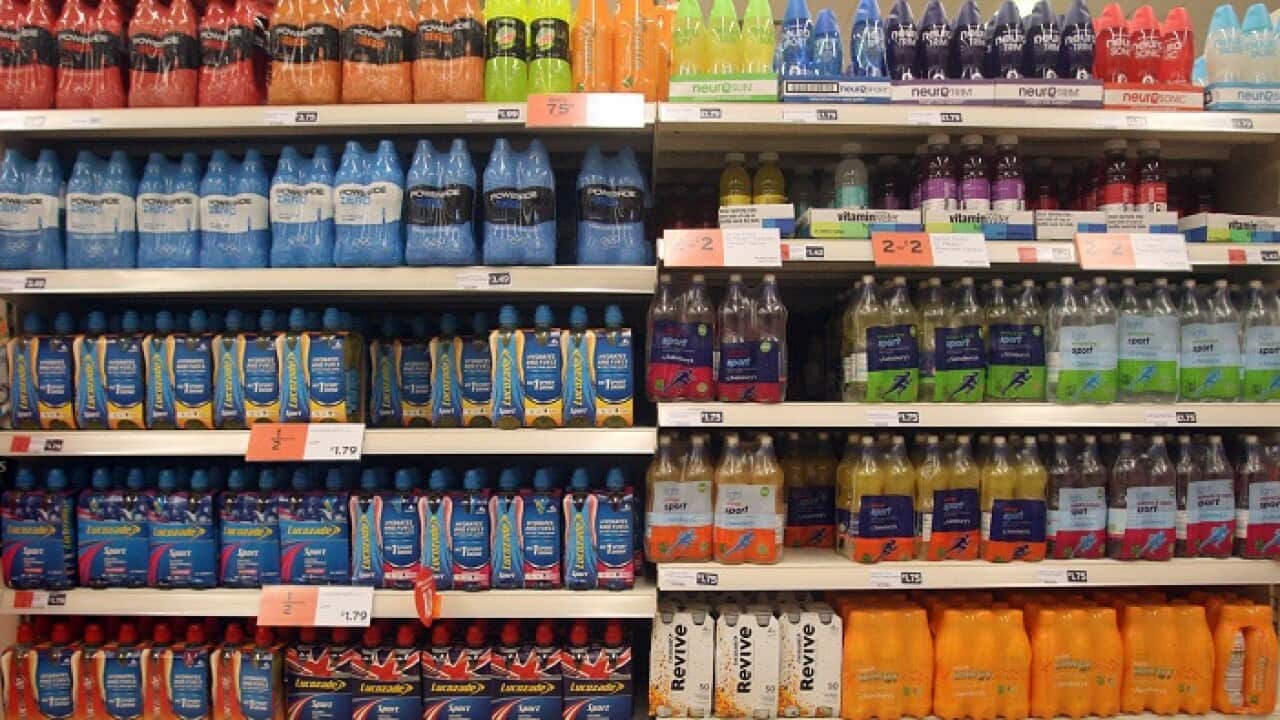

Nineteen Australian organisations are banding together to communicate the health consequences of sugary drinks.
The government is being urged to take steps to reduce the availability of sugary drinks across the country.
Nineteen Australian organisations, are backing a Cancer Council campaign called Rethinking Sugary Drink Initiative.
A graphic TV advertisement has been produced, warning the public about weight gain and obesity, heart and kidney disease, type two diabetes and cancer.
The consumption of sugar-laden drinks is resulting in negative health effects including tooth decay, with nearly 50 per cent of Australian children suffering.
About one in six Australians drink at least 5.2 kilograms of sugar annually from sugary drinks alone.
Just one 600ml bottle of soft drink has the equivalent of 16 teaspoons of sugar.
Craig Sinclair is the Head of Prevention Division at the Cancer Council Victoria branch and spokesman for Rethink Sugary Drink initiative.
He says big brands' marketing is influential as it pervades many social situations where young people congregate.
"We obviously see a lot of advertising associated with sport, and on television and social media. And it's done in a very positive construct. And it's about - they [children] make the connection between enjoyment of life and consumption of these drinks", underscores Mr Sinclair.
Restricting the supply
Mr Sinclair says it's necessary to restrict the availability of sugary drinks in sporting facilities, schools and other places.
Some organisations like Museums Victoria have already overhauled their cafeterias to provide healthy options.
While exposure and availability are significant drivers in the popularity of sugary drinks, cost is another deciding factor.
Craig Sinclair from the Cancer Council says people who live in regional Australia may not have the choice available in urban areas.
"And this is particularly in rural and remote communities where sometimes these soft drinks dominate the fridges and it's hard to find healthy alternatives. So it is across each of those spectrums, it is the price and it is the promotion and the placement", said Mr Sinclair.
Mr Sinclair says the dialogue starts at home, where parents can educate their children as to the volume and subsequent harm of sugar in sugary drinks.
The Rethink Sugary Drink initiative hopes to kick-off those conversations with their advertisement campaign circulating on social media.