
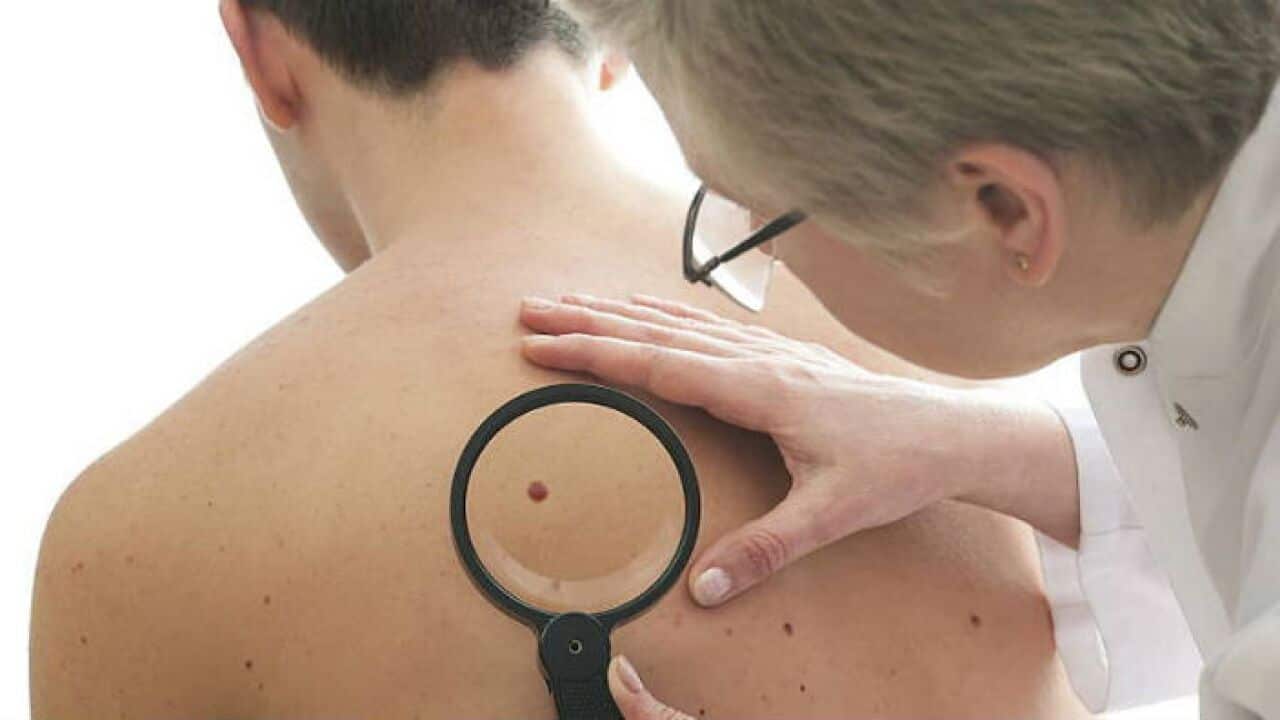

A new treatment listed on the Pharmaceutical Benefits Scheme is said to reduce the recurrence of melanoma for half of stage three cancer patients. Some oncologists describe the drug as a life-saver for people with locally advanced melanomas.
Six years ago Alison Button-Sloan was diagnosed with a high-risk melanoma on her back.
“I remember thinking I had 32 per cent (chance) of making five years. I cried every night for the first six months,” she said.
Surgery to remove the melanoma has left a 30 centimetre scar across her back. Now she’s watching and waiting to see if the cancer will return.
“It means living in limbo worrying it’s going to come back. It's 'fear of cancer recurrence' - yeah, fear of its recurrence.”
But a new melanoma drug, just listed on the pharmaceutical benefits scheme, is designed to prevent this eventuality.
TAFINLAR and MEKINIST is a targeted post-operative treatment for stage 3 of the disease, in which cancer is locally advanced but not yet spread to other part of the body.
“These drugs target an abnormality in the cancer cells, called a B-RAF mutation, to kill off those melanoma cancer cells,” explains Professor Georgina Long, from the Melanoma Institute of Australia. She notes that this is the first drug listed on the PBS to treat this stage of melanoma.
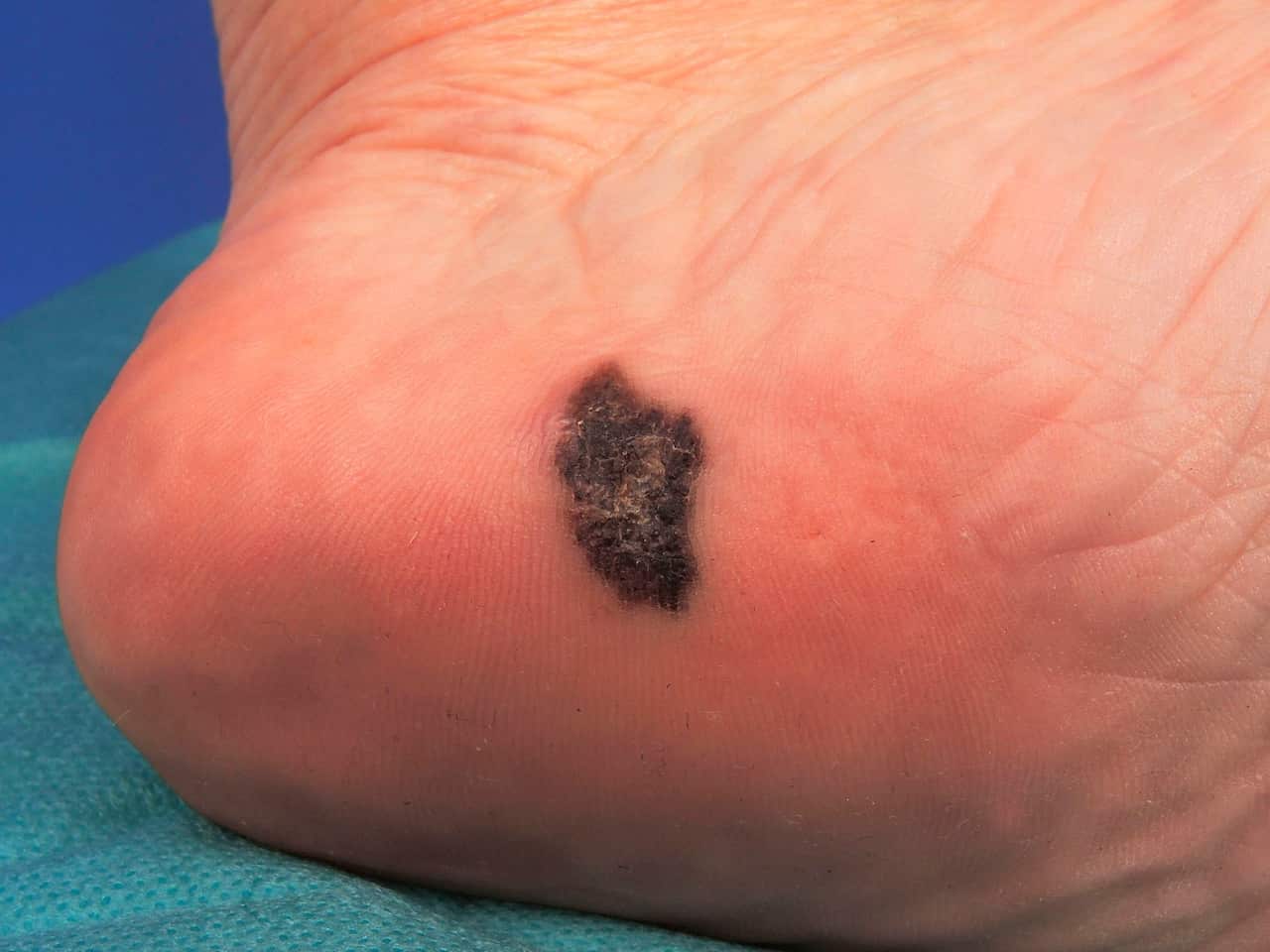
According to Alfred Health oncologist, Dr Andrew Haydon, this treatment could improve the chances of patients.
“We now have a treatment that can halve their chance of the melanoma recurring which is going to lead to a significant improvement in their chance of surviving.”
Clinical trials showed 20 per cent of patients had side effects from the drugs, such as vomiting and fatigue, but also a 50 per cent reduction in the risk of melanoma recurrence.
Professor Long is confident progress is being made in the fight against melanoma.
“We’re working towards zero deaths from Melanoma deaths in our life time, and this is one step forward in preventing people from getting the advanced metastatic melanoma.”
This year it’s estimated there will be 15,229 cases of melanoma detected, and from these, 1,726 will die.
It makes Australia the country with the highest rates of melanoma in the world, with the incidence of melanoma 11 times the global average.