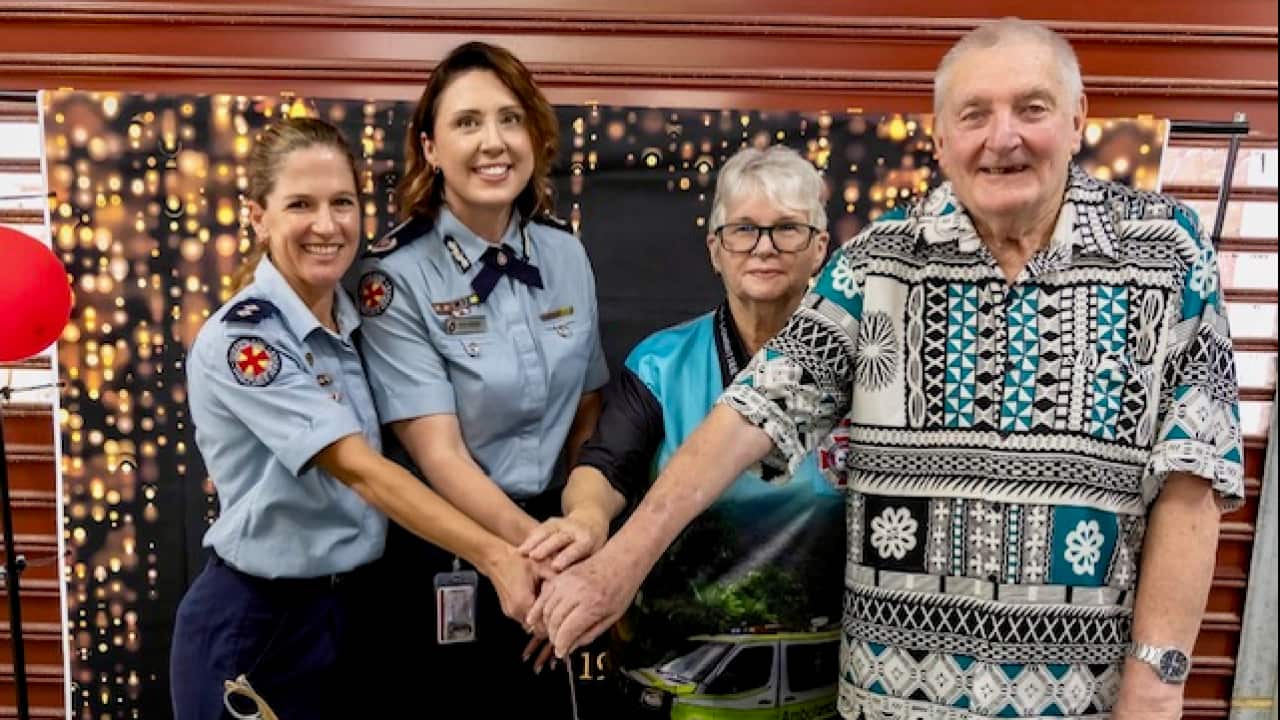


The people who care for the elderly are the focus in this segment of ‘’Speak My Language’’ with Oddyseas Kripotos of ‘’Fronditha Care’’.
The program is sponsored by the federal government and is a joint initiative undertaken by the Multicultural Community Councils of NSW, Victoria and Queensland.
SBS Radio and the National Ethnic Broadcaster’s Council (NEMBC) function as the program’s communication partners.
Odysseas Kripotos works for aged care services provider ''Fronditha Care''. The service is responsible for the coordination of the ''Speak My Language program'' in Greek, in the state of Victoria.
The role of a carer
What do we mean by the term ‘’carer’’? ‘’We are talking about the people who care for a relative or a friend, most of the time without a reward,’’ says Odysseas Kripotos and adds: ‘’A carer’s role may include the psychological or social support of the elderly, accompanying them in appointments, even their personal care such as cleaning and dressing’’.
The role and responsibilities of a carer are determined on a case by case basis. It should be noted that some carers might only need to spend a few hours of their week looking after an elderly, while others are doing it on a constant basis.
The cultural background
Mr. Kripotos notes that for many cultures, including Greeks, ‘’there is a notion that the kids have to look after their parents when they grow old.’’ Mr. Kripotos points out that in other ethnicities, when the parents realise they need assistance, they must either hire a carer or become admitted into an aged care home.
A carer’s rights
As far as their employment is concerned, carers are legally protected when it comes to their shifts and any discrimination they might suffer. In addition, they are able to represent and make decisions for their elderly charge assuming they have received their consent beforehand.
Support Services
Mr. Kripotos notes that the role of a care can be demanding. ‘’If the carer does not reach out to the proper services, then the situation might become damaging for both themselves and the elderly.’’ he said.
The Carer Advisory Service provides information on how to support the elderly and lists the local services that can provide assistance. Moreover, Carers needing respite care services can call 1800 200 422.
Odysseas Kripotos suggests that carers could also talk with others in a similar situation or join groups of other carers.
‘’We may think that it is the children’s responsibility to care for their parents, but we must understand that they also need help. So if you know a carer, get in touch with them and see what you can do to ease their work’’.
Press Play to hear more in Greek.