
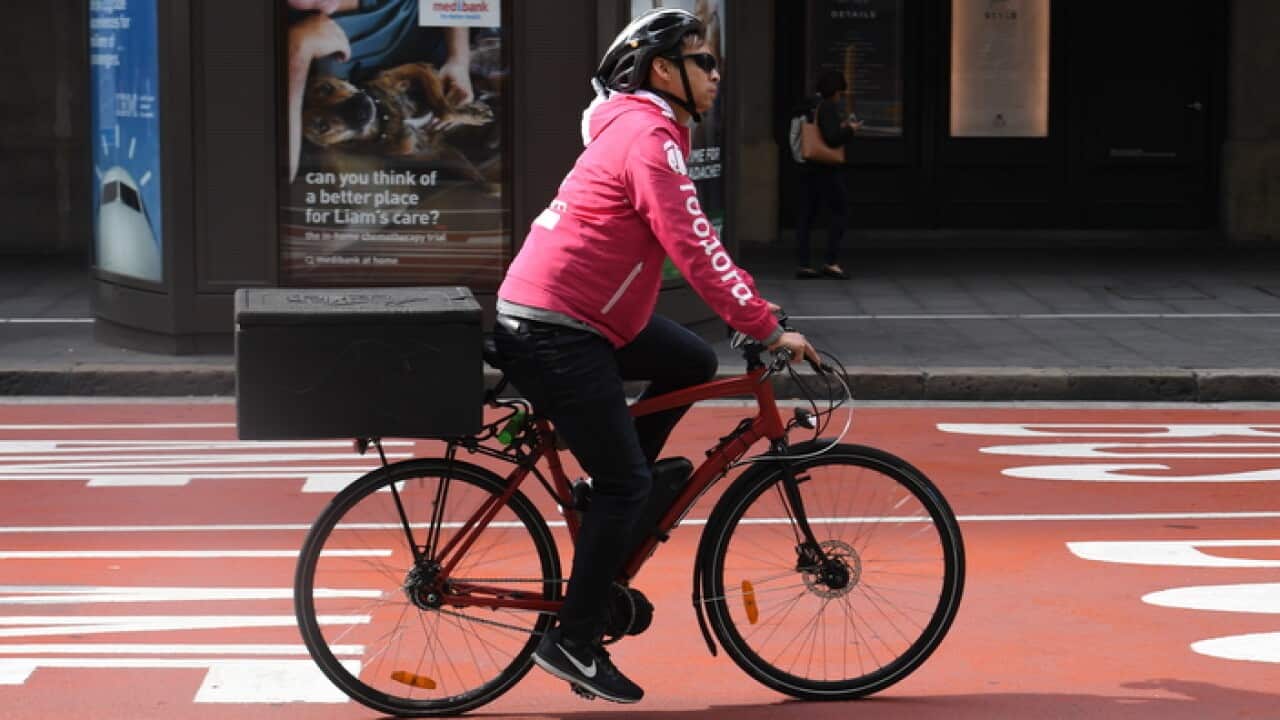

An inquiry by the Victorian government is looking at the phenomenon of the so-called, ''Gig Economy''. More and more Australians are choosing to find jobs through electronic platforms, working as outside contractors for a variety of positions. The model has low barriers to entry and it allows people to set their own working schedule, but there are those who argue that the system is ripe for exploitation.
A survey by the Queensland University of Technology has found that digital platforms are playing a offering a wide variety of work for Australians seeking employment. The survey is part of the Victorian government’s Inquiry into what is known as On-Demand Workforce, also known as ‘’Gig Economy’’.
Natalie James, the chair of the Victorian inquiry, says it's an area that needs regulating.
"Our respondents identified over 100 platforms that they were working through and around a third of them are working on multiple platforms. And there seems to be a new platform arising every day from the gig economy. This is a fast moving sector and it is important that our regulation keeps and that we understand the implications for individuals and the labour market more generally."

The most common digital platform workers include men aged 18 to 34, students, temporary residents, people with a disability, and those who do not speak English at home.
NSW is the state with the highest level of gig economy workers at 7.9%, while Victoria follows closely behind with 7.4%.
Pros and Cons
Platform workers who took part in the survey said they enjoy the flexibility their work provides but were not very pleased with their income.
Rich Phan drives for Uber and other similar platforms. He said the system allowed him to combine work during his studies.
"I was offered a PhD scholarship to pursue a PhD at Melbourne University. Prior to that I was balancing graduate studies with work and found that to be very difficult. I thought it might be a good idea to do what I want when I want, to drive a few hours and earn some extra cash," said Mr Phan.

Ms James said that so far the verdict is not out on whether the positive aspects of the gig economy outweigh the negative ones.
However the survey has made some interesting discoveries. But Ms James says there's also a lot in the survey to confirm what is already known about the gig economy.
"For example most people who are accessing work via platforms are not solely reliant on the incomes from platforms but there are small cohorts who are. So 15 per cent of people absolutely rely on this income for support and it is more likely that they are going to be in that category if they're in food delivery and transport for example, and there we have seen some quite distinct features of people working in that sector," said Mrs James.
Potential for abuse
However there are those who believe electronic platforms are built in a way that attracts workers and can potentially leave them vulnerable to exploitation.
Michael Kaine is the Secretary of the National Transport Workers Union.
‘’I think the bigger picture in this so called new economy is that if there is a low barrier to entry and you can just take your bicycle or car and you can go out and look like you're doing work that is valuable, then that is absolutely seductive and it is no accident that these multimillionaires construct their work that way. They say that these people are independent contractors, they say that they are their partners. But really they are exploited employees who have been mis-classified and that is what the community needs to come to terms with."
The Victorian Inquiry into the On-Demand Workforce is expected to report to the state government later this year.