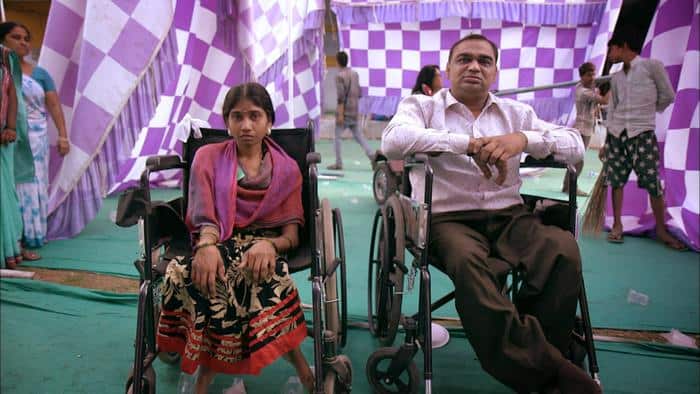
ndian man Pankaj Gaikwad is 28, works at the tax office, and is a Taylor Swift fan.
He’s been blind since birth. For him, this has been a constant barrier to finding a partner.
Prejudice against people living with disabilities has long been an issue in India, something the country has recently tried to address through anti-discrimination legislation.
Having a disability or impairment can make education and employment opportunities difficult to obtain and leads to social stigma. It also makes it difficult for Indians like Pankaj to find love.
Dateline meets Pankaj as he heads to a matchmaking event in Mumbai, where he hope he’ll find his soul mate.
The event is the brainchild of businesswoman Sushmeetha Bubna, the founder of Voice Vision, an organisation that aims to empower people with visual impairments. She herself has been blind since the age of ten.
She’s expecting around 100 single people to turn up – all of them there to find love. Many arrive with their parents, who also want to meet potential partners. They stand around, intensely observing their children’s interactions.
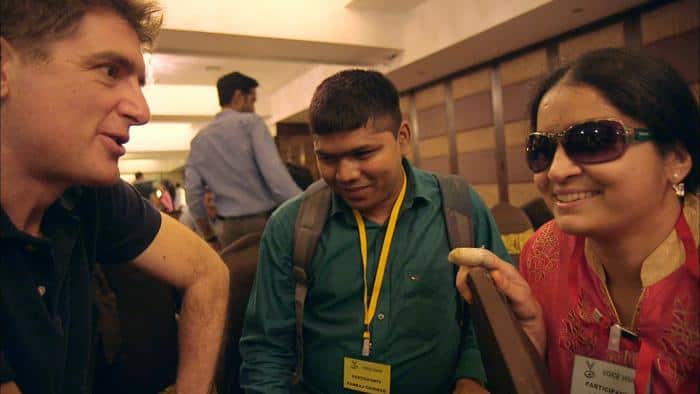
“Every parent who comes here comes with their checklist, like I want this and this,” says Ms Bhubna. “Therefore, we at Voice Vision believe ‘match your capabilities rather than matching your disabilities’.”
She gives the attendees, who are living with a range of different disabilities and impairments, a chance to pitch themselves to the rest of the group.
“Before I go from here, I don’t know whether I’ll find my partner or not, but I do want to make a few friends,” says Huda, a 38-year-old women who has difficulty walking, after a bout of polio she had as a child.
“I want to find somebody who’s ready to accept me as I am.”
During the event she meets Alex D'Souza, a 33-year-old private tutor, who also had polio in his childhood. They appear to hit it off, but there’s one clear obstacle; Alex is a Catholic, Huda is Muslim.
But Alex is optimistic; “if things go well we can set an example. I’ll be the Western side, she can be the Middle Eastern side, and we can be an example for the world!” he says.
Huda’s life has been mostly sheltered – she’s never left the house by herself and her family is very protective.
In contrast, Alex has run marathons and tackles the streets of Mumbai with confidence.
For Huda, the experience of talking to Alex has empowered and inspired her to do things she didn’t dream possible with her disability. She says meeting Alex, who is outgoing, has made her seek more independence and changed her perspective on her impairment.
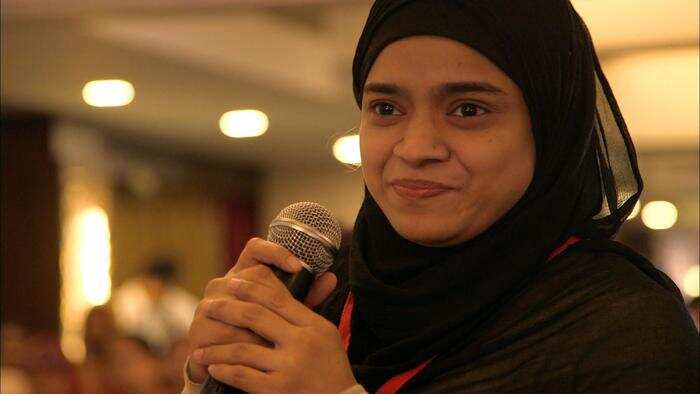
Not long after their meeting, for the first time in her life Huda walks several blocks to visit her sister on her own, something she had not really considered previously.
Even though their future is uncertain, their meeting has changed Huda’s life for the better.
These matchmaking events have been spreading across the country.
27-year-old Hiren Gohil has travelled around seven hours to be at an event in Ahmedabad, a city north of Mumbai.
Hiren’s hand and leg were severely injured in a childhood accident. He’s hoping he will meet his future wife here.
During the event Hiren talks to one woman he likes, noticing her soon after walking in. After asking her caste however, he refuses to consider her as a potential future partner.
A core purpose of these matchmaking sessions is to break barriers created by discrimination, but some attendees like Hiren are unable to shake certain prejudices – he’s worried his family would not accept someone from a low caste.
In Mumbai, Pankaj also meets someone that he likes.
After the matchmaking meeting he asks if she would consider him as a future partner.
And as he waits on an answer, he’s caught in a position relatable for all people, asking himself; she loves me, or she loves me not?
Will he find his soulmate, or will he have to keep looking? Watch Dateline, Tuesday 9.30pm on SBS.