

Despite China's northern water shortage, polluted water is further exacerbating water problem in China. So what are the solutions?
China's water shortage is a very serious issue, however polluted water adds a further pressure to the existing water problem.
Northern China is experiencing water shortage but the southern tends have torrential rain that could flood many areas.
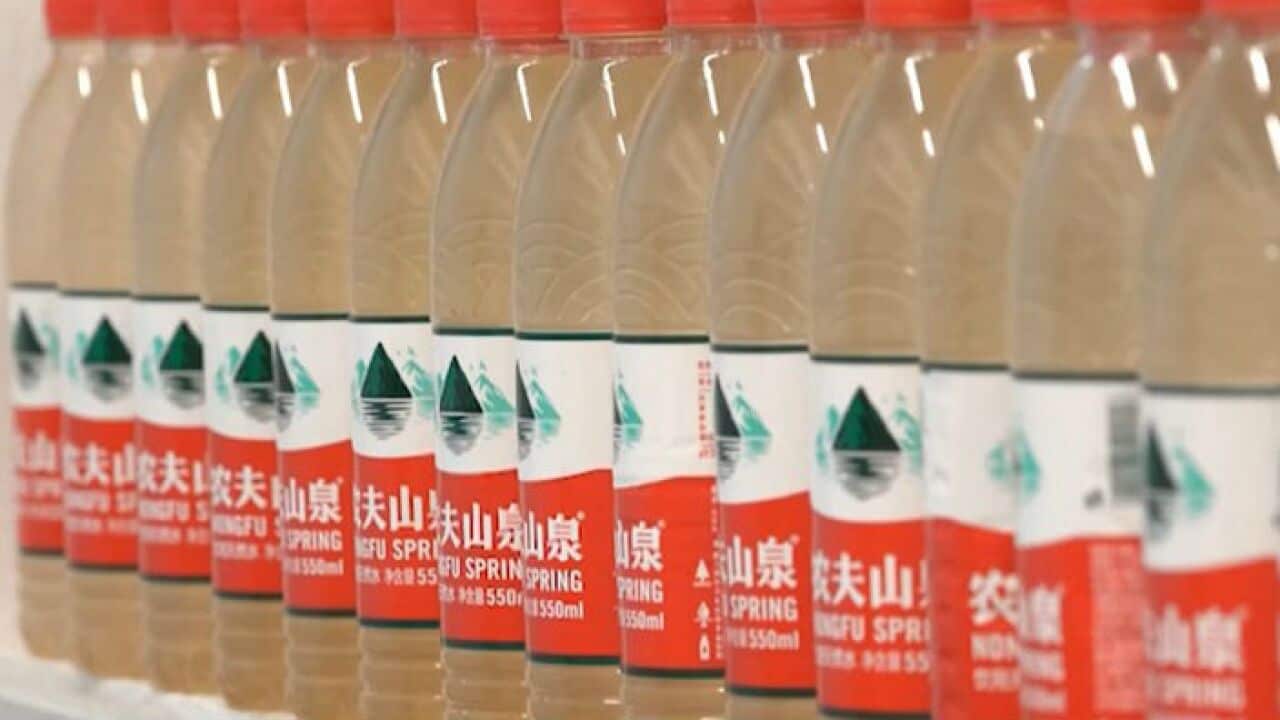
Nut Brother, an unanimous name of Chinese artist who presented a small art gallery in Beijing with thousands of cloudy bottled water on whites shelf to raise awareness about water pollution in China. He says the water is filled with high levels of heavy metals.
"You can see all the rivers are black and dirty. The groundwater is polluted. The livestock drink this water. It’s used for crops. The people drink this water. The whole ecosystem is highly polluted." "It’s not suitable for people to drink. If you drink too much, you can get diseases like cancer or have skin problems. And your livestock could die."
Government statistics for 2016 show 80 per cent of China’s tested groundwater is affected by pollution, and it is contributing to water scarcity in the country’s dry north. More than one-third of China’s mainland is facing high, or extremely high, water stress. Professor Song Guojun, from Beijing’s Renmin University, explains.
"China’s water problem is from both scarcity and pollution. Two factors are involved. Water pollution causes water shortage. For example, rivers or lakes could have been a source of drinking water but, because it’s polluted, you have to find another source."
Finding alternative water sources has become a necessity for the city of Beijing, where 40 per cent of all waterways are too contaminated to use. This year, the city began a project to clean up 140 of its polluted rivers. Excessive groundwater pumping for drinking water is causing parts of the capital to sink at a rate of up to 11 centimetres a year. Because of the shortage, water is being piped from the country’s rainier south via the country’s south-north transfer project. Professor Song suggests people should be paying more for their water, something the government is hesitant to implement.
"If the cost of moving people is more than moving water, then why not? Of course, moving water has costs, but we should add this to the price of water," said Prefessor Song.
Wang Jiao is a researcher at the Beijing office of the World Resources Institute. She says China’s water-scarcity outlook is improving, thanks to government initiatives such as a 2012 policy that improved irrigation efficiency and imposed better measures to protect water quality.
"We compared the water stress between two time periods. The first one was 2001 to 2010, and then we also compared 2010 to 2015. And we do see that a lot of areas are getting better in the second time period, which happened to be when the policies started to be implemented," said Wang Jiao.
But the artist calling himself Nut Brother says guidelines are not always followed. This week, men from China’s industrial and commercial bureau were sent to clear his exhibition. The bottled-water company and Xiaohaotu village authorities have complained, labelling him a troublemaker. He says the reality of China’s water woes is not a message all are ready to hear.
"The authorities avoid dealing with this problem. They know it’s polluted, but they’re not investigating it seriously. This is common in China. Everyone knows there’s a problem and where the problem is. They pretend it’s not there. And they do nothing."#
Listen to SBS Radio Hmong program at www.sbs.com.au/hmong on Thursday 6pm AEST (Australian Eastern Standard Time) and Sunday 11am AEST.
You can download SBS Radio App from App Store at https://apple.co/2pLgvCX and from Google Play at http://bit.ly/2GuIRv or you can download podcasts news in Hmong and English from www.sbs.com.au/podcasts/yourlanguage/hmong. and listen to Hmong news in iTunes at https://itunes.apple.com/us/podcast/sbs-hmong/id814724207?mt=2
Besides, you can follow us, click like, share and comments at #SBSHmong website at www.facebook.com/sbshmong.
Call to have a chat with SBS Radio Hmong Program on + 61 3 9949 2259 or sent your comments to comments@sbs.com.au.