

For most Indonesians, the first traditional instrument that comes to mind is likely the gamelan or angklung. But for Yona Detaq, a physics master's student at the University of Melbourne from East Nusa Tenggara, there is one lesser-known instrument she believes deserves far greater recognition: the sasando.
For most Indonesians, the first traditional instrument that comes to mind is likely the gamelan or angklung. But for Yona Detaq, a physics master's student at the University of Melbourne from East Nusa Tenggara, there is one lesser-known instrument she believes deserves far greater recognition: the sasando.
The sasando is a traditional plucked string instrument from Rote Island, Indonesia's southernmost island. Detaq describes it as resembling a harp, but round in shape, with dozens of strings encircling a central bamboo tube and dried lontar palm leaves serving as a natural resonator.
What makes the sasando truly distinctive, Detaq said, is that it allows the player to produce three layers of sound at once. The right hand plays the chords; the thumb and index finger of the left hand carry the melody, while the remaining three fingers handle the bass line.
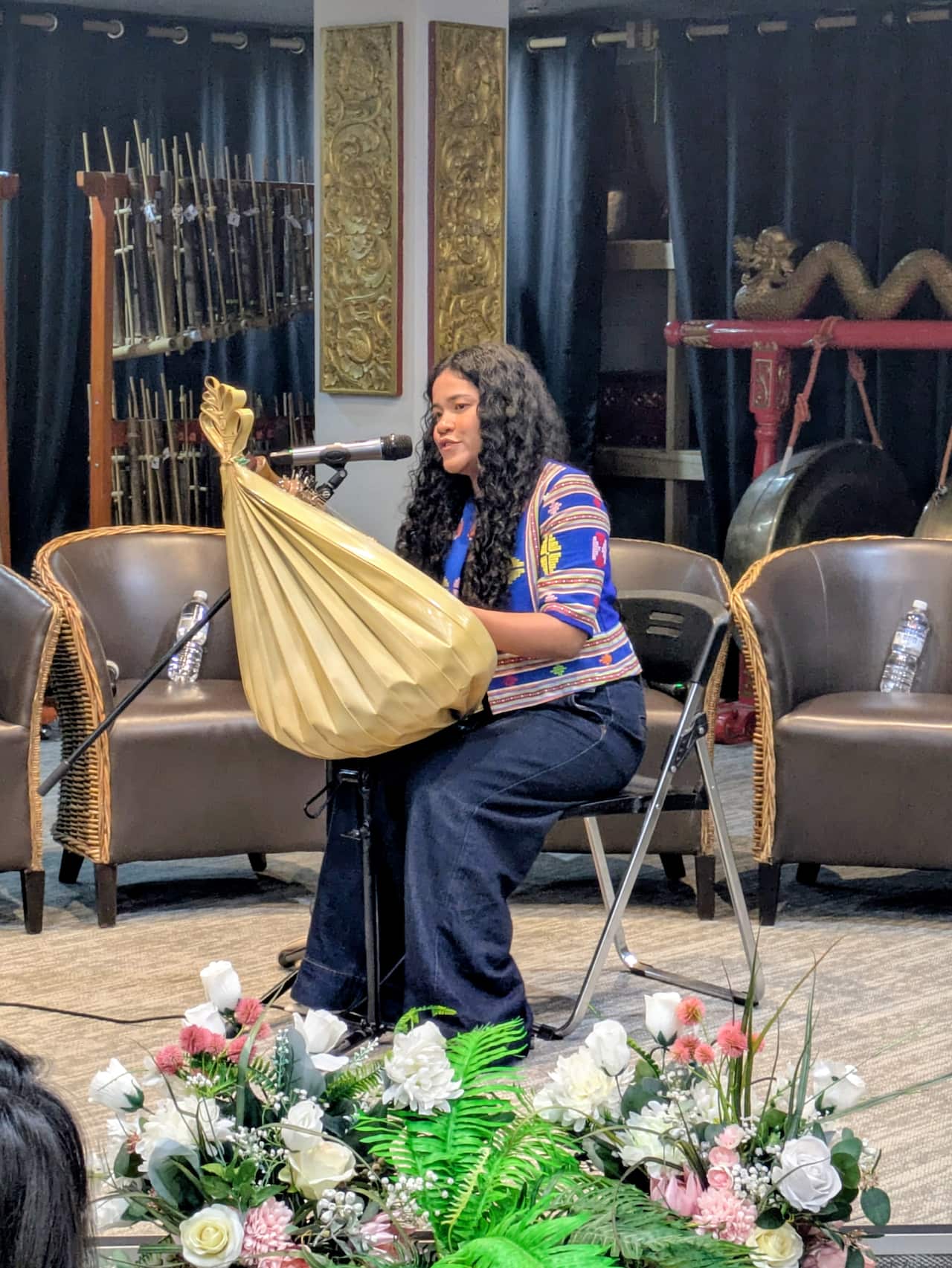
Detaq first picked up the sasando in high school. Initially, she just wanted to learn a single song, she said. But her passion for the instrument has endured ever since, even as she pursues postgraduate studies in physics. Detaq said.
Her musical roots run deep in her family, Detaq said. While no one played an instrument, her household was one of singers, with her grandmother, mother and aunts all active in their church choir, she said. That early grounding in music meant she didn't have to start from scratch when she began learning the sasando, Detaq adeed.
Melbourne marks the second time Detaq has taken her sasando abroad. She previously performed the instrument in the United States during an earlier study period.
The pride I feel is still the same. The pride of showing that this is an instrument from Indonesia's southernmost island — that feeling is still very much with me, and it's even stronger now because so many more people are enthusiastic about it.Yona Detaq
But Detaq's mission extends beyond the sasando itself. She's also passionate about sharing the wider cultural richness of East Nusa Tenggara, including the deeper philosophical meanings behind the tenun ikat woven textiles she wears whenever she performs, she said.
Detaq is open to collaborating with Indonesian community events in Melbourne that want to help introduce the sasando to a broader audience, she added.
Listen to the full interview on the SBS Indonesian podcast.